


Understanding Why Global Companies Continue to Trust Java for Enterprise Software Development
Technology evolves rapidly, with new programming languages and frameworks emerging every year. Despite this constant change, Java continues to be one of the most widely used programming languages in the world, especially for enterprise software development.
From banking systems and insurance platforms to e-commerce applications and large-scale business solutions, Java powers countless mission-critical applications used by millions of people every day.
Many students wonder whether Java is still worth learning in the age of Artificial Intelligence, Cloud Computing, and modern web technologies. The answer is a strong yes. Java remains a cornerstone of enterprise software development and continues to offer excellent career opportunities for developers worldwide.
What is Java?
Java is a high-level, object-oriented programming language developed by Sun Microsystems and later acquired by Oracle.
Java was designed with the principle:
“Write Once, Run Anywhere.”
This means Java applications can run on different operating systems without major modifications.
Because of its reliability, scalability, and security, Java has become one of the most trusted technologies in the software industry.
Why Java Became Popular
Several factors contributed to Java’s widespread adoption:
- Platform Independence
- Strong Security Features
- Object-Oriented Design
- Scalability
- Large Developer Community
- Rich Ecosystem
These advantages helped Java become a preferred choice for enterprise applications.
What is Enterprise Software?
Enterprise software refers to applications designed to support large organizations and business operations.
Examples include:
- Banking Systems
- ERP Solutions
- CRM Platforms
- Healthcare Management Systems
- Insurance Applications
- Government Portals
- E-Commerce Platforms
These applications require high performance, reliability, security, and scalability.
Why Enterprises Prefer Java
Platform Independence
Java applications run on the Java Virtual Machine (JVM), allowing software to operate across multiple platforms.
Benefits include:
- Reduced Development Costs
- Greater Flexibility
- Easier Maintenance
High Reliability
Enterprise applications often handle critical business operations.
Java provides:
- Stable Runtime Environment
- Strong Error Handling
- Robust Performance
This reliability makes Java suitable for large-scale applications.
Strong Security Features
Security is essential for enterprise software.
Java includes:
- Built-In Security Mechanisms
- Authentication Support
- Encryption Libraries
- Secure Coding Practices
This is one reason banks and financial institutions continue using Java.
Scalability
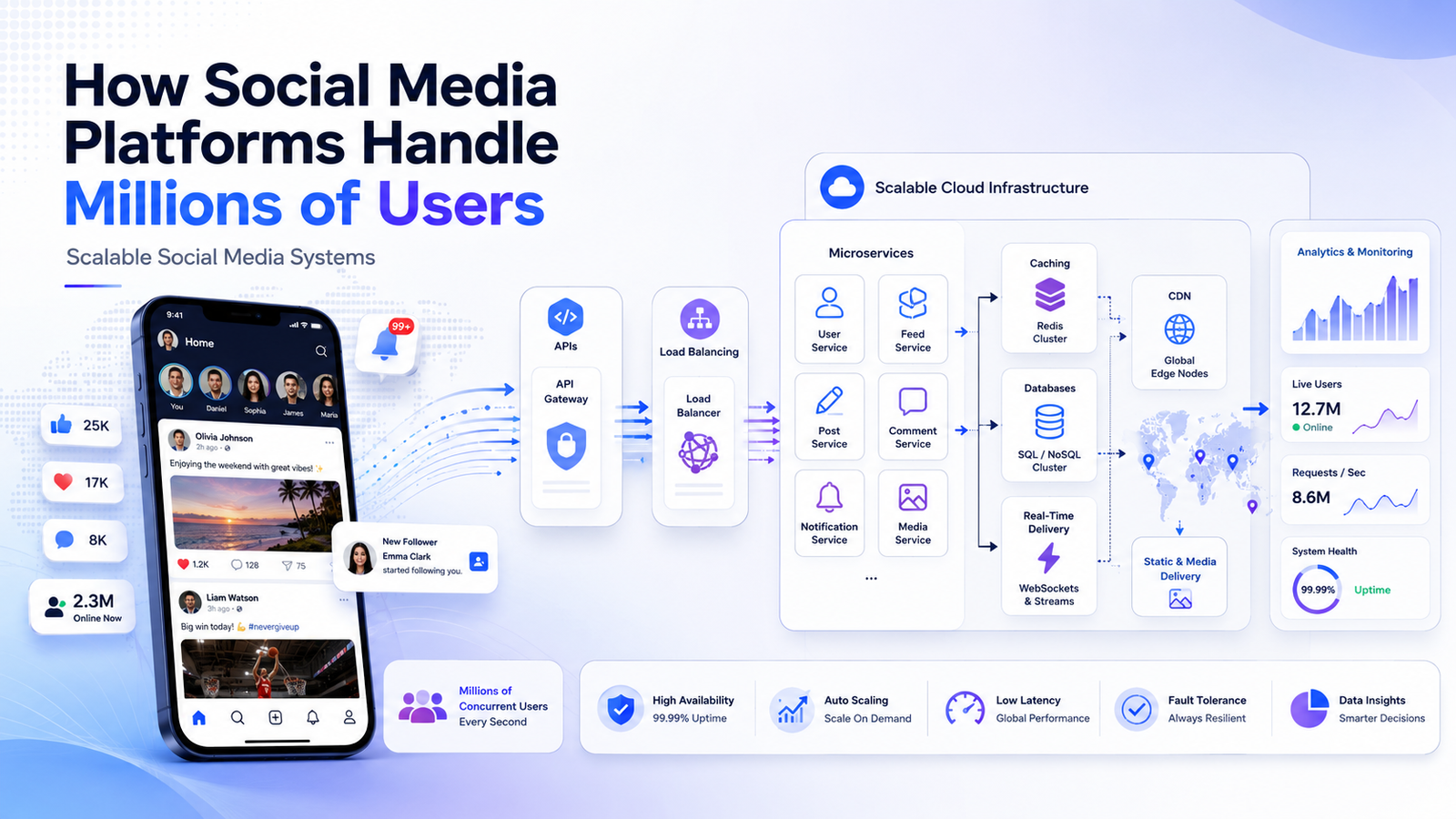
Large organizations require systems capable of handling millions of users and transactions.
Java supports:
- Distributed Systems
- Microservices Architecture
- Cloud-Native Applications
This makes it ideal for enterprise growth.
Java in Banking and Financial Systems
Many major banking systems use Java because of its:
- Security
- Performance
- Reliability
- Scalability
Common applications include:
- Online Banking
- Payment Processing
- Fraud Detection
- Trading Platforms
Financial institutions trust Java for mission-critical operations.
Java and Large-Scale Business Applications
Java is commonly used for:
Enterprise Resource Planning (ERP)
Managing:
- Finance
- Inventory
- Human Resources
- Operations
Customer Relationship Management (CRM)
Helping organizations manage customer interactions.
Supply Chain Management
Supporting logistics and operational processes.
These systems often serve thousands or millions of users simultaneously.
The Power of the Java Ecosystem
Java has one of the largest ecosystems in software development.
Popular technologies include:
Spring Framework
Widely used for enterprise application development.
Spring Boot
Simplifies modern application development and deployment.
Hibernate
Popular for database management and object-relational mapping.
Maven & Gradle
Build automation and dependency management tools.
These frameworks significantly improve developer productivity.
Java and Cloud Computing
Modern Java applications are increasingly deployed on cloud platforms.
Popular cloud environments include:
- AWS
- Microsoft Azure
- Google Cloud Platform
Java supports:
- Cloud-Native Applications
- Containerized Deployments
- Microservices
This keeps Java relevant in modern software architecture.
Java and Microservices
Many organizations are moving from monolithic systems to microservices.
Java frameworks such as Spring Boot make microservices development efficient.
Benefits include:
- Scalability
- Independent Deployment
- Better Maintainability
Java remains a dominant technology in this area.
Performance Improvements in Modern Java
Modern Java versions continue to introduce:
- Faster Performance
- Better Memory Management
- Enhanced Security
- Improved Developer Productivity
This ongoing evolution helps Java remain competitive.
Career Opportunities for Java Developers
Java continues to offer excellent career opportunities.
Popular roles include:
Java Developer
Develop enterprise applications and backend systems.
Backend Developer
Build APIs and server-side applications.
Software Engineer
Design and maintain software solutions.
Full Stack Developer
Combine Java backend development with frontend technologies.
Cloud Engineer
Deploy and manage Java applications in cloud environments.
Solution Architect
Design enterprise software systems.
Skills Required to Become a Java Developer
Students should focus on:
Core Java
- OOP Concepts
- Collections Framework
- Exception Handling
- Multithreading
Advanced Java
- JDBC
- Servlets
- JSP
Spring Framework
- Spring Core
- Spring Boot
- Spring Security
Databases
- MySQL
- PostgreSQL
- MongoDB
Version Control
- Git
- GitHub
Why Recruiters Continue to Hire Java Developers
Recruiters value Java developers because:
- Enterprise Demand Remains Strong
- Java Skills Are Transferable
- Large Organizations Depend on Java
- Long-Term Projects Require Skilled Developers
Java professionals continue to be highly sought after across industries.
Common Myths About Java
Java is Outdated
False. Java continues to evolve and remains widely used.
Java Has No Future
False. Enterprise demand remains strong globally.
New Languages Will Replace Java
While new languages emerge, Java continues to power countless enterprise systems.
Future of Java
Java remains relevant because organizations continue investing in:
- Enterprise Software
- Cloud Computing
- Distributed Systems
- Microservices
- Large-Scale Applications
As businesses modernize existing systems, demand for Java expertise remains strong.
Conclusion
Java remains one of the most popular enterprise programming languages because of its reliability, security, scalability, and extensive ecosystem. From banking systems and healthcare platforms to cloud-native applications and enterprise software, Java continues to power critical business operations worldwide.
Students who learn Java, Spring Boot, databases, cloud technologies, and software engineering fundamentals can build strong and rewarding careers in enterprise software development.
🌐 Website: https://grootacademy.com
📺 YouTube: https://www.youtube.com/@YourGrootAcademy
📘 Facebook: http://facebook.com/GrootAcademy
📸 Instagram: https://www.instagram.com/groot.academy/
🐦 X: https://x.com/GrootAcademy
💼 LinkedIn: https://www.linkedin.com/company/grootacademy
📌 Pinterest: https://in.pinterest.com/mygrootacademy/