


Complete Step-by-Step Guide to Becoming a Java Developer
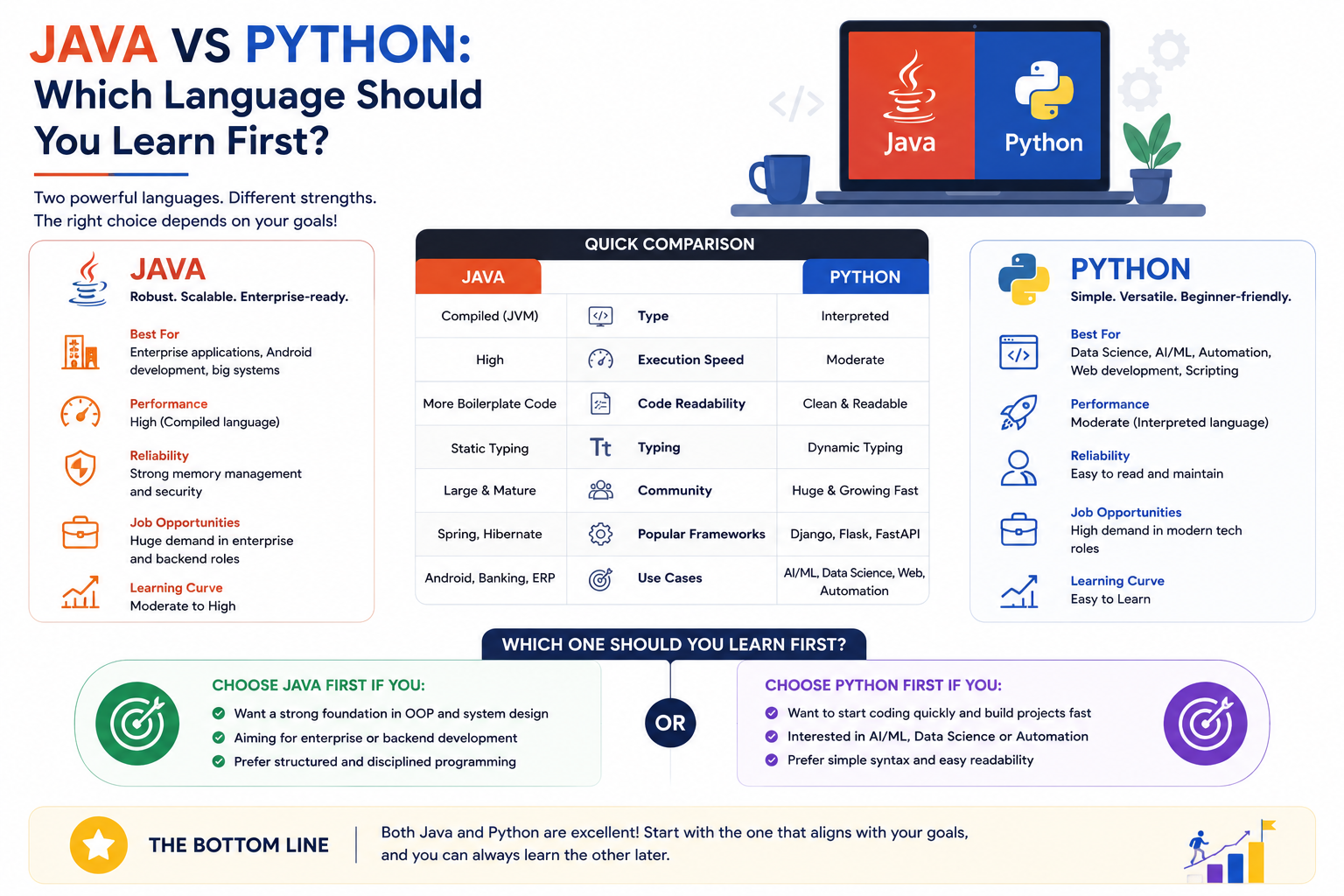
Java continues to be one of the most in-demand programming languages in the software industry. From enterprise applications and banking systems to cloud platforms and large-scale business software, Java powers some of the world’s most critical applications.
Many beginners want to learn Java but often feel confused about where to start and what topics to learn. With so many frameworks, tools, and technologies available, having a clear roadmap can save months of confusion and help students learn efficiently.
This guide provides a complete Java roadmap for beginners in 2026, covering everything from programming fundamentals to advanced enterprise development concepts.
Why Learn Java in 2026?
Java remains one of the most valuable programming languages because of its:
- Strong Industry Demand
- Enterprise Adoption
- High Salary Potential
- Large Community Support
- Cross-Platform Compatibility
- Long-Term Career Opportunities
Java is widely used in:
- Banking Applications
- Enterprise Software
- Cloud Applications
- Backend Development
- E-Commerce Platforms
- Government Systems
Learning Java provides access to a wide range of software engineering careers.
Phase 1: Learn Programming Fundamentals
Before diving into advanced Java concepts, students should understand basic programming principles.
Topics to Learn
- Variables
- Data Types
- Operators
- Input & Output
- Conditional Statements
- Loops
- Functions
- Basic Problem Solving
Practice Projects
- Calculator
- Number Guessing Game
- Student Grade Calculator
- Simple Billing System
Focus on understanding logic rather than memorizing code.
Phase 2: Master Core Java
Core Java forms the foundation of enterprise development.
Important Topics
Object-Oriented Programming (OOP)
Learn:
- Classes
- Objects
- Encapsulation
- Inheritance
- Polymorphism
- Abstraction
Exception Handling
Understand:
- Try-Catch Blocks
- Custom Exceptions
- Error Management
Collections Framework
Learn:
- ArrayList
- LinkedList
- HashMap
- HashSet
- Queue
- Stack
Strings
Understand:
- String Manipulation
- StringBuilder
- StringBuffer
File Handling
Learn how applications read and write files.
Multithreading
Understand concurrent programming concepts.
Beginner Java Projects
- Library Management System
- Employee Management System
- Banking Application
- Inventory Management System
Phase 3: Learn Data Structures and Algorithms
DSA is essential for:
- Problem Solving
- Coding Interviews
- Software Engineering Careers
Topics to Learn
- Arrays
- Linked Lists
- Stacks
- Queues
- Trees
- Graphs
- Hash Tables
Algorithms
- Searching Algorithms
- Sorting Algorithms
- Recursion
- Dynamic Programming
Most software companies evaluate DSA during interviews.
Phase 4: Learn Git and GitHub
Modern software development requires version control.
Learn
- Git Basics
- Branching
- Merging
- Pull Requests
- GitHub Repositories
Benefits:
- Project Management
- Team Collaboration
- Portfolio Building
A GitHub profile helps recruiters evaluate practical skills.
Phase 5: Learn Database Management
Almost every Java application uses databases.
SQL Databases
Learn:
- MySQL
- PostgreSQL
Topics:
- CRUD Operations
- Joins
- Relationships
- Normalization
NoSQL Databases
Learn:
- MongoDB
Database skills are critical for backend development.
Phase 6: Learn JDBC
JDBC (Java Database Connectivity) enables Java applications to interact with databases.
Topics
- Database Connections
- Prepared Statements
- CRUD Operations
- Transaction Management
This is an important bridge between Java and database systems.
Phase 7: Learn Advanced Java
Advanced Java introduces web application development concepts.
Topics
- Servlets
- JSP
- Session Management
- Filters
- Listeners
These concepts help students understand how web applications work.
Phase 8: Learn Spring Framework
Spring is the most popular Java framework for enterprise development.
Spring Core
Learn:
- Dependency Injection
- Inversion of Control
Spring MVC
Understand:
- Controllers
- Services
- Views
Spring simplifies enterprise application development.
Phase 9: Learn Spring Boot
Spring Boot is currently one of the most demanded skills for Java developers.
Topics
- REST APIs
- Dependency Management
- Spring Data JPA
- Spring Security
- Application Configuration
Projects
- E-Commerce Backend
- Student Management API
- Employee Management API
- Authentication System
Spring Boot skills significantly improve employability.
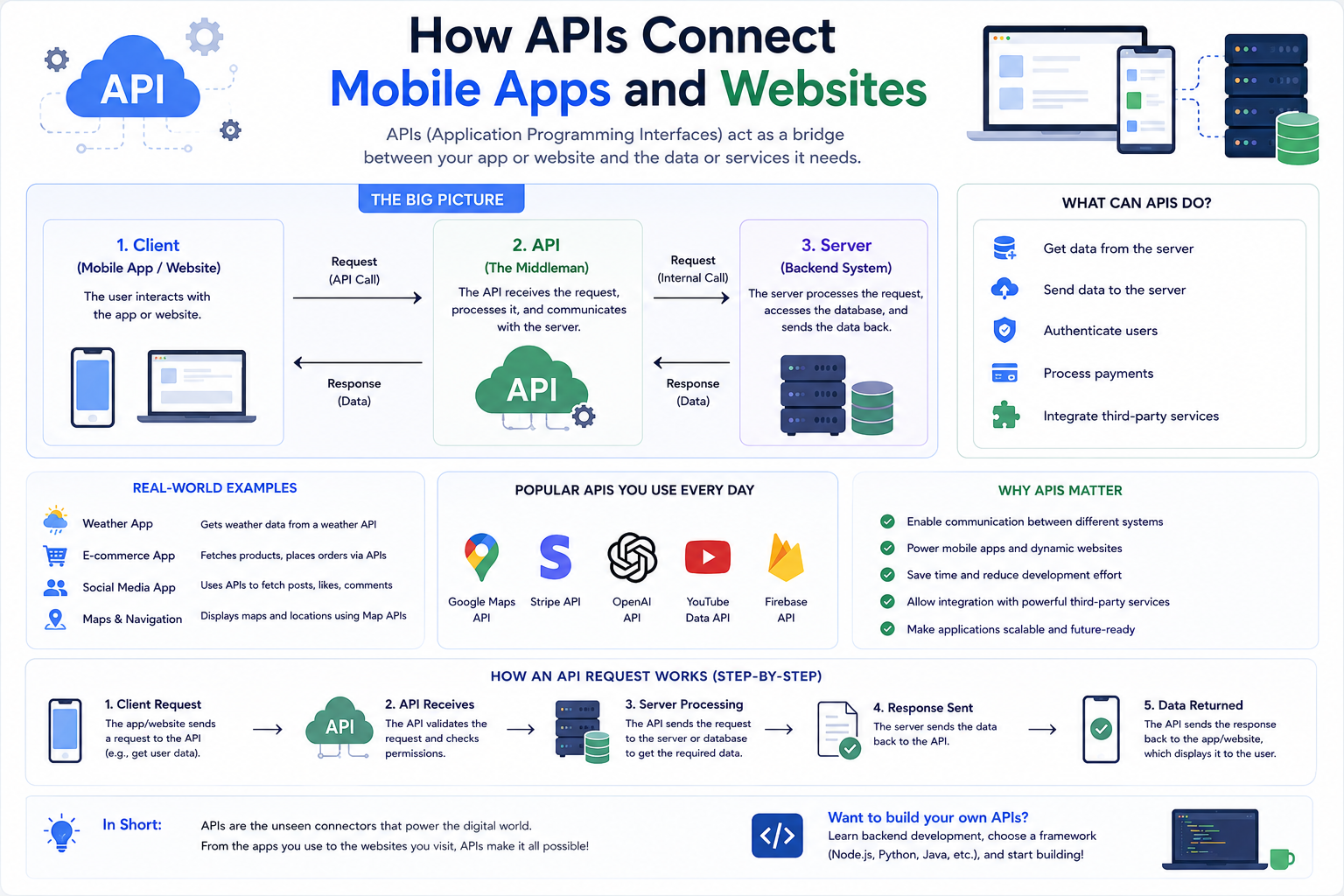
Phase 10: Learn REST API Development
Modern applications communicate through APIs.
Topics
- HTTP Methods
- JSON
- REST Architecture
- API Security
API development is essential for backend engineers.
Phase 11: Learn Microservices
Large organizations increasingly use microservices architecture.
Topics
- Service Communication
- API Gateway
- Load Balancing
- Service Discovery
Understanding microservices helps prepare for enterprise development roles.
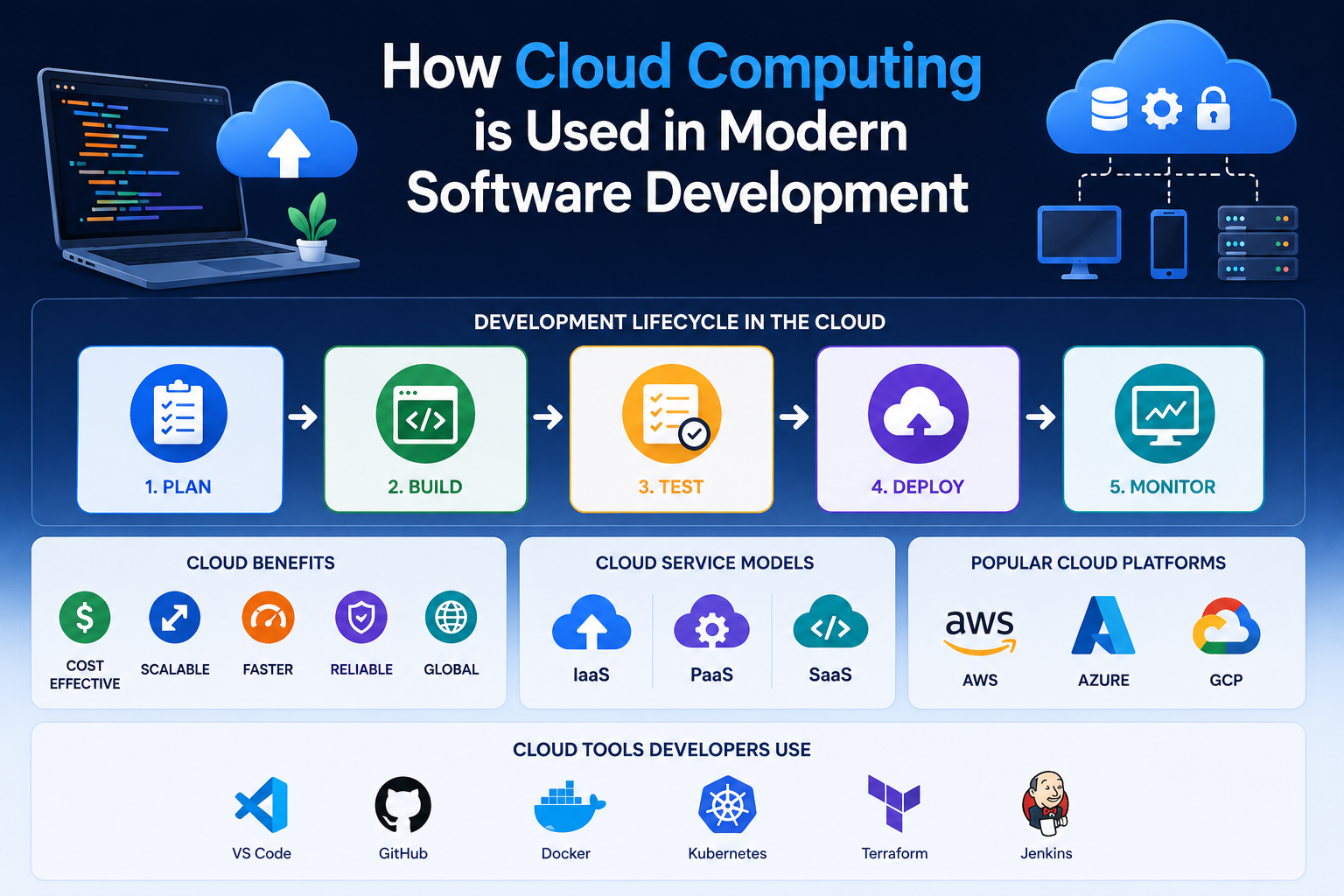
Phase 12: Learn Cloud Computing
Cloud skills are becoming essential for software engineers.
Popular Platforms
- AWS
- Microsoft Azure
- Google Cloud Platform
Topics
- Cloud Deployment
- Virtual Machines
- Storage Services
- Monitoring
Java developers with cloud knowledge have strong career opportunities.
Phase 13: Learn DevOps Basics
DevOps improves software delivery processes.
Important Tools
- Docker
- Kubernetes
- Jenkins
- GitHub Actions
Concepts
- CI/CD
- Automation
- Deployment Pipelines
These skills are increasingly valuable in modern software teams.
Phase 14: Build Real Projects
Projects demonstrate practical experience.
Recommended Projects
Beginner
- Calculator
- Student Management System
Intermediate
- Inventory Management System
- Hospital Management System
Advanced
- E-Commerce Platform
- CRM Application
- Banking Management System
Projects strengthen portfolios and interview performance.
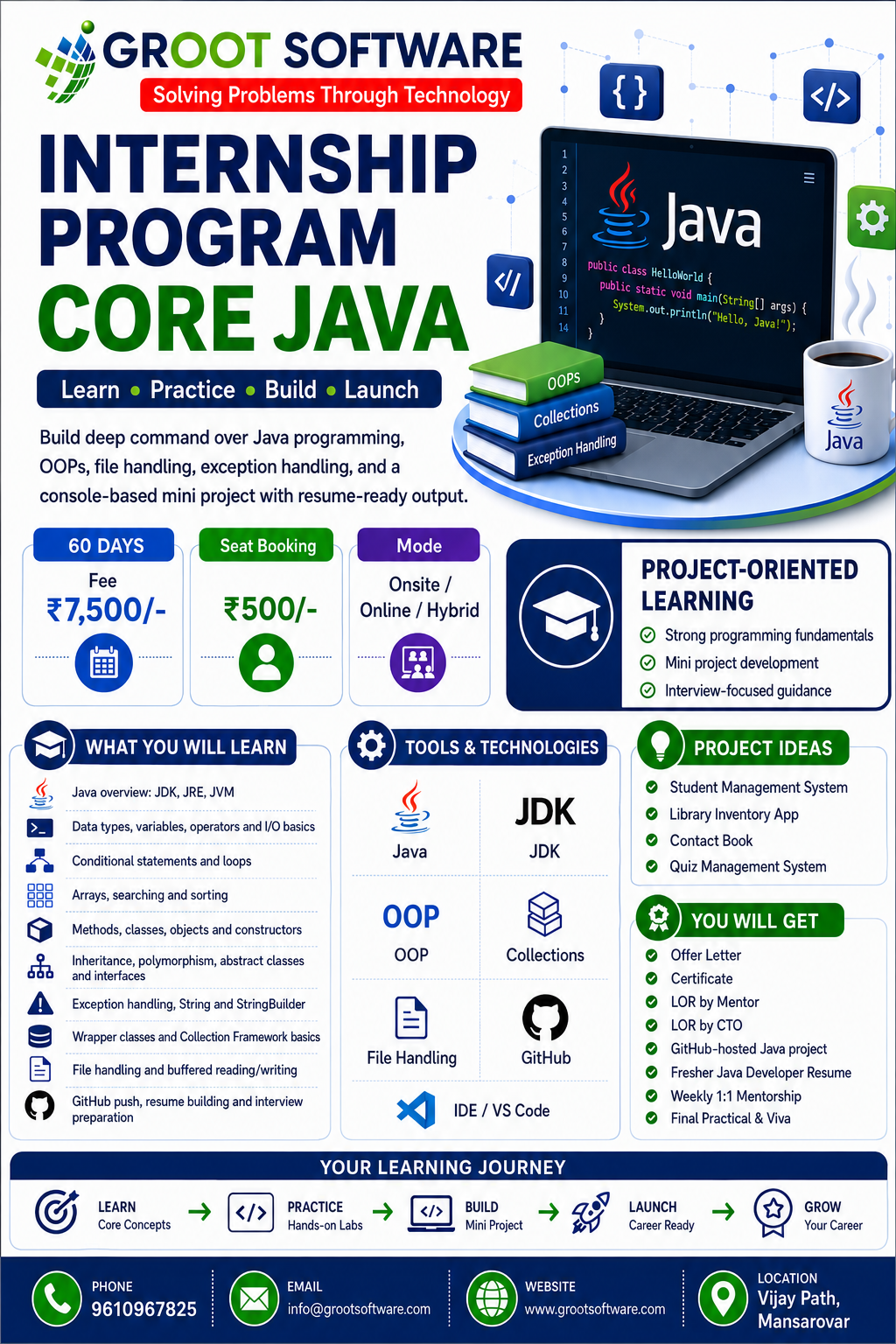
Phase 15: Internship and Industry Exposure
Internships provide:
- Practical Experience
- Team Collaboration
- Industry Workflows
- Real Projects
Students with internship experience often become job-ready faster.
Common Mistakes Beginners Make
Skipping Fundamentals
Programming basics are essential.
Ignoring DSA
Problem-solving skills remain highly valuable.
Learning Too Many Technologies
Master Java before exploring multiple frameworks.
Not Building Projects
Projects provide proof of skills.
Avoiding GitHub
Maintain a professional developer portfolio.
Career Opportunities After Learning Java
Popular roles include:
- Java Developer
- Backend Developer
- Software Engineer
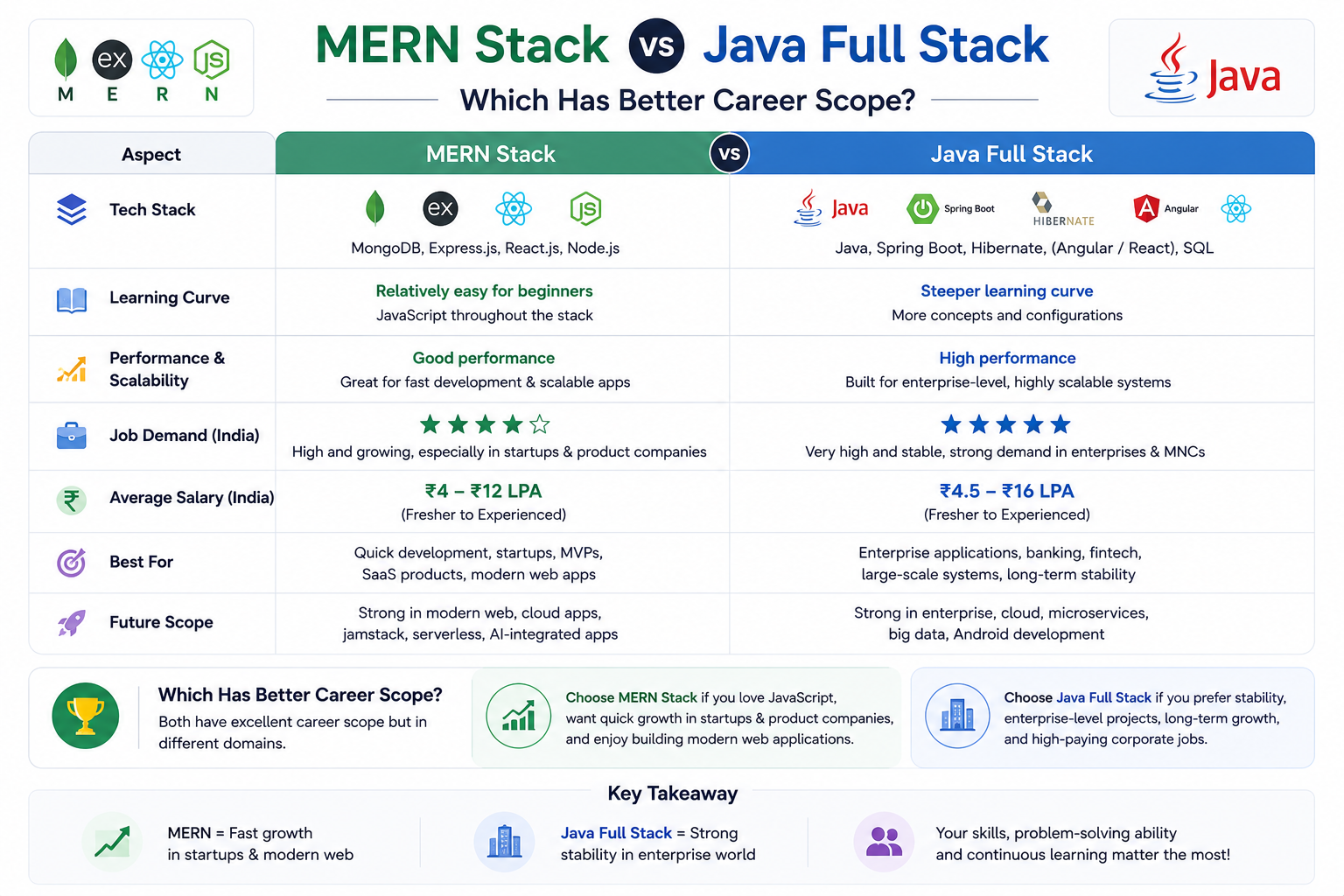
- Full Stack Developer
- Spring Boot Developer
- Cloud Engineer
- Solution Architect
Java continues to provide excellent career growth opportunities.
Conclusion
Java remains one of the strongest career-oriented programming languages in 2026. By following a structured roadmap that includes Core Java, DSA, Databases, Spring Boot, Cloud Computing, DevOps, and real projects, beginners can build a solid foundation for successful software engineering careers.
The key to success is consistent practice, project development, problem solving, and continuous learning.
🌐 Website: https://grootacademy.com
📺 YouTube: https://www.youtube.com/@YourGrootAcademy
📘 Facebook: http://facebook.com/GrootAcademy
📸 Instagram: https://www.instagram.com/groot.academy/
🐦 X: https://x.com/GrootAcademy
💼 LinkedIn: https://www.linkedin.com/company/grootacademy
📌 Pinterest: https://in.pinterest.com/mygrootacademy/