


Why Successful Software Engineers Focus on Problem Solving, Not Just Programming Languages
One of the most common questions asked by students entering the technology industry is:
“Which programming language should I learn?”
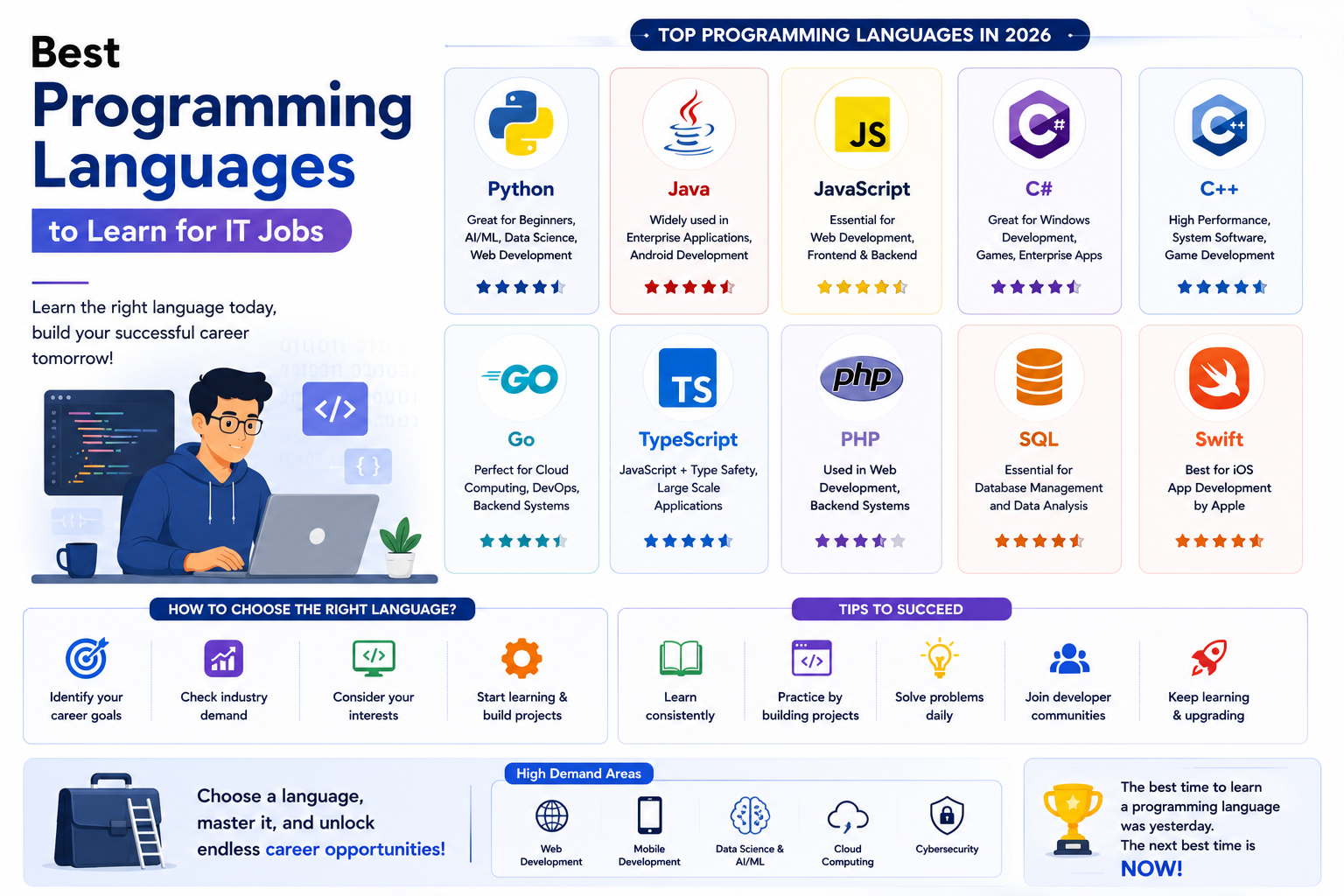
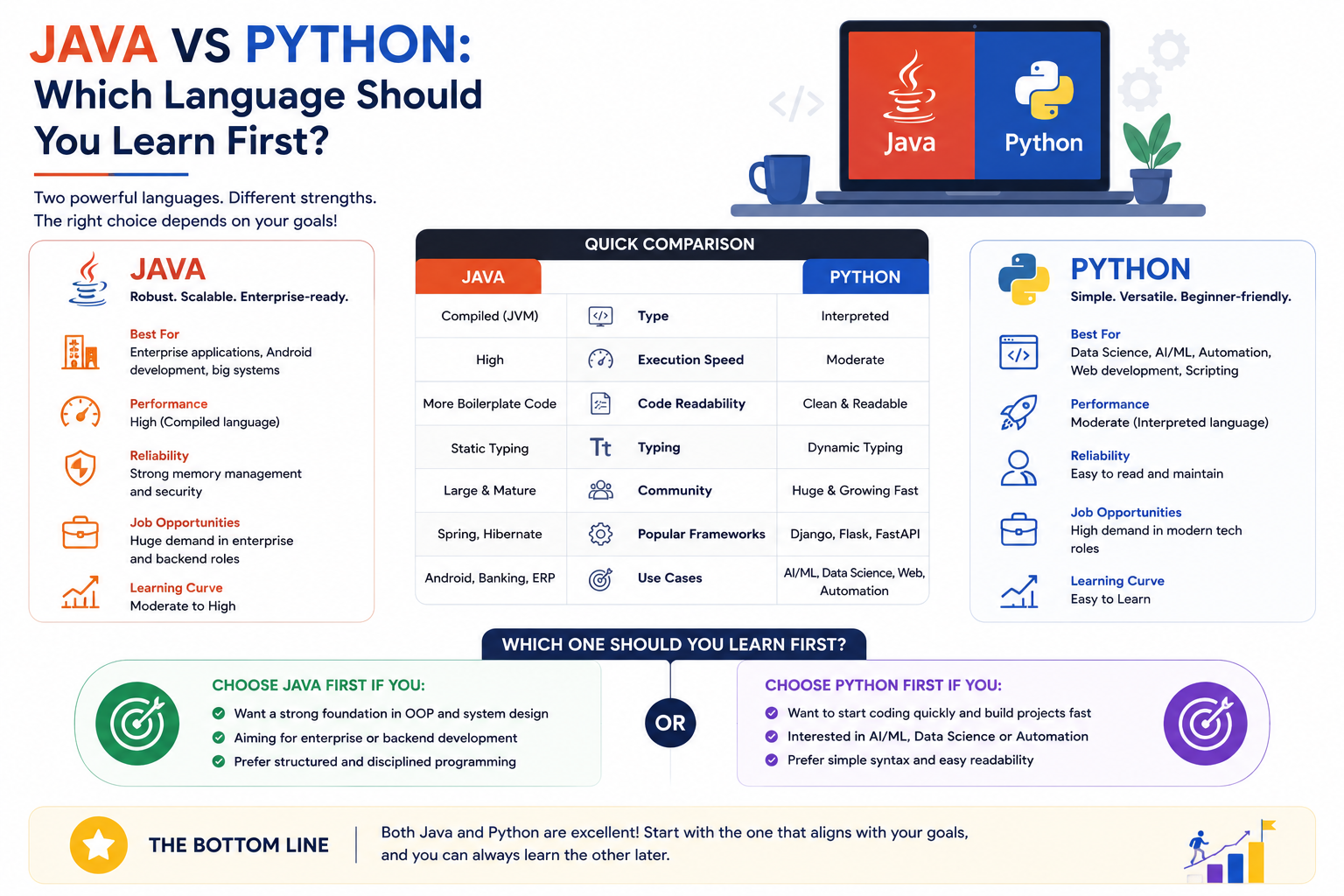
Some students choose Java, while others focus on Python, JavaScript, C++, Go, Rust, or Kotlin. While learning a programming language is important, experienced software engineers know that programming languages are only tools.
The most successful developers do not define themselves by a language. Instead, they develop a mindset focused on solving problems, building systems, understanding users, and creating value.
This is known as the Developer Mindset.
A developer mindset helps engineers adapt to changing technologies, work on complex systems, collaborate with teams, and grow into leadership positions. It transforms a person from someone who writes code into someone who creates solutions.
What is a Developer Mindset?
A developer mindset is a way of thinking that focuses on:
- Problem Solving
- Continuous Learning
- System Thinking
- Product Development
- User-Centric Design
- Technical Growth
Rather than asking:
“Which language should I use?”
Developers ask:
“What problem am I solving?”
This shift in thinking is what separates long-term software engineers from short-term technology learners.
Why Programming Languages Are Just Tools
Over the years, the industry has used:
- C
- C++
- Java
- Python
- JavaScript
- PHP
- Go
- Rust
Technologies evolve constantly.
However, core engineering principles remain valuable:
- Logic
- Algorithms
- System Design
- Software Architecture
- Problem Solving
Developers who understand these principles can learn new languages quickly.
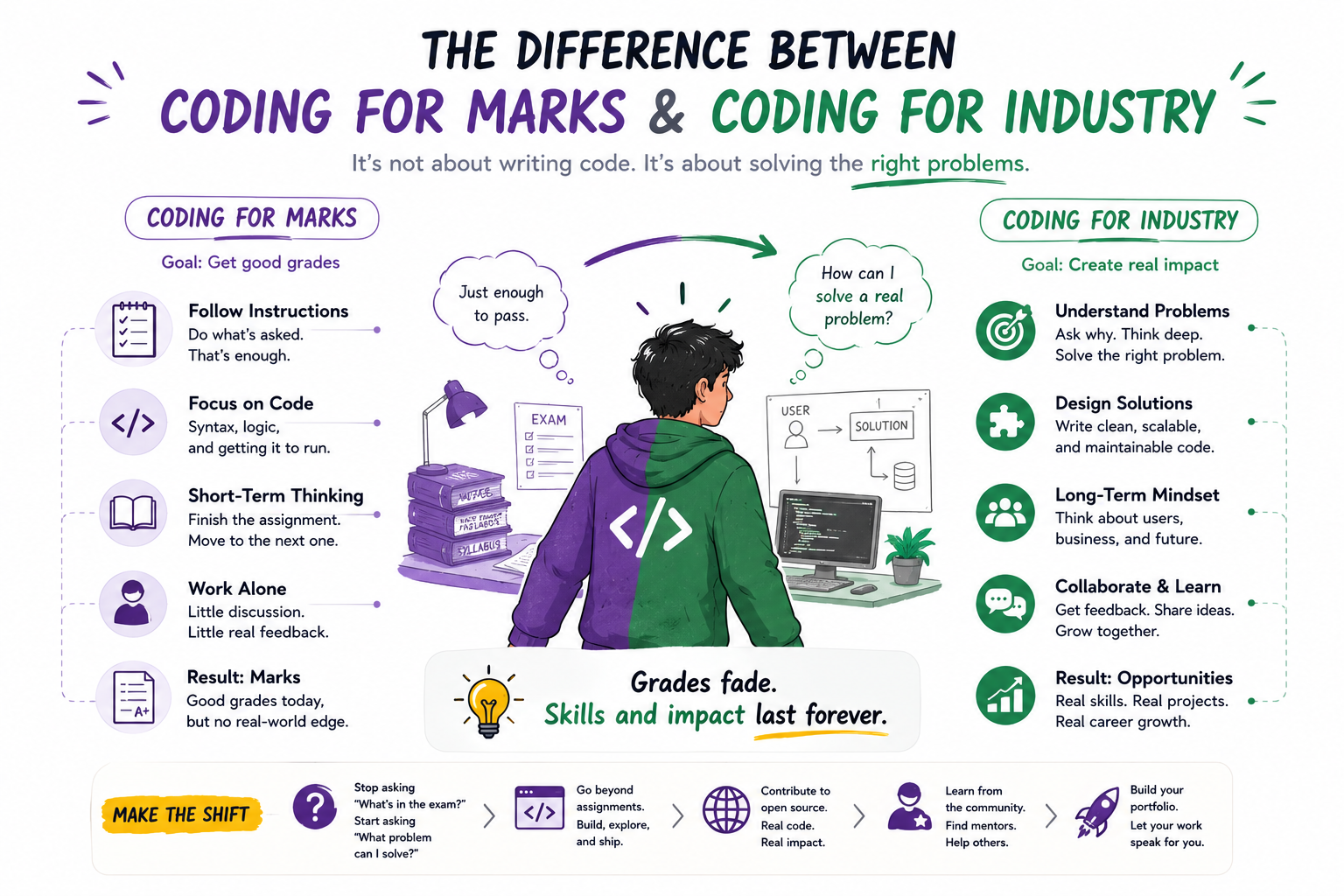
The Difference Between a Programmer and a Developer
Programmer
Focuses on:
- Syntax
- Frameworks
- Completing Tasks
Developer
Focuses on:
- Solving Problems
- Designing Systems
- Building Products
- Understanding Users
Programming is a skill.
Development is a mindset.
Thinking Like a Problem Solver
Professional developers spend more time thinking than coding.
Before writing code, they ask:
- What is the actual problem?
- Who will use the solution?
- What constraints exist?
- What is the simplest approach?
The best solutions often come from understanding the problem deeply.
Understanding the User
Successful software products are built around user needs.
Developers should understand:
- User Goals
- Pain Points
- Business Requirements
- User Experience
A technically perfect solution is useless if it fails to solve the user’s problem.
Thinking in Systems
As projects grow, developers must think beyond individual files and functions.
System thinking involves understanding:
- Databases
- APIs
- Authentication
- Infrastructure
- Scalability
Every software component affects the overall system.
Developers who understand systems build more reliable applications.
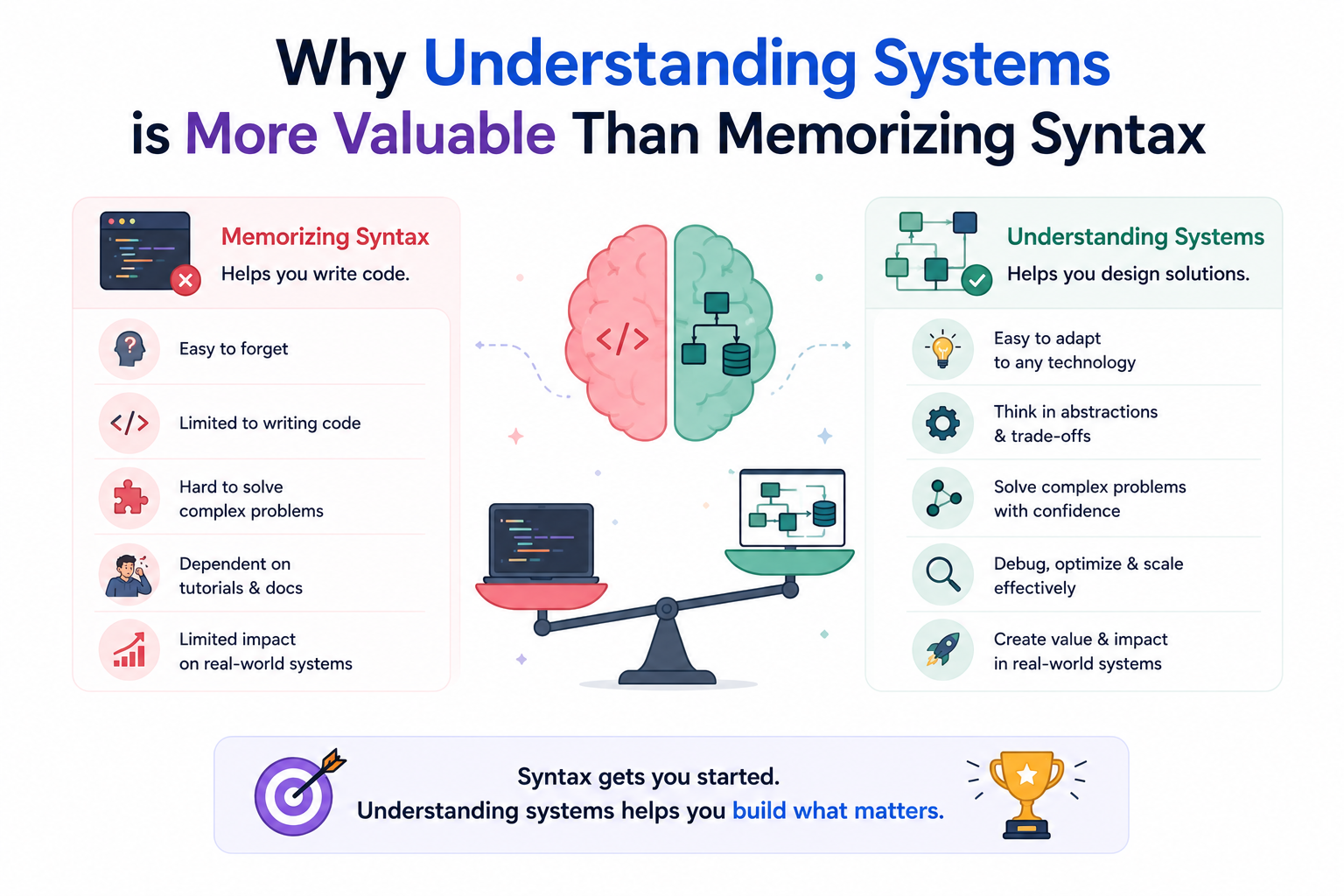
Learning Concepts Instead of Memorizing Syntax
Many students spend excessive time memorizing:
- Functions
- Libraries
- Framework Commands
Professional developers focus on concepts such as:
- Data Structures
- Algorithms
- Design Patterns
- Architecture
- Networking
Concepts remain valuable even when technologies change.
Embracing Continuous Learning
Technology evolves rapidly.
New:
- Frameworks
- Tools
- Platforms
- AI Technologies
appear every year.
Developers with the right mindset enjoy learning and adapting rather than resisting change.
Continuous learning is one of the most important career skills.
Learning How Software Works
Many beginners know how to use frameworks but do not understand how software operates behind the scenes.
Developers should learn:
Databases
How data is stored and retrieved.
APIs
How systems communicate.
Networks
How information travels across the internet.
Operating Systems
How software interacts with hardware.
This knowledge creates stronger engineers.
Thinking About Scalability
A beginner may build an application for 10 users.
A developer thinks about:
- 1,000 Users
- 10,000 Users
- 100,000 Users
Questions include:
- Will performance remain stable?
- Can the database handle growth?
- Is the architecture scalable?
Scalability thinking is a hallmark of mature developers.
Focusing on Product Creation
Developers do not simply write code.
They create products.
Examples include:
- E-Commerce Platforms
- Learning Management Systems
- Mobile Apps
- SaaS Products
- AI Solutions
Product thinking encourages developers to focus on outcomes rather than implementation details.
Understanding Business Value
Every software application exists for a reason.
Developers should understand:
- Revenue Generation
- User Retention
- Cost Optimization
- Business Goals
Technical decisions often have business consequences.
Understanding both perspectives creates stronger engineers.
Taking Ownership
A developer mindset includes responsibility.
Instead of saying:
“My task is complete.”
Developers ask:
- Does this feature solve the problem?
- Are there risks?
- Can it be improved?
Ownership accelerates professional growth.
Developing Strong Problem-Solving Skills
Problem solving remains the most valuable software engineering skill.
Students should practice:
- Data Structures & Algorithms
- Logical Reasoning
- System Design
- Debugging
Languages may change, but problem-solving skills remain valuable forever.
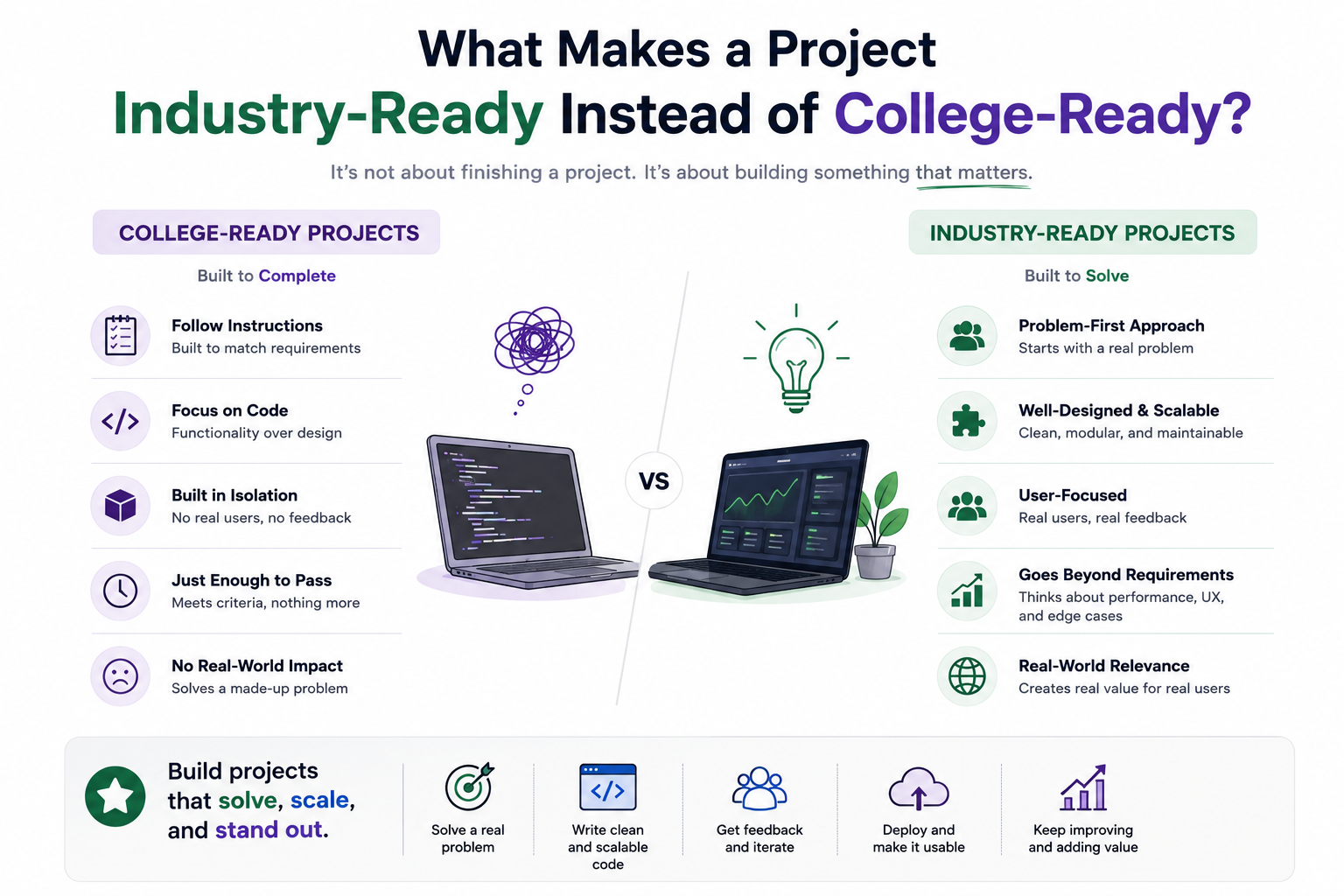
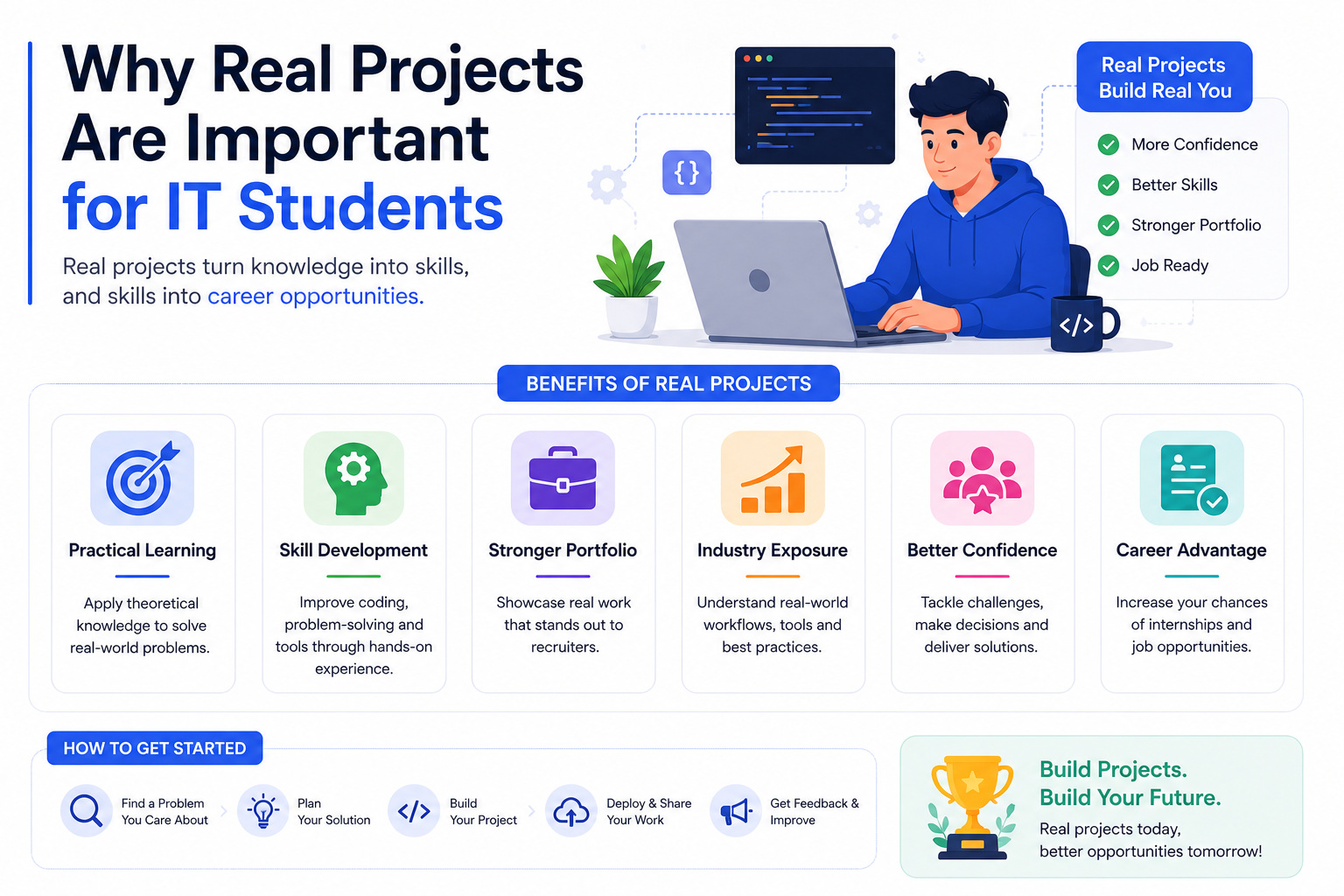
Learning Through Projects
Projects help students develop:
- Technical Skills
- Product Thinking
- Deployment Experience
- User Understanding
Real-world projects provide lessons that tutorials cannot teach.
Understanding Team Collaboration
Software development is rarely a solo activity.
Developers collaborate with:
- Designers
- Testers
- Product Managers
- Clients
- DevOps Engineers
Communication and teamwork are essential.
Adapting to New Technologies
Developers should avoid becoming attached to specific technologies.
Instead of:
❌ “I am only a React Developer.”
Think:
✅ “I am a software engineer who can learn React.”
This mindset creates flexibility and long-term career growth.
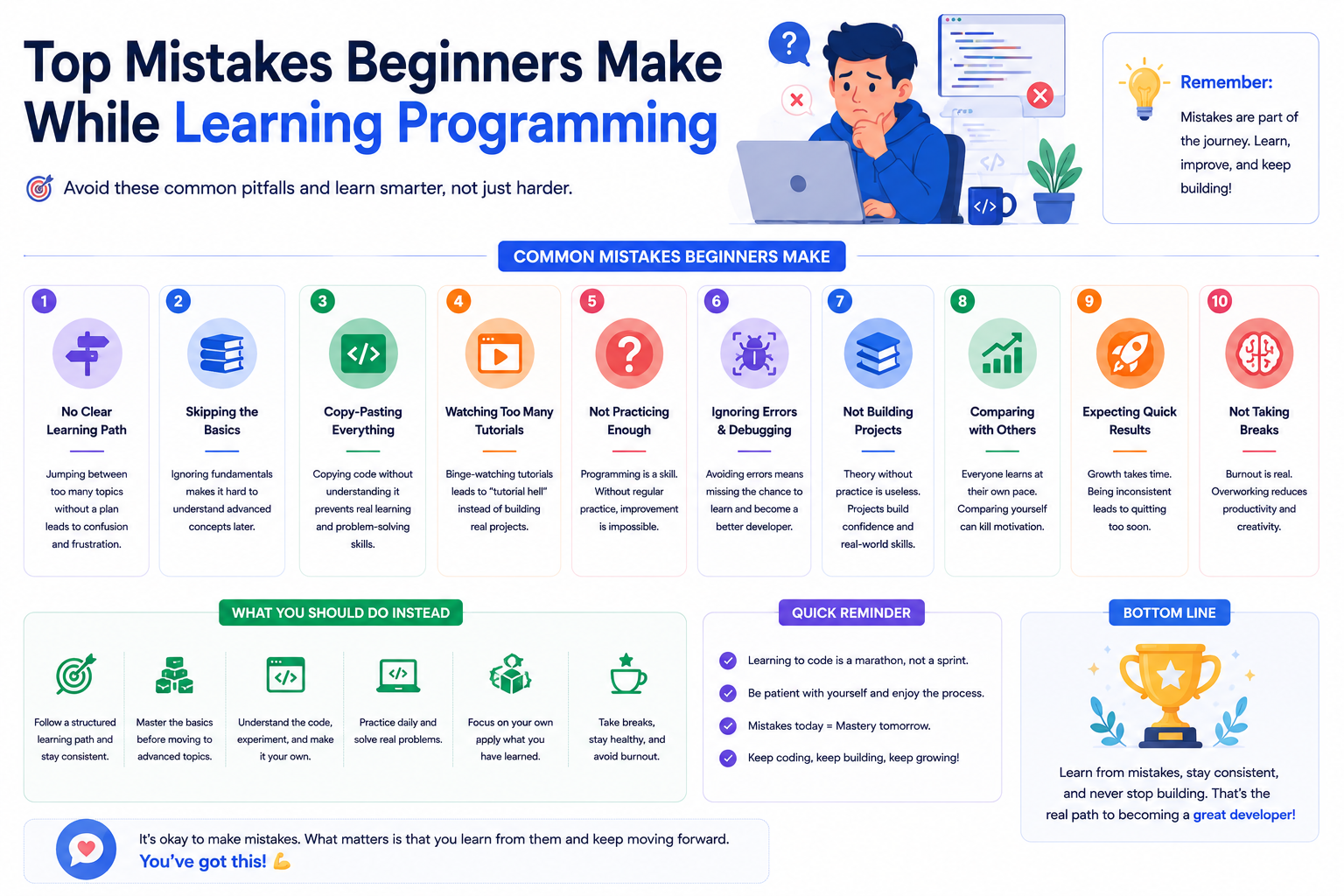
Common Mistakes Students Make
Chasing Every New Framework
Focus on fundamentals first.
Comparing Languages Constantly
All languages solve problems.
Ignoring System Design
Architecture becomes important as projects grow.
Learning Without Building
Projects reinforce learning.
Avoiding Real Problems
Practical challenges create stronger developers.
How to Build a Developer Mindset
Learn Programming Fundamentals
Build strong foundations.
Study Data Structures & Algorithms
Improve problem-solving abilities.
Build Real Projects
Gain practical experience.
Learn System Design
Understand large-scale systems.
Contribute to Open Source
Collaborate with real developers.
Understand Business Needs
Think beyond technical implementation.
Practice Continuous Learning
Stay adaptable.
Why Recruiters Value Developer Mindsets
Recruiters look for candidates who can:
✅ Solve Problems
✅ Learn Quickly
✅ Adapt to Change
✅ Work in Teams
✅ Build Products
These qualities often matter more than knowledge of a specific framework.
Future of Software Engineering
As AI tools become more capable of generating code, developers who focus only on syntax may struggle to differentiate themselves.
The most valuable professionals will be those who understand:
- Systems
- Architecture
- Product Design
- Business Problems
- Human Needs
These skills are difficult to automate.
Frequently Asked Questions
Should students focus on one language?
Start with one language, but focus on learning programming concepts.
Is problem solving more important than syntax?
Yes. Syntax can be learned quickly; problem solving takes years to develop.
Can developers switch languages easily?
Developers with strong fundamentals can learn new languages efficiently.
Why do companies value mindset?
Because technologies change, but learning ability and problem-solving skills remain valuable.
Conclusion
Building a developer mindset means thinking beyond programming languages and focusing on solving problems, understanding users, designing systems, and creating products that deliver value. Programming languages are important tools, but they are only one part of software engineering.
Students who develop strong fundamentals, embrace continuous learning, understand system design, build projects, and think from a user and business perspective position themselves for long-term success in the technology industry.
The future belongs not to those who know the most programming languages, but to those who can use technology to solve meaningful problems.
🌐 Website: https://grootacademy.com
📺 YouTube: https://www.youtube.com/@YourGrootAcademy
📘 Facebook: http://facebook.com/GrootAcademy
📸 Instagram: https://www.instagram.com/groot.academy/
🐦 X: https://x.com/GrootAcademy
💼 LinkedIn: https://www.linkedin.com/company/grootacademy
📌 Pinterest: https://in.pinterest.com/mygrootacademy/