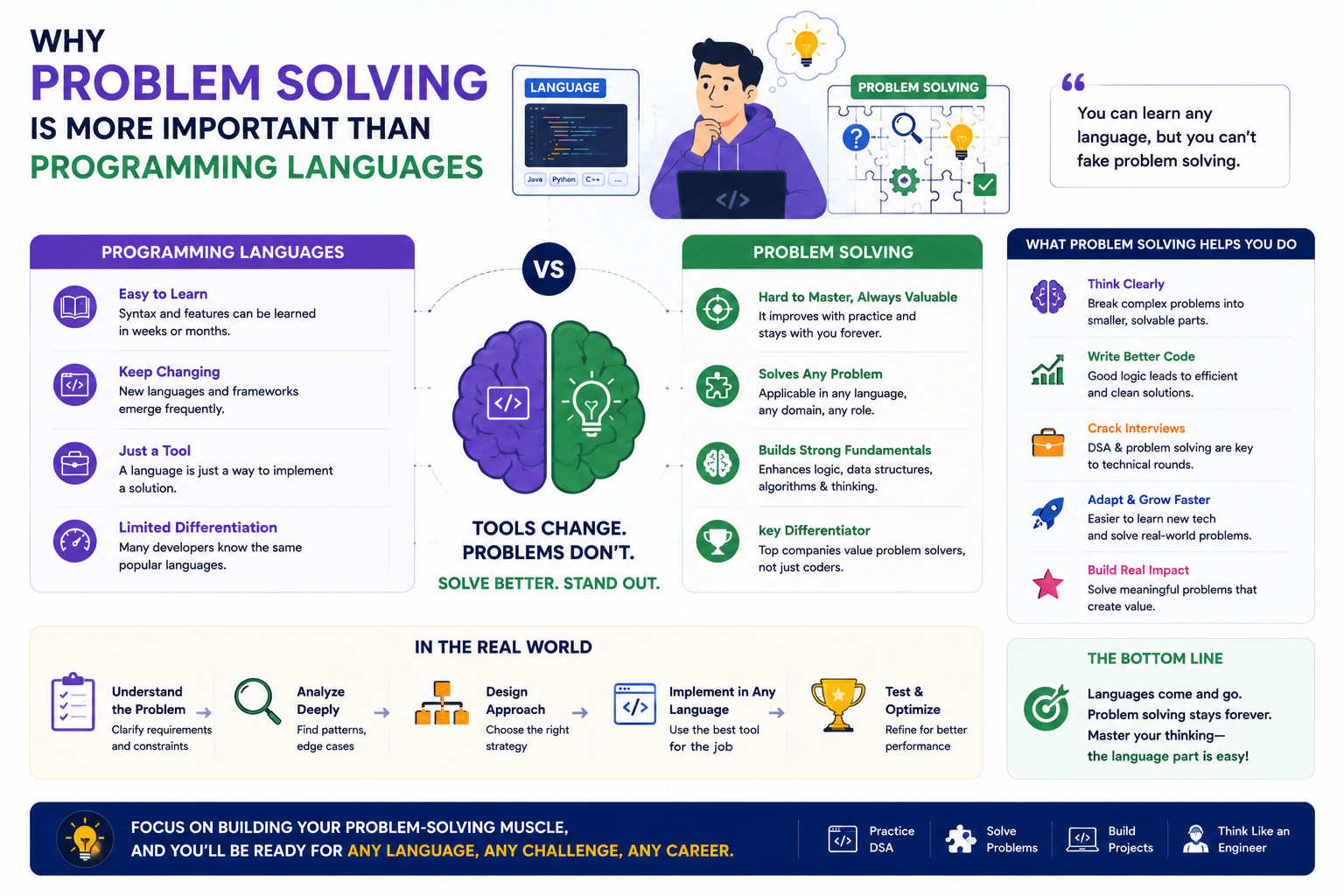



Why Some Professionals Build Successful Software Careers While Others Remain Stuck Writing Code
Many students believe that learning a programming language automatically makes them a software developer. They spend months learning Java, Python, JavaScript, C++, or ReactJS and assume that technical knowledge alone is enough to succeed in the software industry.
However, experienced engineering managers, startup founders, and senior software architects know a different reality:
Not every coder becomes a software engineer.
Writing code is only a small part of software development. The professionals who grow into senior developers, technical leads, architects, engineering managers, and startup founders possess a set of hidden skills that go far beyond programming syntax.
These skills help them solve complex problems, build scalable systems, work effectively with teams, understand business requirements, and create software that delivers real value.
Coder vs Developer: Understanding the Difference
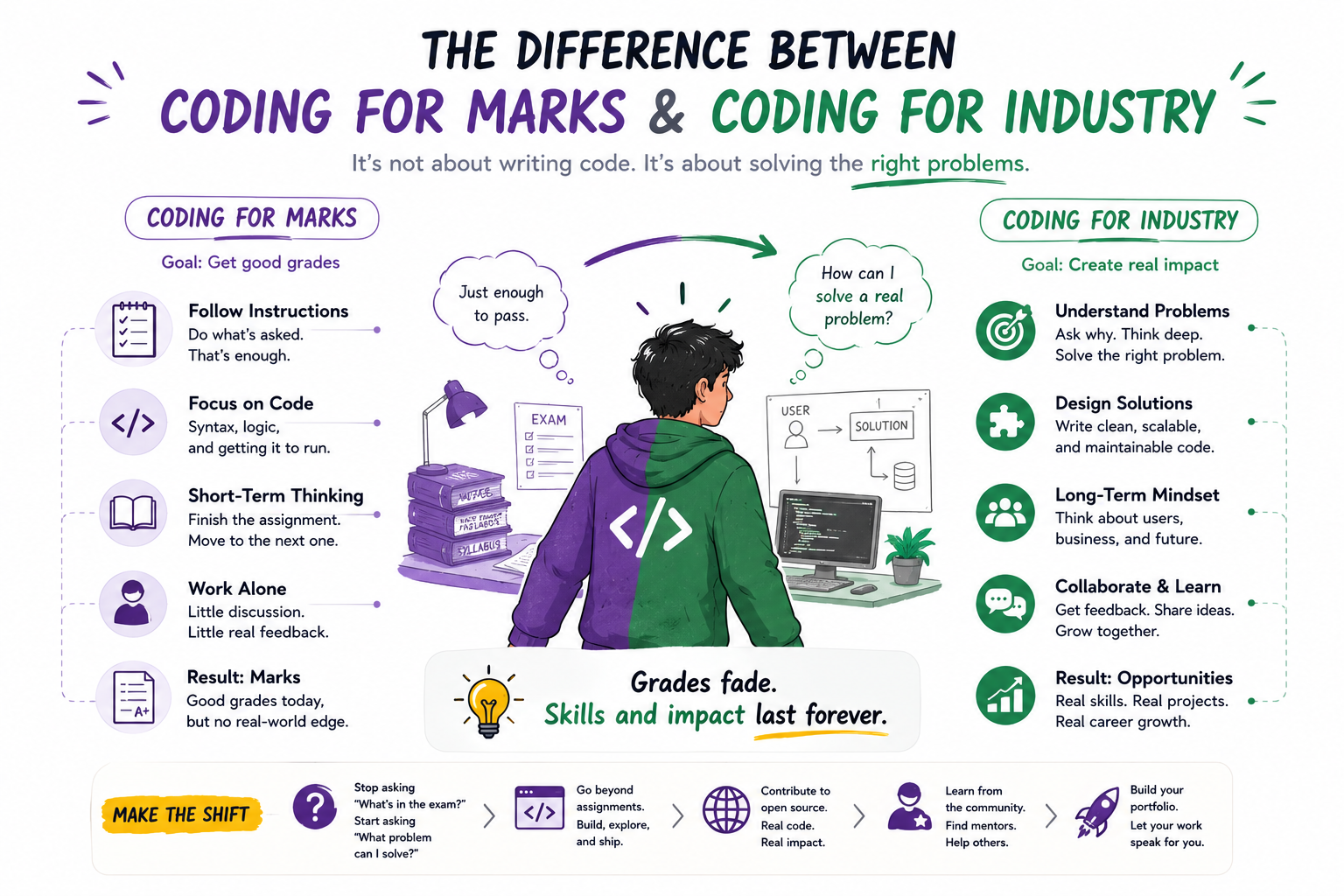
A coder primarily focuses on writing code.
A software developer focuses on:
- Solving Problems
- Building Products
- Understanding Users
- Designing Systems
- Delivering Business Value
A coder asks:
“How do I write this code?”
A developer asks:
“Why are we building this feature and what problem does it solve?”
This mindset shift creates a significant difference in career growth.
Hidden Skill #1: Problem-Solving Ability
The most valuable skill in software engineering is problem solving.
Real-world software development involves:
- Debugging Issues
- Optimizing Performance
- Designing Features
- Handling Edge Cases
Developers constantly analyze challenges and create solutions.
This is why companies emphasize:
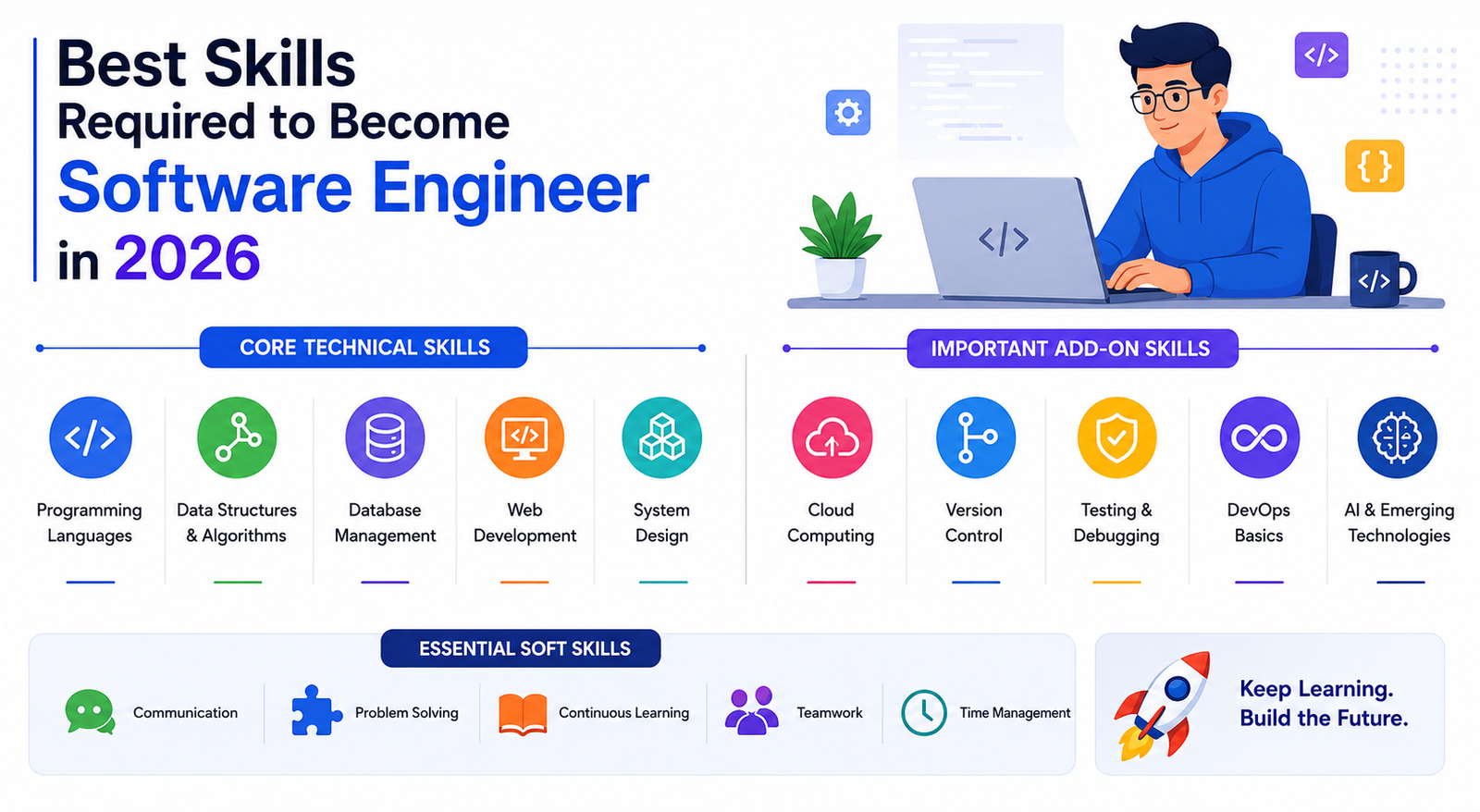
- Data Structures
- Algorithms
- System Design
- Analytical Thinking
Programming languages change, but problem-solving skills remain valuable throughout a career.
Hidden Skill #2: System Thinking
Many beginners focus on individual functions and files.
Experienced developers think in systems.
They understand:
- Application Architecture
- Databases
- APIs
- Security
- Scalability
- Infrastructure
When building software, developers must understand how different components interact.
System thinking separates software engineers from code writers.
Hidden Skill #3: Communication Skills
Software development is a team activity.
Developers regularly communicate with:
- Product Managers
- Designers
- Clients
- Testers
- Team Members
Strong communication helps:
- Clarify Requirements
- Avoid Misunderstandings
- Improve Collaboration
- Deliver Better Products
Many technically strong developers struggle because of weak communication skills.
Hidden Skill #4: Product Thinking
Great developers understand users.
They ask:
- Who will use this feature?
- What problem are we solving?
- How can we improve the user experience?
Product thinking helps developers build solutions that create value.
Companies increasingly seek engineers who understand both technology and business objectives.
Hidden Skill #5: Learning How to Learn
Technology evolves constantly.
New:
- Frameworks
- Libraries
- Languages
- Tools
appear every year.
Successful developers focus on learning principles rather than memorizing technologies.
They can quickly adapt to:
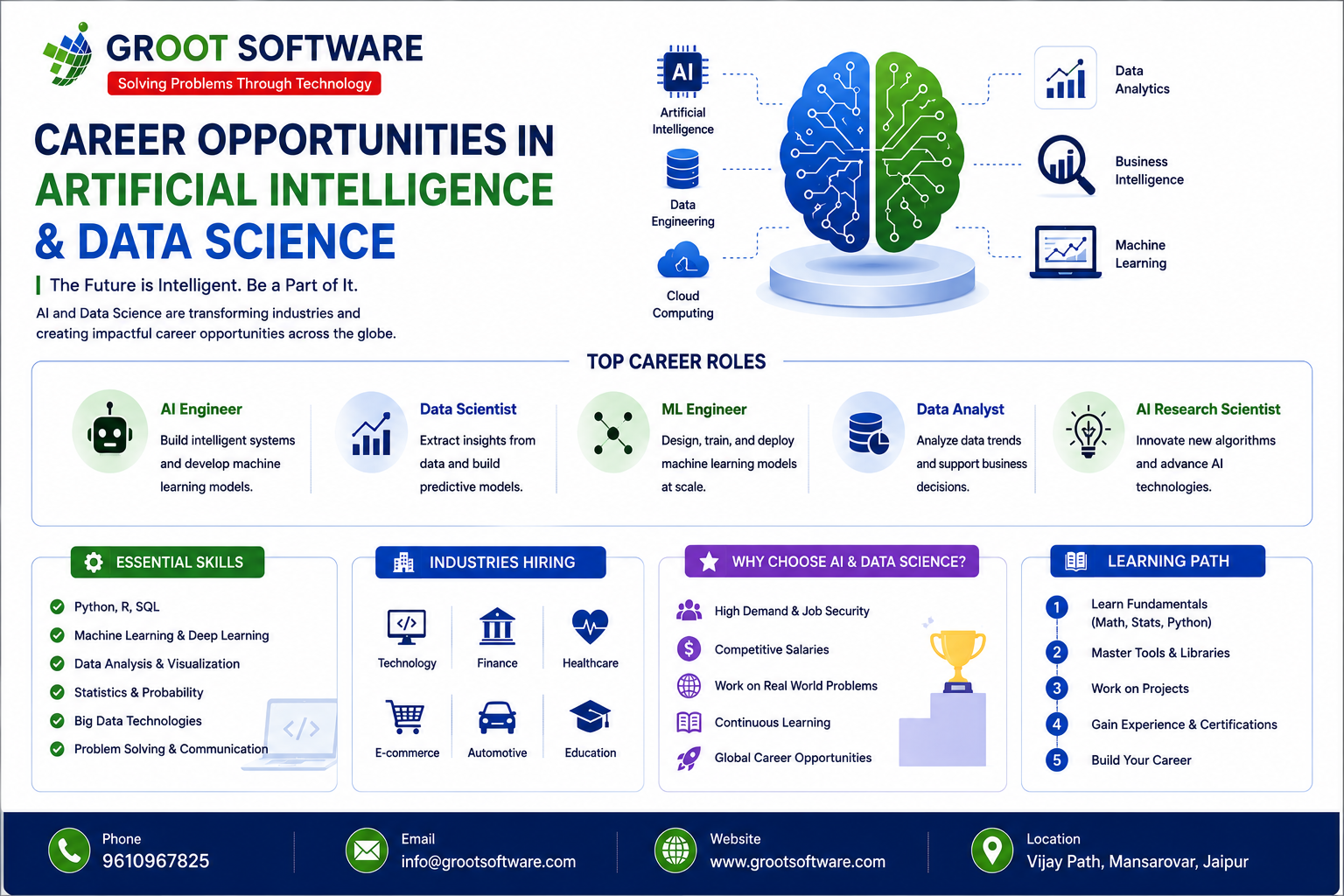
- AI Tools
- Cloud Platforms
- New Programming Languages
- Emerging Frameworks
Continuous learning is one of the most important career skills.
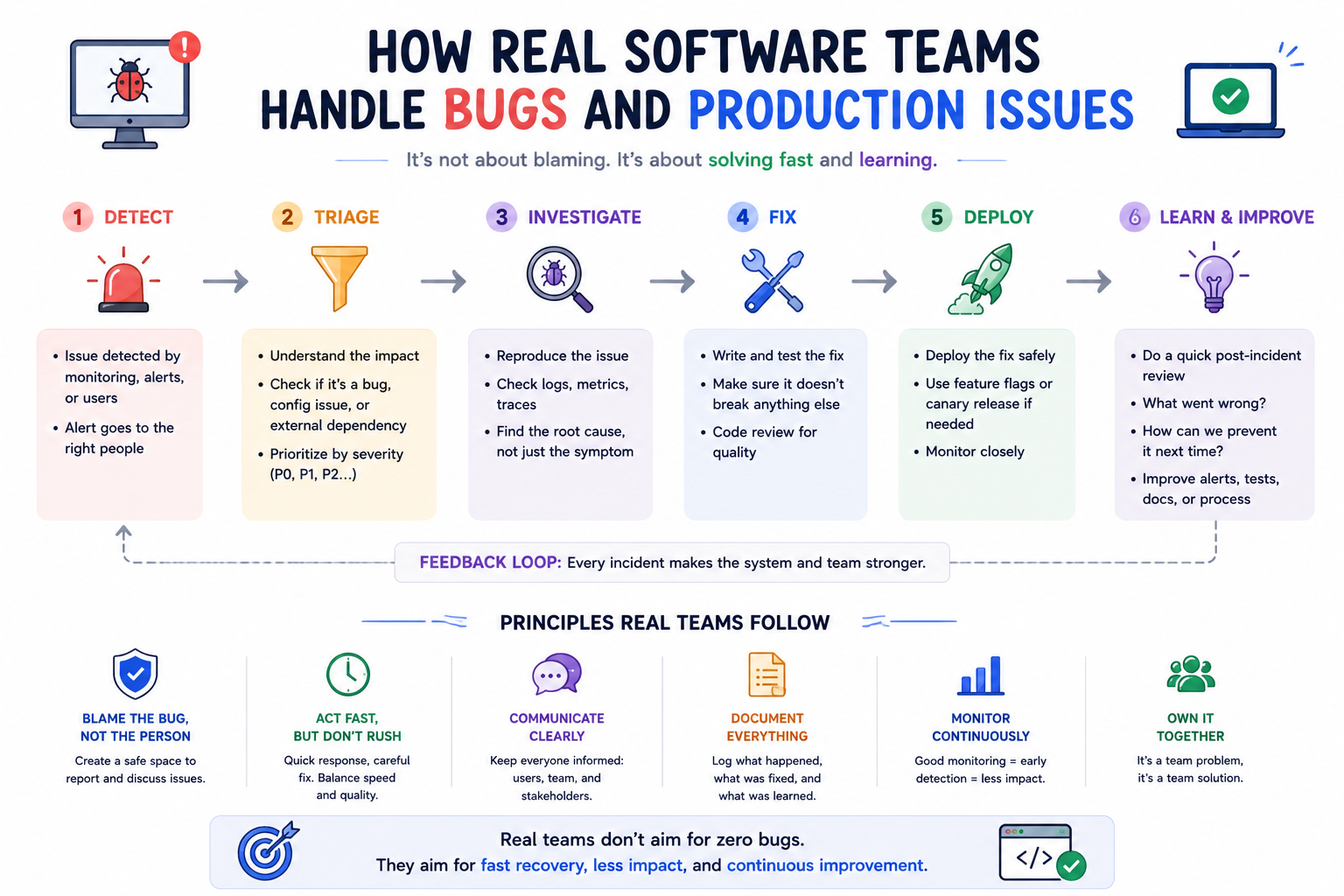
Hidden Skill #6: Debugging and Troubleshooting
Writing code is only part of software development.
Professional developers spend significant time:
- Identifying Bugs
- Investigating Errors
- Analyzing Logs
- Fixing Production Issues
Strong debugging skills save companies time and money.
Many developers become highly valuable because they can solve difficult technical problems efficiently.
Hidden Skill #7: Understanding Business Requirements
Software exists to solve business problems.
Developers who understand business goals make better technical decisions.
Examples:
E-Commerce
Focus on:
- Sales
- Customer Experience
- Performance
Banking
Focus on:
- Security
- Reliability
- Compliance
Healthcare
Focus on:
- Accuracy
- Privacy
- Scalability
Technical decisions should align with business objectives.
Hidden Skill #8: Software Design Skills
Before writing code, developers should design solutions.
Important concepts include:
- Modularity
- Reusability
- Maintainability
- Scalability
Good design reduces technical debt and simplifies future development.
Hidden Skill #9: Collaboration and Teamwork
Modern software products are built by teams.
Developers collaborate using:
- Git
- GitHub
- Jira
- Agile Workflows
Teamwork involves:
- Code Reviews
- Pull Requests
- Sprint Planning
- Knowledge Sharing
Successful engineers contribute positively to team environments.
Hidden Skill #10: Time Management
Software projects involve deadlines and priorities.
Developers must learn to:
- Estimate Tasks
- Manage Workloads
- Prioritize Features
- Meet Deadlines
Time management improves productivity and reliability.
Hidden Skill #11: Adaptability
Technology changes rapidly.
Developers often need to:
- Learn New Tools
- Switch Frameworks
- Explore New Domains
Adaptability helps engineers remain relevant throughout their careers.
Hidden Skill #12: Documentation Skills
Professional developers write documentation for:
- APIs
- Systems
- Processes
- Projects
Documentation helps teams:
- Collaborate Better
- Onboard New Members
- Maintain Software
Good documentation saves countless hours of future effort.
Hidden Skill #13: Understanding Scalability
A project may work for:
- 10 Users
But fail when serving:
- 10,000 Users
Developers must understand:
- Performance Optimization
- Caching
- Database Scaling
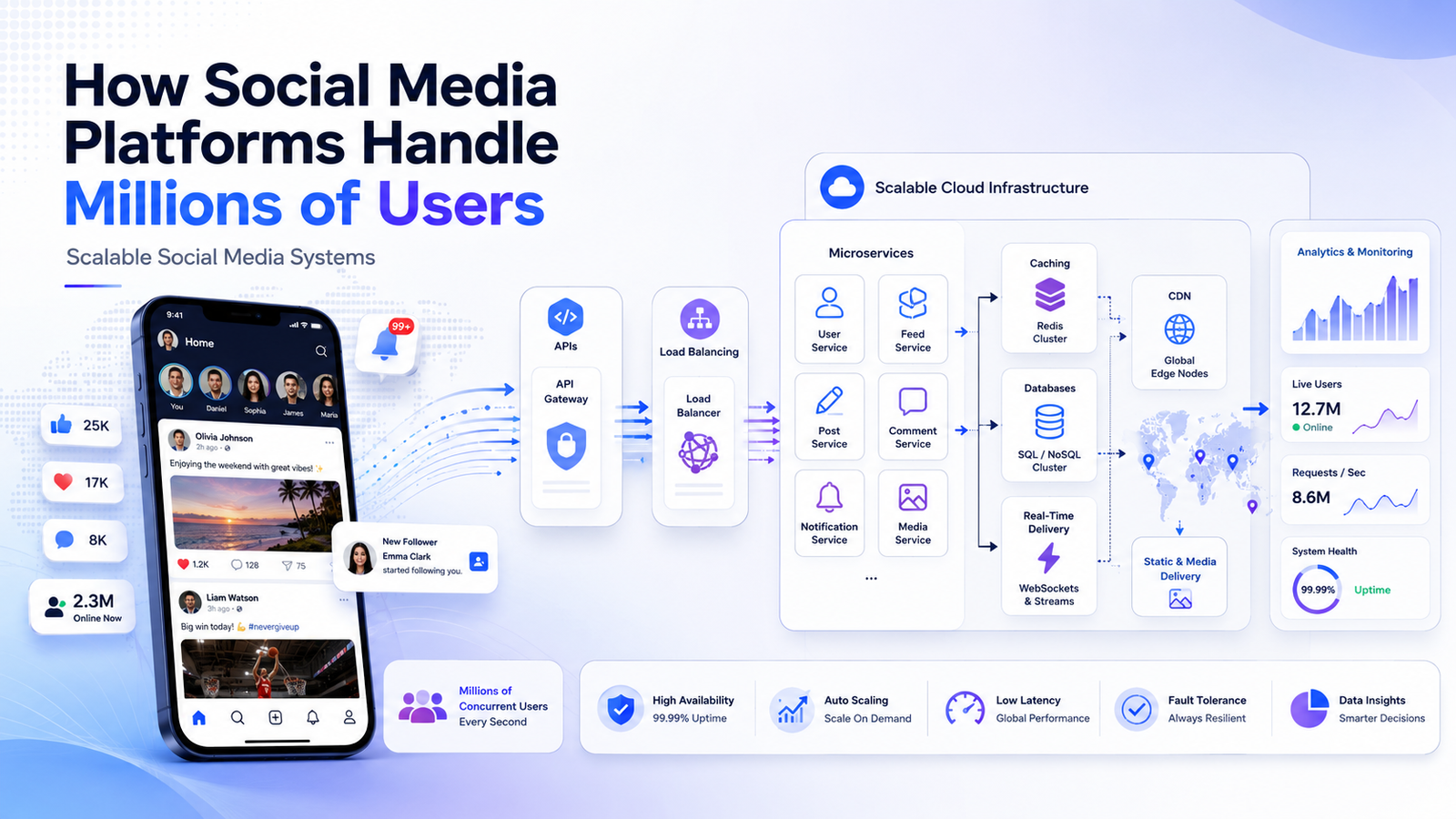
- Load Balancing
Scalability becomes increasingly important as products grow.
Hidden Skill #14: Ownership Mindset
Coders often focus only on assigned tasks.
Developers take ownership.
They ask:
- Can this be improved?
- Are there hidden risks?
- How will users experience this feature?
Ownership creates leadership opportunities.
Hidden Skill #15: Real-World Product Development Experience
Nothing replaces hands-on experience.
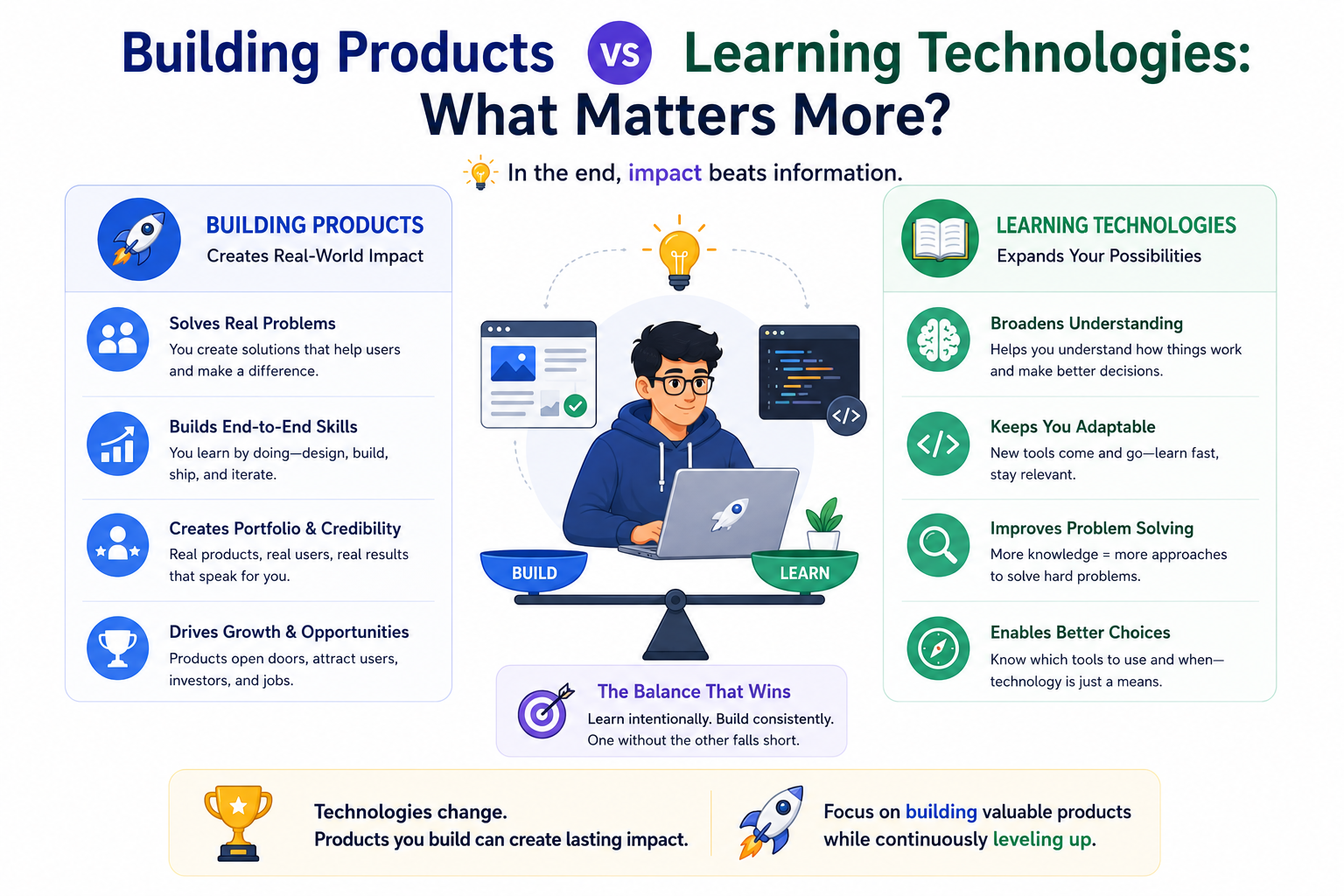
Building products teaches:
- Deployment
- User Feedback
- Maintenance
- Performance Optimization
Students who build products develop skills that tutorials cannot teach.
Why Recruiters Prefer Developers Over Coders
Recruiters look for professionals who can:
✅ Solve Problems
✅ Work in Teams
✅ Build Products
✅ Learn Quickly
✅ Communicate Clearly
✅ Adapt to Change
These qualities often matter more than knowledge of a specific programming language.
How Students Can Develop These Skills
Build Real Projects
Work on practical applications.
Contribute to Open Source
Collaborate with other developers.
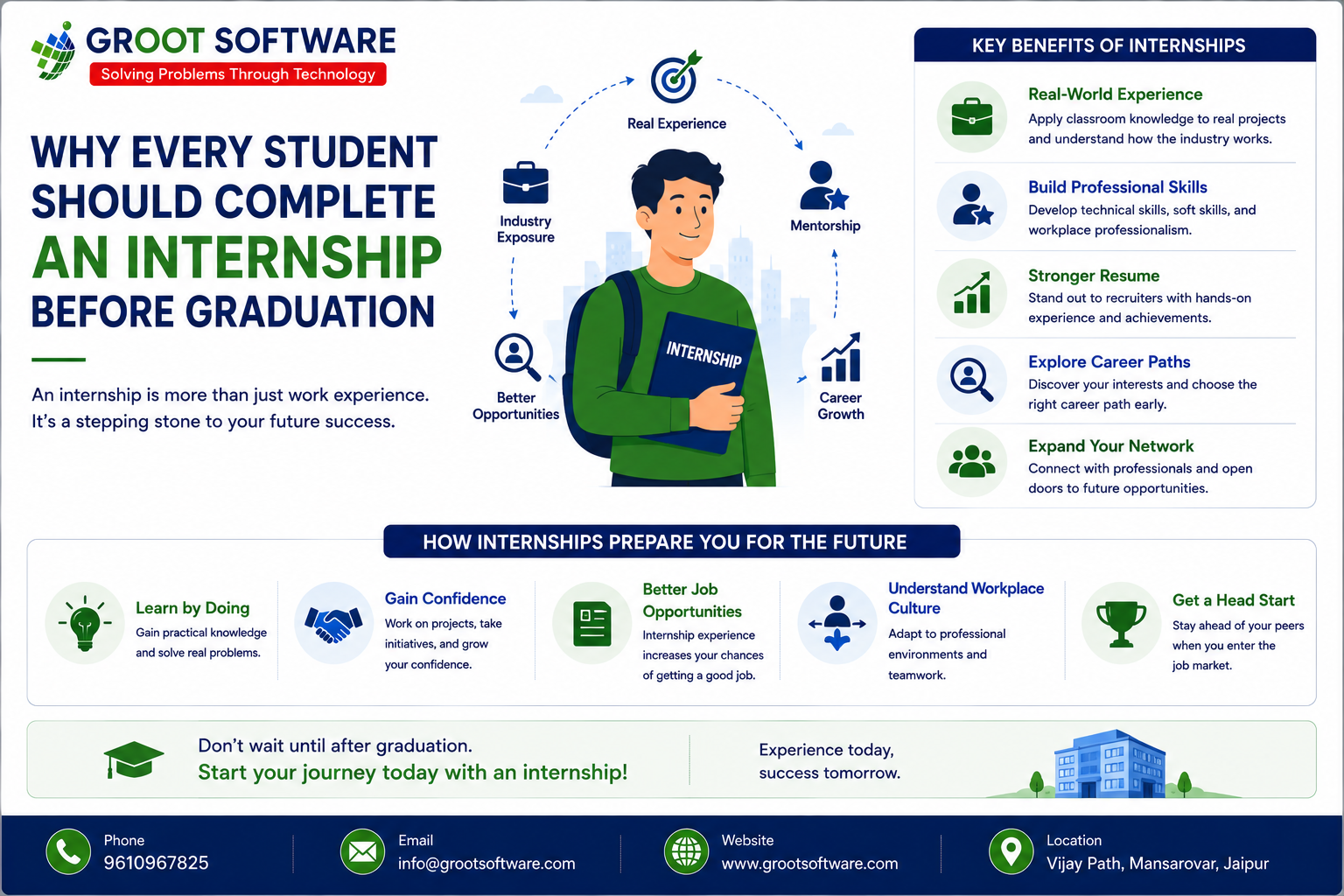
Complete Internships
Gain industry experience.
Practice DSA
Improve analytical thinking.
Learn System Design
Understand large-scale software systems.
Improve Communication
Participate in discussions and presentations.
Use Git and GitHub
Learn professional development workflows.
Future of Software Engineering
As AI tools automate routine coding tasks, the most valuable engineers will be those who can:
- Solve Complex Problems
- Understand Systems
- Think Strategically
- Build Products
- Lead Teams
The future belongs to developers who combine technical expertise with engineering and business understanding.
Frequently Asked Questions
Is coding enough to become a software engineer?
No. Software engineering requires problem solving, system design, communication, and product thinking in addition to coding.
Why do some developers grow faster than others?
They develop skills beyond programming, including leadership, collaboration, and business understanding.
Are soft skills important for software engineers?
Absolutely. Communication and teamwork significantly impact career growth.
Can students learn these skills before graduation?
Yes. Projects, internships, open-source contributions, and team collaboration provide excellent opportunities.
Conclusion
The difference between a coder and a software developer is not the programming language they use but the way they think and solve problems. Coding is only one component of software engineering. The hidden skills that truly separate developers from coders include problem solving, communication, system thinking, product understanding, teamwork, adaptability, and ownership.
Students who focus on developing these skills alongside technical knowledge become stronger software engineers, perform better in interviews, contribute more effectively to teams, and create greater long-term career opportunities.
🌐 Website: https://grootacademy.com
📺 YouTube: https://www.youtube.com/@YourGrootAcademy
📘 Facebook: http://facebook.com/GrootAcademy
📸 Instagram: https://www.instagram.com/groot.academy/
🐦 X: https://x.com/GrootAcademy
💼 LinkedIn: https://www.linkedin.com/company/grootacademy
📌 Pinterest: https://in.pinterest.com/mygrootacademy/