


Why Every Software Developer Must Learn Data Structures and Algorithms
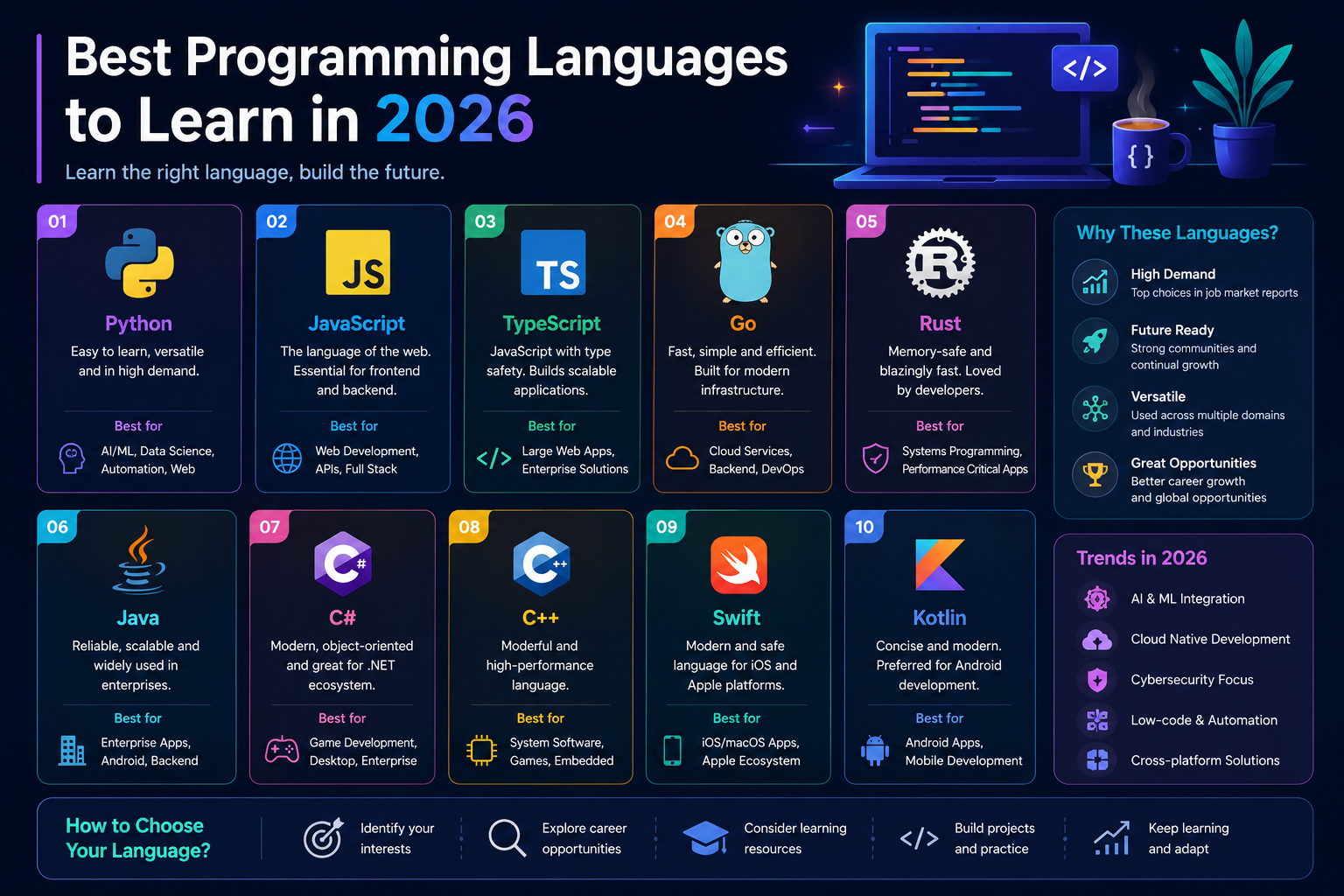
Many students start their programming journey by learning languages such as Python, Java, JavaScript, C++, or C#. While learning a programming language is important, understanding Data Structures and Algorithms (DSA) is what transforms a programmer into a software engineer.
Data Structures are the foundation of modern software development. Whether you are building a website, mobile application, banking system, social media platform, cloud application, or artificial intelligence solution, data structures play a critical role in organizing, storing, and processing data efficiently.
Top technology companies such as Google, Microsoft, Amazon, Meta, Netflix, and many others heavily emphasize DSA because efficient software depends on choosing the right data structure for the right problem.
What Are Data Structures?
A Data Structure is a method of organizing and storing data so that it can be accessed and modified efficiently.
Think of data structures as containers designed for specific purposes.
Different types of data require different storage and retrieval methods.
Common Data Structures include:
- Arrays
- Linked Lists
- Stacks
- Queues
- Hash Tables
- Trees
- Graphs
- Heaps
Each data structure solves specific types of problems.
Why Data Structures Matter
Modern software applications handle massive amounts of data.
Examples:
- E-Commerce Platforms
- Banking Systems
- Social Media Applications
- Search Engines
- Cloud Platforms
- AI Systems
Without efficient data structures, applications become:
- Slow
- Resource Intensive
- Difficult to Scale
Data structures help developers build fast and efficient software.
How Data Structures Improve Software Performance
Faster Data Retrieval
Applications frequently search for information.
Examples:
- Product Search
- User Login
- Database Queries
Choosing the correct data structure improves response times significantly.
Efficient Memory Usage
Data structures help optimize memory consumption.
Benefits include:
- Better Performance
- Reduced Resource Usage
- Improved Scalability
Faster Processing
Efficient data structures reduce computational complexity and improve application speed.
Common Data Structures Used in Software Development
Arrays
Arrays store elements in contiguous memory locations.
Used in:
- Lists
- Tables
- Collections
Advantages:
- Fast Access
- Simple Implementation
Linked Lists
Linked Lists store data using nodes connected through references.
Advantages:
- Dynamic Size
- Efficient Insertions
Used in:
- Memory Management
- Dynamic Applications
Stacks
Stacks follow the Last In First Out (LIFO) principle.
Applications:
- Undo Functionality
- Browser History
- Expression Evaluation
Queues
Queues follow the First In First Out (FIFO) principle.
Applications:
- Task Scheduling
- Print Management
- Request Processing
Hash Tables
Hash Tables provide fast data lookup.
Applications:
- Authentication Systems
- Caching
- Database Indexing
Hash tables are widely used in modern applications.
Trees
Trees organize hierarchical information.
Applications:
- File Systems
- Databases
- Search Engines
Popular tree types include:
- Binary Trees
- Binary Search Trees
- AVL Trees
Graphs
Graphs model relationships between entities.
Applications:
- Social Networks
- GPS Navigation
- Recommendation Systems
Graphs help solve complex connectivity problems.
Real-World Examples of Data Structures
Google Search
Uses advanced data structures for indexing and retrieving billions of web pages.
Facebook and Instagram
Use graphs to represent relationships between users.
Amazon
Uses data structures for:
- Product Search
- Recommendations
- Inventory Management
Banking Applications
Use data structures for:
- Transaction Processing
- Account Management
- Fraud Detection
Data Structures and Algorithms Work Together
Data Structures store data.
Algorithms process data.
Together they help solve problems efficiently.
For example:
- Arrays + Sorting Algorithms
- Trees + Search Algorithms
- Graphs + Pathfinding Algorithms
Strong software development requires understanding both concepts.
Why Recruiters Ask DSA Questions
Most technology companies evaluate DSA during interviews.
Reasons include:
Problem-Solving Assessment
DSA questions reveal analytical thinking abilities.
Coding Efficiency
Recruiters evaluate how efficiently candidates solve problems.
Software Engineering Foundations
Strong DSA knowledge indicates a solid technical foundation.
Companies want developers who can build scalable systems.
Importance of DSA for Technical Interviews
Popular interview topics include:
Arrays
- Searching
- Sorting
- Two-Pointer Problems
Linked Lists
- Reversal
- Cycle Detection
Stacks and Queues
- Expression Evaluation
- Scheduling Problems
Trees
- Traversals
- Binary Search Trees
Graphs
- BFS
- DFS
- Shortest Path Problems
Mastering these topics improves interview performance significantly.
How DSA Improves Problem-Solving Skills
Students learn how to:
- Analyze Problems
- Optimize Solutions
- Improve Performance
- Design Efficient Systems
Problem-solving is one of the most valuable skills in software engineering.
DSA in Different Technology Domains
Web Development
Used for:
- Caching
- Search Features
- Data Management
Mobile App Development
Used for:
- Navigation
- User Data Handling
Artificial Intelligence
Used for:
- Search Algorithms
- Optimization Techniques
Data Science
Used for:
- Data Processing
- Efficient Computation
Cloud Computing
Used for:
- Resource Allocation
- Distributed Systems
Common Mistakes Students Make
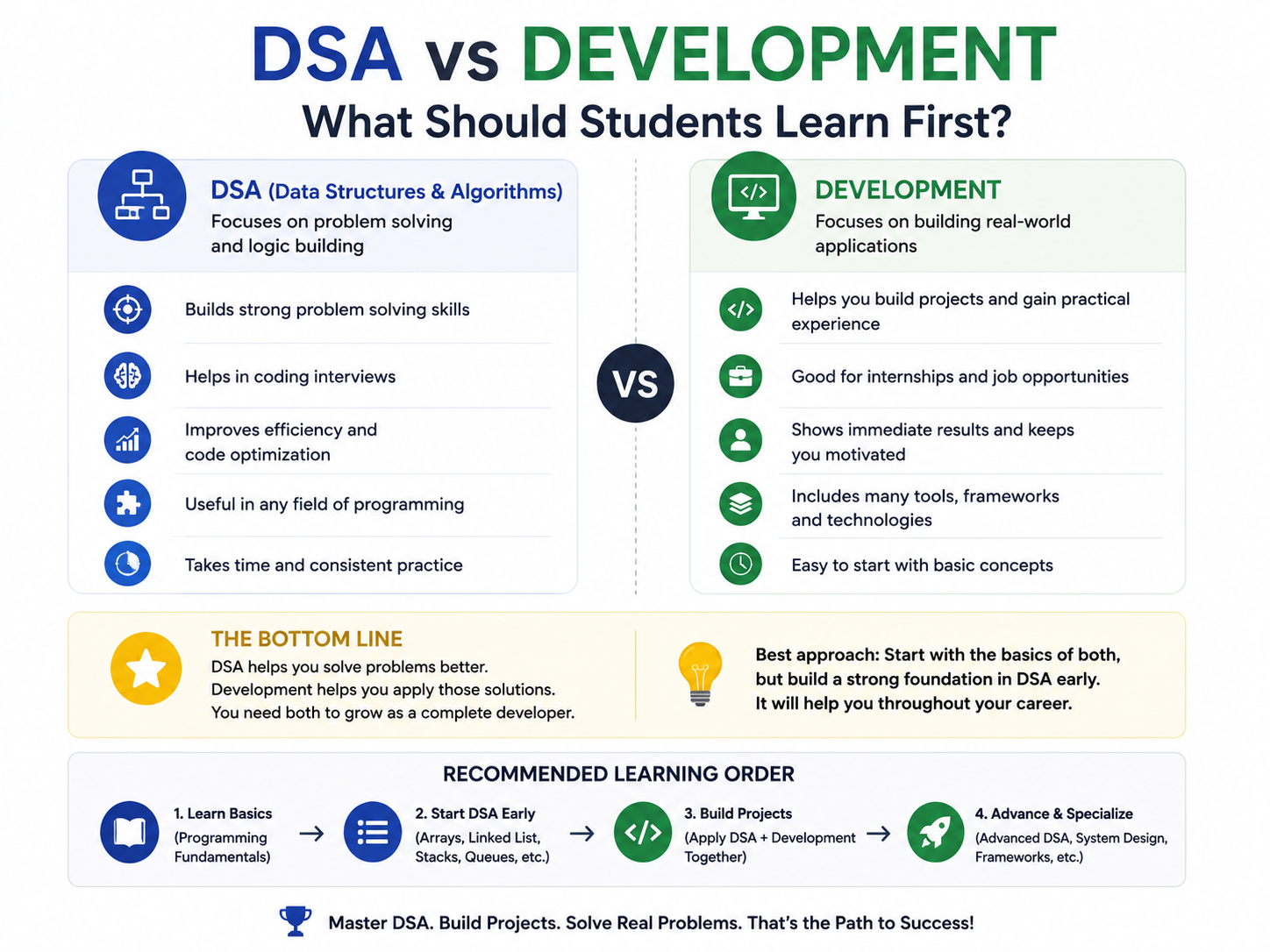
Ignoring DSA
Many students focus only on programming languages.
Memorizing Solutions
Understanding concepts is more important than memorization.
Avoiding Practice
Regular problem solving is essential.
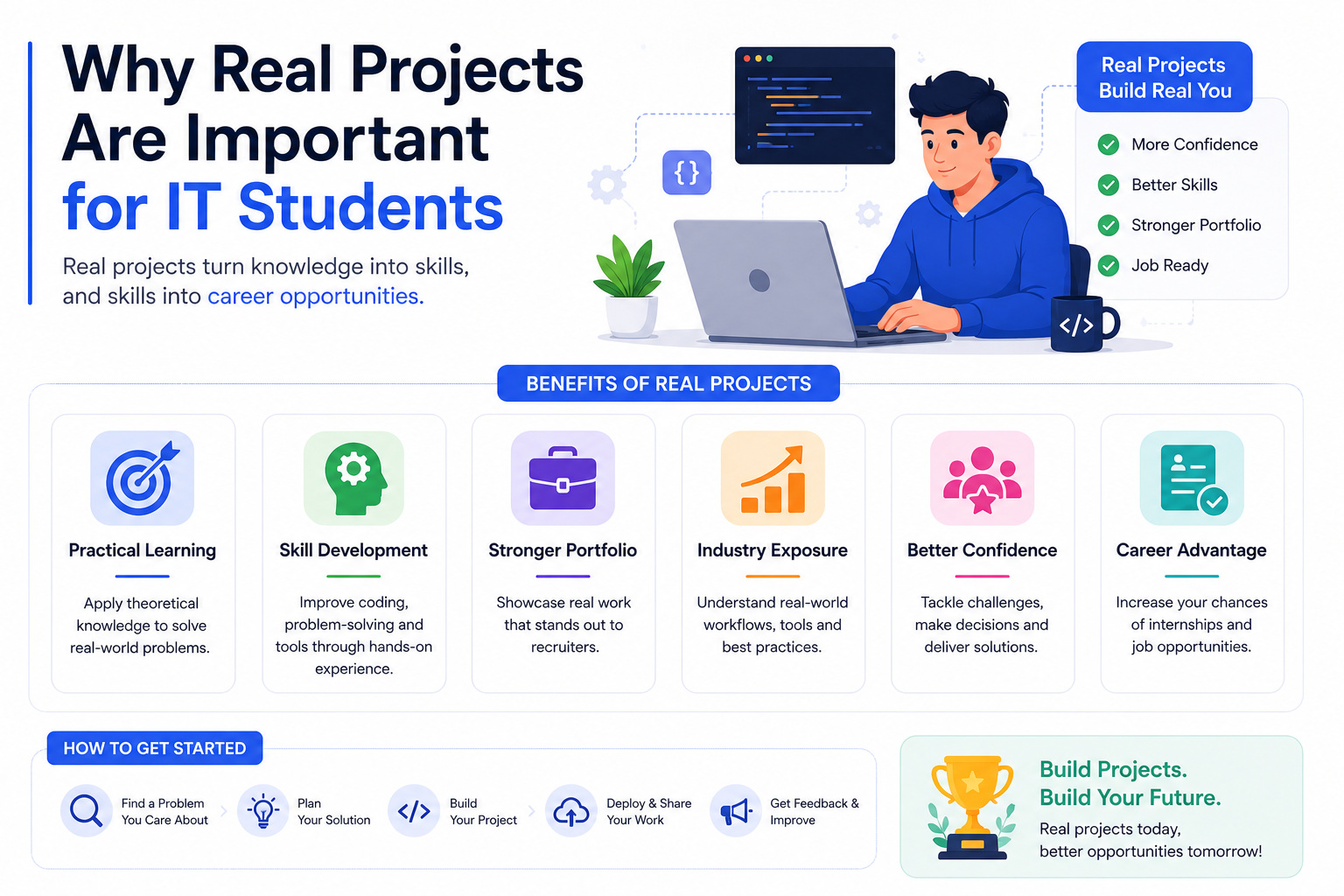
Learning Without Projects
Projects help apply DSA concepts to real-world scenarios.
Best Way to Learn Data Structures
Step 1
Learn Programming Fundamentals.
Step 2
Master Arrays and Strings.
Step 3
Learn Linked Lists, Stacks, and Queues.
Step 4
Study Trees and Graphs.
Step 5
Practice Algorithms.
Step 6
Solve Coding Challenges Regularly.
Step 7
Apply DSA Concepts in Projects.
Career Benefits of Strong DSA Skills
Developers with strong DSA knowledge often:
- Perform Better in Interviews
- Solve Problems Faster
- Build More Efficient Applications
- Advance More Quickly in Software Careers
These skills remain valuable throughout a developer’s professional journey.
Frequently Asked Questions
Is DSA necessary for software development?
Yes. DSA helps build efficient and scalable applications.
Can I get a job without learning DSA?
Some roles may not require advanced DSA, but strong DSA knowledge significantly improves opportunities.
Why do big companies focus on DSA?
DSA helps evaluate problem-solving and software engineering fundamentals.
Which programming language is best for learning DSA?
Java, Python, and C++ are all excellent choices.
Conclusion
Data Structures are one of the most important foundations of software development. They help developers organize data efficiently, improve application performance, solve complex problems, and build scalable systems.
Students who invest time in learning Data Structures and Algorithms gain stronger problem-solving abilities, perform better in technical interviews, and become more effective software engineers. Regardless of the programming language you choose, mastering DSA will continue to provide long-term career advantages.
🌐 Website: https://grootacademy.com
📺 YouTube: https://www.youtube.com/@YourGrootAcademy
📘 Facebook: http://facebook.com/GrootAcademy
📸 Instagram: https://www.instagram.com/groot.academy/
🐦 X: https://x.com/GrootAcademy
💼 LinkedIn: https://www.linkedin.com/company/grootacademy
📌 Pinterest: https://in.pinterest.com/mygrootacademy/