


Learn DSA from Scratch: Ultimate Data Structures and Algorithms Guide 2025
If you dream of becoming a top programmer or landing a job at Google, Amazon, or Microsoft — mastering Data Structures and Algorithms (DSA) is the key.
In this ultimate guide, we’ll show you how to learn DSA from scratch, build a strong problem-solving mindset, and prepare for coding interviews with the best resources of 2025.
What Is DSA (Data Structures and Algorithms)?
Data Structures and Algorithms (DSA) are the foundation of computer programming and software engineering.
- Data Structures help you organize and store data efficiently.
- Algorithms are step-by-step methods that manipulate this data to solve problems.
Together, DSA improves time complexity, memory usage, and code efficiency — essential skills for every software developer.
Example:
When you search something on Google, DSA is what helps fetch billions of results in milliseconds.
Why Learn DSA in 2025?
In 2025, knowing DSA is not optional — it’s mandatory for anyone serious about coding.
1. Crack Coding Interviews
Companies like Google, Amazon, Microsoft, Meta, and TCS test your DSA knowledge first. 90% of technical interview questions are DSA-based.
2. Build Problem-Solving Skills
Understanding DSA makes you a logical thinker. You’ll learn to solve real-world problems faster and smarter.
3. Write Efficient Code
With DSA, you can optimize code performance — crucial for scalable apps, AI systems, and backend development.
4. Boost Your Career
Developers with DSA mastery earn 30–50% higher salaries and get faster promotions.
5. Foundation for Advanced Fields
AI, Machine Learning, and Competitive Programming all rely on strong DSA knowledge.
Core Topics of DSA You Must Learn
1. Data Structures
Learn these first, as they form the base of DSA:
- Arrays – Store elements in sequence for easy access.
- Linked Lists – Dynamic memory usage with flexible data handling.
- Stacks & Queues – Ideal for recursion, undo operations, and scheduling.
- Trees – Hierarchical data organization for searching/sorting.
- Graphs – Represent relationships and networks.
- Hash Tables – Enable lightning-fast lookups.
🔹 2. Algorithms
Once you’re comfortable with data structures, move on to algorithmic logic:
- Searching Algorithms: Linear Search, Binary Search
- Sorting Algorithms: MergeSort, QuickSort, Insertion Sort
- Recursion & Backtracking: Solving puzzles like Sudoku
- Dynamic Programming (DP): Optimizing overlapping subproblems
- Greedy Algorithms: Local best choice for global solution
- Graph Algorithms: BFS, DFS, Dijkstra’s, Kruskal’s
Step-by-Step Roadmap to Learn DSA
Step 1️⃣: Pick a Programming Language
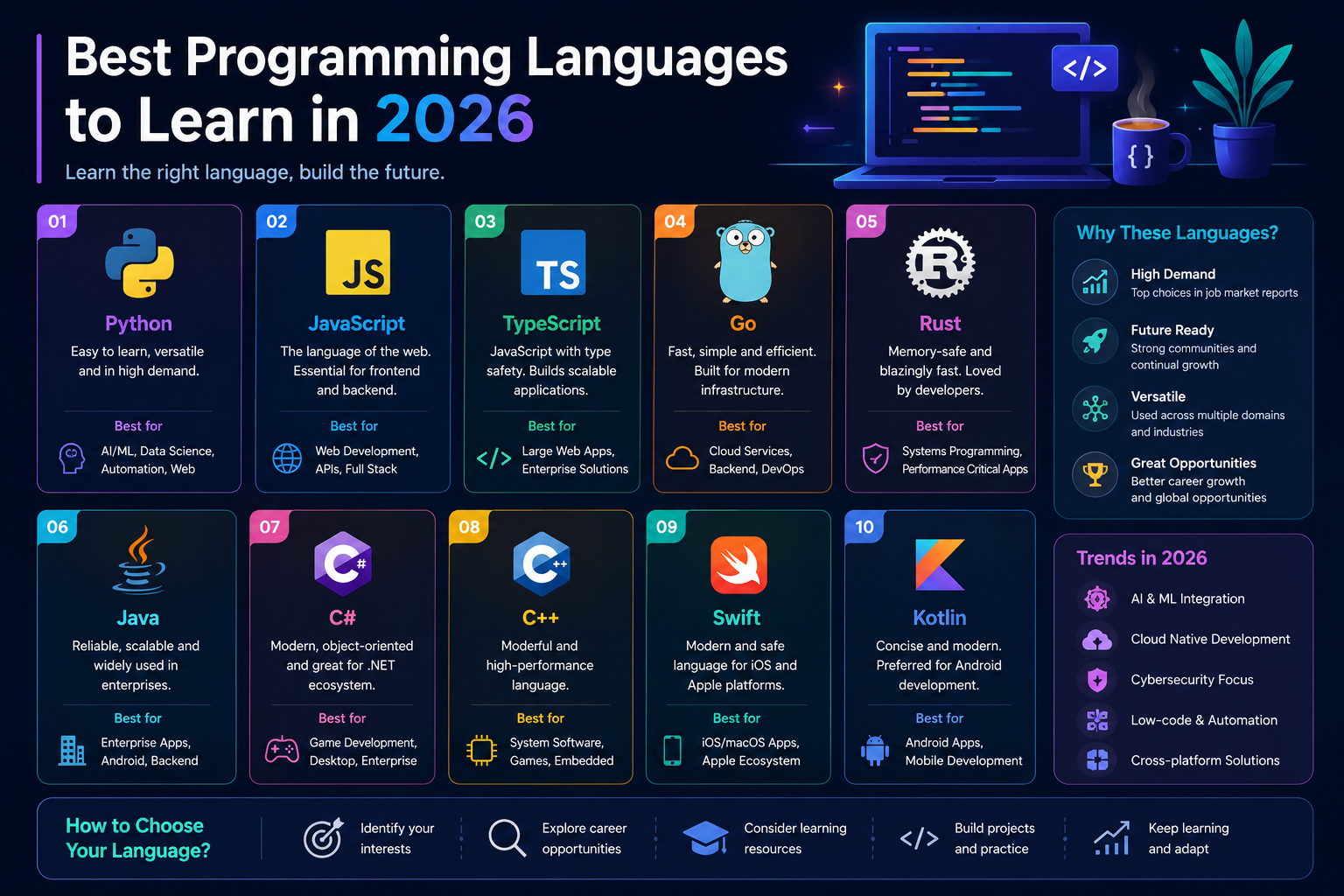
Start with one — Python, C++, or Java.
- Python for simplicity
- C++ for performance
- Java for structure
Keyword Target: data structures in python, learn DSA in C++
Step 2️⃣: Learn Core Data Structures
Understand arrays, stacks, and linked lists deeply.
Don’t just read theory — implement them manually.
Platforms like GeeksforGeeks and LeetCode provide beginner-friendly problems.
Step 3️⃣: Understand Time & Space Complexity
Learn Big O Notation — it helps you measure efficiency.
Example: O(n) vs. O(n²) tells how fast your code performs as data grows.
Keyword Target: DSA time complexity, Big O tutorial
Step 4️⃣: Practice DSA Problems Daily
Consistency is key. Solve 1–2 problems daily on:
- LeetCode
- HackerRank
- Codeforces
- InterviewBit
Start with easy, move to medium, then hard problems.
Step 5️⃣: Study Algorithms & Patterns
Recognize problem patterns — like sliding window, binary search, and divide & conquer.
This helps you solve new problems faster in interviews.
Step 6️⃣: Build Real Projects Using DSA
To strengthen concepts, apply DSA in real-world scenarios:
- Autocomplete Search System
- Path Finder (using Graphs)
- Cache Simulation
- Stock Market Analyzer
Keyword Target: DSA projects, real-world applications of DSA
Step 7️⃣: Prepare for Coding Interviews
Revise frequently asked interview questions from FAANG companies.
Focus on:
- Arrays
- Strings
- Trees
- Dynamic Programming