


Introduction
Want to start your coding journey but don’t know which language to learn first?
If yes, then Python is your best choice.
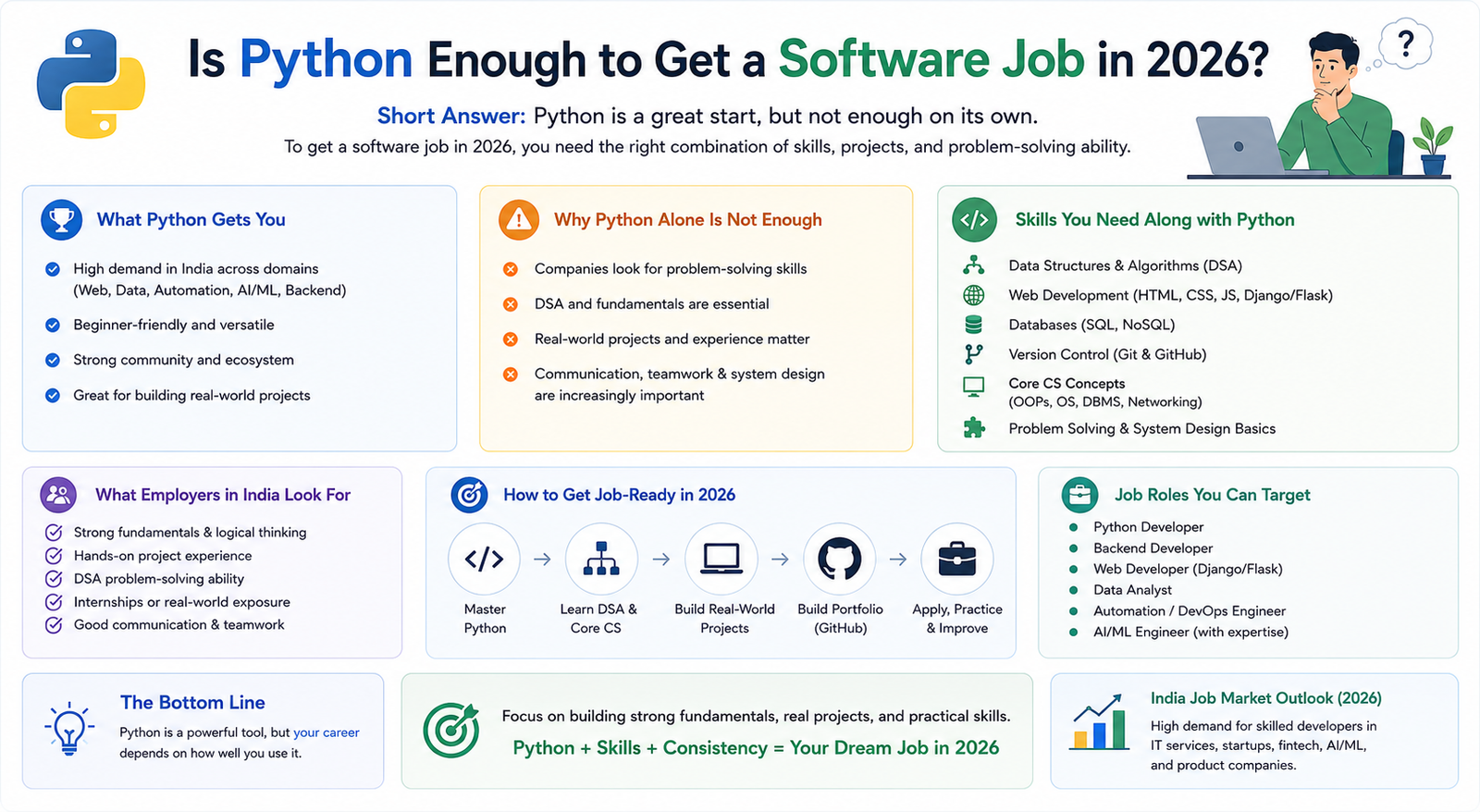
Python is one of the most powerful and beginner-friendly programming languages in the world. Whether you want to become a web developer, data analyst, or AI engineer, learning Python is the first step to building your dream career in tech.
In this blog, we’ll explore everything you need to know to learn Python from scratch — what Python is, why it’s so popular, how to start learning, and the best Python course roadmap for beginners in 2025.
💡 What Is Python?
Python is a simple yet powerful programming language created by Guido van Rossum in 1991. It’s known for its easy-to-read syntax, strong community support, and wide range of applications.
Python is used in various domains like:
- Web Development
- Data Science & Analytics
- Artificial Intelligence (AI) & Machine Learning (ML)
- Cybersecurity
- Automation & Scripting
- Game Development
This versatility makes Python one of the most in-demand programming languages in the world today.
🚀 Why Learn Python in 2025?
If you’re planning to start a career in programming, Python is a must-learn skill. Here’s why:
1. High Demand in Tech Jobs
Python is used by leading companies like Google, Netflix, Instagram, YouTube, and NASA.
The demand for Python developers continues to rise across industries like fintech, healthcare, and AI.
2. High Salary Packages
Python developers are among the highest-paid programmers globally.
- In India: ₹6–25 LPA
- In the USA: $85,000–$150,000 per year
3. Beginner-Friendly Syntax
Python’s syntax is clean and readable — perfect for people learning coding for the first time.
Example:
print("Hello, World!")
4. Wide Career Opportunities
After completing a Python certification course, you can work as:
- Python Developer
- Data Analyst
- Machine Learning Engineer
- Web Developer
- Automation Engineer
🛠️ How to Start Learning Python from Scratch
If you want to learn Python effectively, follow this structured Python learning roadmap step by step:
Step 1: Install Python
- Visit python.org/downloads
- Download and install the latest version (Python 3.x)
- Verify installation:
python --version
Or use an online Python compiler like Replit or Google Colab to practice instantly.
Step 2: Learn Python Basics
Before moving to advanced topics, master the Python language basics:
- Variables and Data Types
- Conditional Statements
- Loops (
for,while) - Functions
- Lists, Tuples, Sets, and Dictionaries
Example:
name = input("Enter your name: ")
print("Welcome to Python, " + name)
🔑 Tip: Practice small coding exercises daily to strengthen your logic.
Step 3: Understand Data Structures and Functions
Data structures are the building blocks of programming. In Python, you’ll use:
- Lists: Ordered collections
- Tuples: Immutable collections
- Sets: Unique items
- Dictionaries: Key-value pairs
Example:
student = {"name": "Aayushi", "course": "Python Full Course"}
print(student["name"])
Step 4: Learn Object-Oriented Programming (OOP)
OOP helps you organize your code efficiently.
class Student:
    def __init__(self, name, course):
        self.name = name
        self.course = course

    def greet(self):
        print(f"Hello {self.name}, welcome to the {self.course} course!")

s1 = Student("Aayushi", "Python Programming")
s1.greet()
Mastering OOP is essential for jobs in software development and web applications.
Step 5: Learn Popular Python Libraries
Libraries make Python powerful and flexible. Here are must-learn libraries for 2025:
📊 Data Science Libraries
- NumPy: For numerical operations
- Pandas: For data analysis
- Matplotlib / Seaborn: For data visualization
🤖 AI & Machine Learning Libraries
- TensorFlow and PyTorch for deep learning
- Scikit-learn for ML models
🌐 Web Development
- Flask: Lightweight web framework
- Django: Full-stack web framework
⚙️ Automation
- Selenium: Browser automation
- BeautifulSoup: Web scraping
Step 6: Work on Python Projects
Building real-world projects is the best way to learn Python.
Here are some Python project ideas for beginners:
🪜 Beginner-Level Projects
- Calculator App
- Number Guessing Game
- To-Do List
💡 Intermediate-Level Projects
- Weather Forecast App (using API)
- Expense Tracker
- Web Scraper
🚀 Advanced-Level Projects
- Face Recognition Attendance System
- Chatbot using Python and AI
- Machine Learning Prediction App
✅ Working on projects helps you gain confidence and build a Python portfolio for job interviews.
🎓 Python Course Roadmap (3–6 Months Plan)
| Month | Topics | Goal |
|---|---|---|
| 1 | Python Basics, Loops, Data Types | Understand syntax and logic |
| 2 | Functions, OOP Concepts | Write clean, structured code |
| 3 | Libraries: NumPy, Pandas, Matplotlib | Handle real-world data |
| 4 | Flask / Django | Build web apps |
| 5 | Machine Learning Fundamentals | Understand AI basics |
| 6 | Final Project + Resume Portfolio | Become job-ready |
🌍 Best Resources to Learn Python Online
🆓 Free Python Tutorials
🎥 YouTube Channels for Beginners
- FreeCodeCamp: Full Python course (4 hours)
- Telusko: Python explained in simple language
- CodeWithHarry (Hindi): Best Python tutorial in Hindi
- Programming with Mosh: Modern Python learning
💻 Paid Python Courses
- Udemy: Complete Python Bootcamp by Jose Portilla
- Coursera: Python for Everybody (University of Michigan)
- DataCamp: Python for Data Science Track
💡 Tips to Learn Python Effectively
- Practice every day – Consistency beats intensity.
- Work on projects – Real learning happens by doing.
- Follow one roadmap – Avoid jumping between tutorials.
- Read documentation – Build self-learning habits.
- Join communities – Python Reddit, Discord, or Stack Overflow.
- Contribute to open source – Gain real-world experience.
🧭 Career Opportunities After Learning Python
After completing a Python full course, you can explore multiple career paths:
| Career Role | Description | Average Salary |
|---|---|---|
| Python Developer | Build web apps & backend APIs | ₹6–20 LPA |
| Data Analyst | Analyze data using Pandas & NumPy | ₹5–15 LPA |
| Machine Learning Engineer | Create AI models | ₹8–25 LPA |
| Web Developer | Build websites with Flask/Django | ₹6–18 LPA |
| Automation Engineer | Automate daily tasks & testing | ₹5–12 LPA |
Python is a long-term investment — once you learn it, you can switch to any domain easily.
🏁 Conclusion
Learning Python in 2025 is one of the smartest decisions you can make for your tech career.
It’s beginner-friendly, highly in-demand, and opens the door to multiple high-paying roles.
Start with Python basics, learn step by step, and build projects to strengthen your skills.
Remember — consistency, practice, and curiosity are the keys to mastering Python programming.
🚀 So what are you waiting for? Install Python today, follow this roadmap, and start your journey toward becoming a confident Python developer.