


Why Human Engineers Will Continue to Be Essential in the Age of Artificial Intelligence
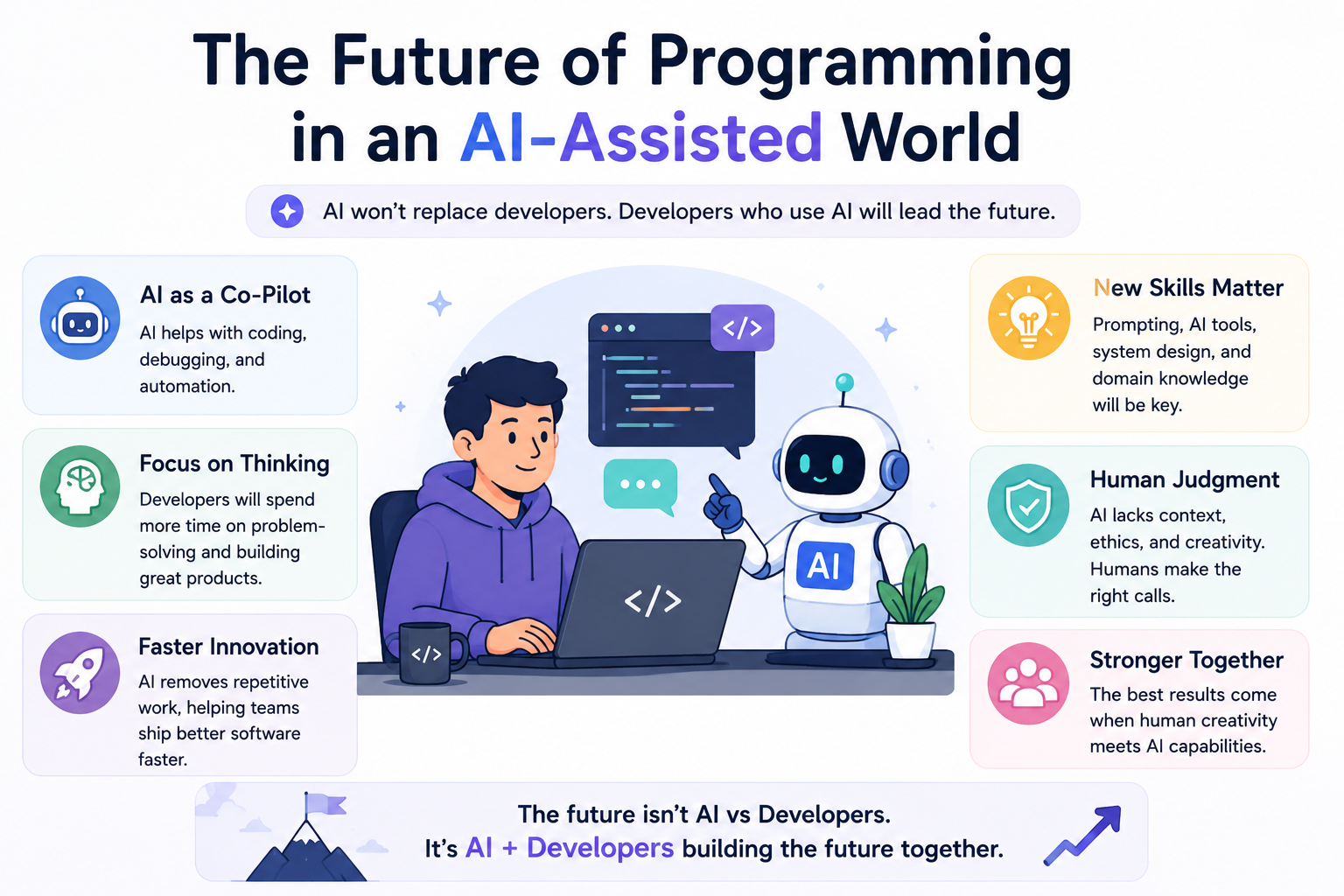
Artificial Intelligence is transforming software development faster than ever before. Modern AI tools can generate code, explain concepts, create documentation, write tests, and even help developers debug applications.
As AI capabilities continue to improve, many students and professionals are asking:
“Will software developers still be needed in the future?”
The answer lies in understanding a critical fact:
AI can automate certain tasks, but it cannot fully replace the human skills that drive successful software development.
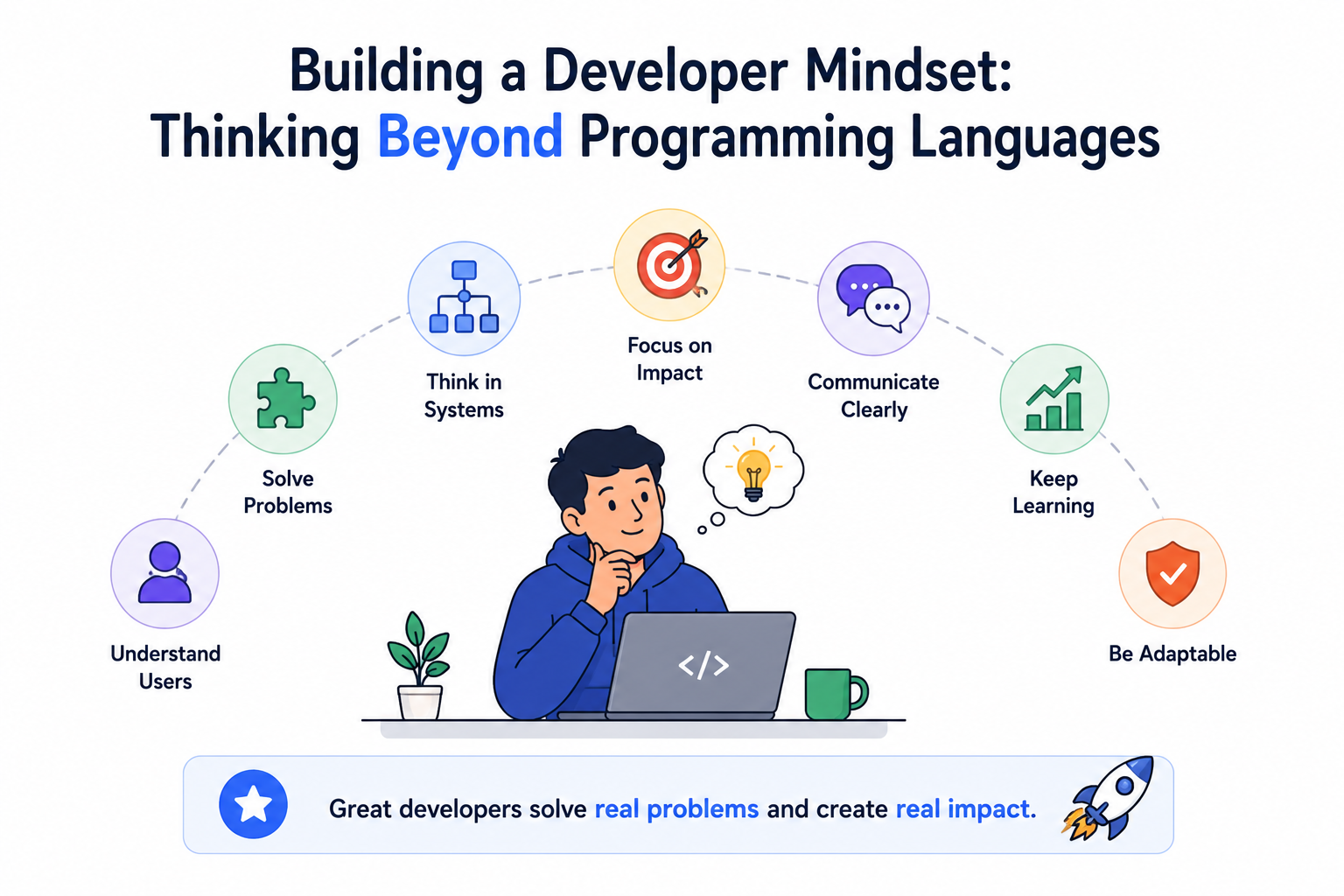
Software engineering is not just about writing code. It involves solving complex problems, understanding people, making decisions, balancing trade-offs, designing systems, and creating products that deliver value.
These are areas where human intelligence continues to play a vital role.
Understanding the skills AI cannot replace will help students and professionals focus on long-term career growth and remain valuable in an AI-driven industry.
Why AI is Powerful but Limited
AI excels at:
- Generating Code
- Creating Documentation
- Explaining Concepts
- Automating Repetitive Tasks
- Producing Boilerplate Solutions
However, AI relies on patterns and existing information.
It does not possess:
- Human Experience
- Genuine Understanding
- Business Awareness
- Responsibility
- Creativity in the human sense
This creates opportunities for developers who cultivate uniquely human skills.
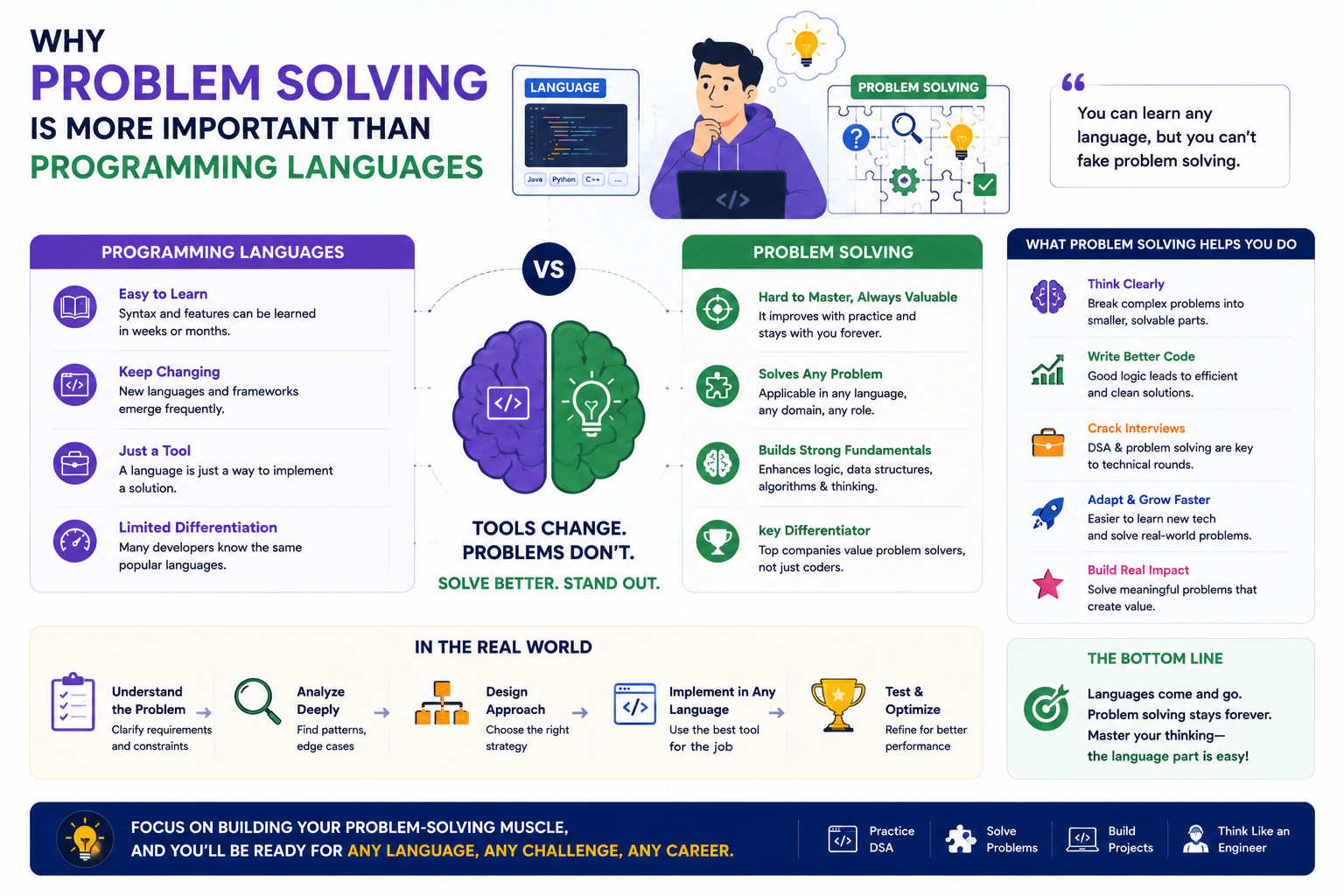
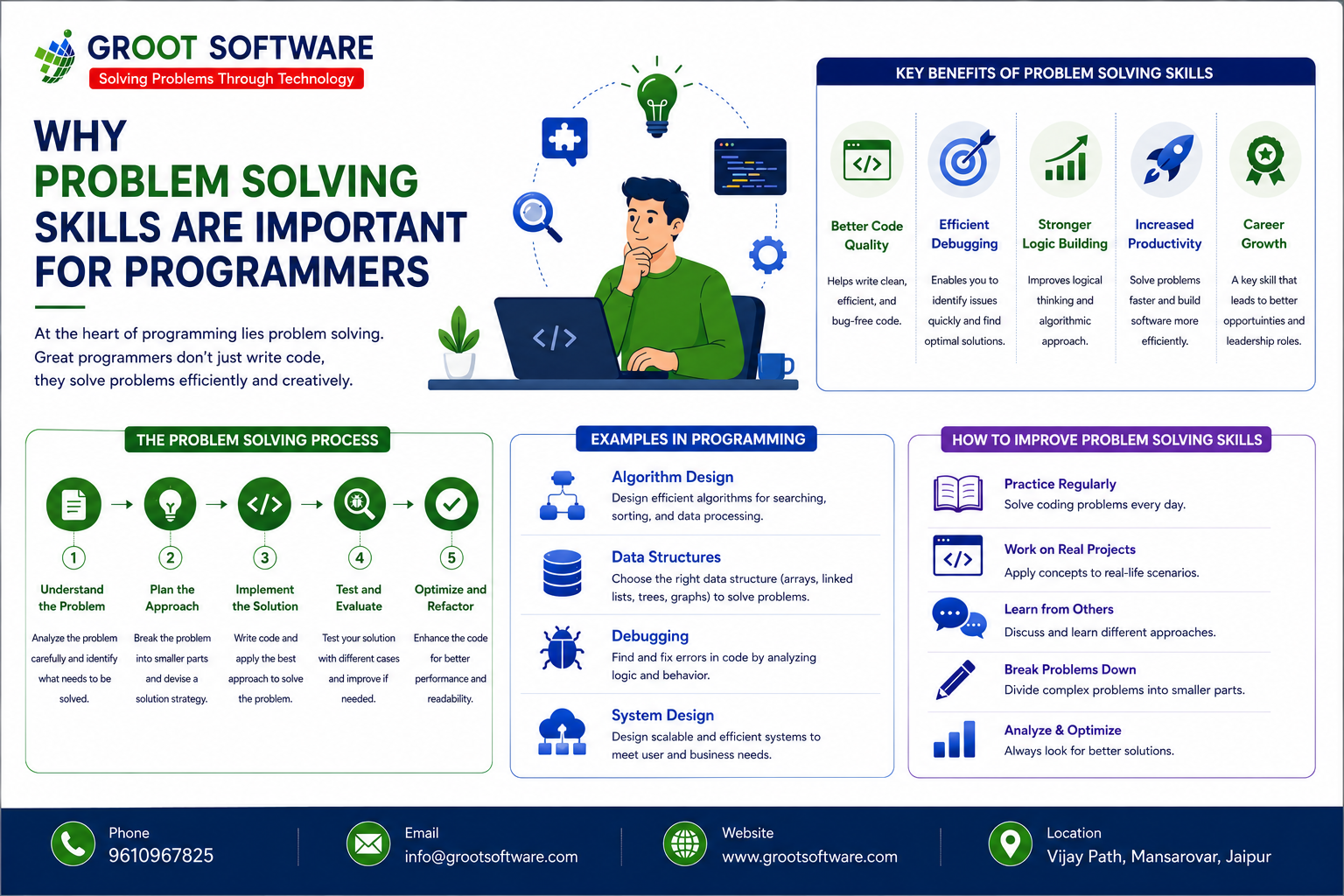
Skill #1: Problem Solving
One of the most valuable skills in software engineering is problem solving.
Before any code is written, engineers must determine:
- What problem exists?
- Why does it exist?
- What is the best solution?
AI can suggest solutions.
Humans must identify the right problem to solve.
Organizations hire developers because they solve business and technical challenges—not because they know syntax.
Skill #2: Understanding Business Requirements
Software exists to serve business goals.
Developers must understand:
- Customer Needs
- Revenue Objectives
- Operational Challenges
- Market Requirements
AI may generate code, but it cannot fully understand organizational priorities and strategic objectives.
Business understanding remains a uniquely human advantage.
Skill #3: System Design
Building large software systems requires architectural thinking.
Engineers make decisions about:
- Scalability
- Security
- Reliability
- Performance
- Maintainability
These decisions involve trade-offs.
AI can suggest architectures, but human engineers must evaluate which approach aligns with business goals.
System design remains one of the most valuable engineering skills.
Skill #4: Software Architecture
Architecture determines how systems are structured.
Architects consider:
- Technology Selection
- Infrastructure Design
- Service Communication
- Data Flow
Poor architectural decisions can affect systems for years.
These decisions require experience, judgment, and long-term thinking.
AI cannot fully replace architectural leadership.
Skill #5: Critical Thinking
AI-generated solutions are not always correct.
Developers must evaluate:
- Accuracy
- Efficiency
- Security
- Maintainability
Critical thinking helps engineers identify weaknesses and improve solutions.
The ability to question assumptions becomes increasingly important in the AI era.
Skill #6: Creativity
Many successful software products begin with creative ideas.
Examples include:
- New Applications
- Innovative Features
- Unique User Experiences
- Novel Business Models
AI can assist creativity but rarely initiates groundbreaking ideas independently.
Human imagination remains a competitive advantage.
Skill #7: Communication
Software engineers constantly communicate with:
- Clients
- Stakeholders
- Product Managers
- Designers
- Team Members
Clear communication helps teams:
- Understand Requirements
- Resolve Conflicts
- Align Goals
AI cannot replace human relationships and interpersonal communication.
Skill #8: Leadership
Technology teams require leadership.
Leaders:
- Guide Teams
- Mentor Developers
- Make Decisions
- Manage Priorities
Leadership involves emotional intelligence, trust, and accountability.
These qualities remain difficult to automate.
Skill #9: Collaboration
Modern software development is a team effort.
Developers collaborate on:
- Features
- Architecture
- Testing
- Deployment
Effective collaboration requires empathy, communication, and adaptability.
These remain human strengths.
Skill #10: Understanding Users
Successful software solves user problems.
Developers must understand:
- User Behavior
- User Goals
- User Pain Points
- User Feedback
Human-centered thinking helps create products that people actually want to use.
AI struggles to fully understand human emotions and experiences.
Skill #11: Engineering Judgment
Software engineering often involves trade-offs.
Questions include:
- Should we optimize for speed or cost?
- Should we prioritize scalability or simplicity?
- Should we build or buy a solution?
There is rarely a perfect answer.
Engineering judgment develops through experience and context.
Skill #12: Ethical Decision-Making
Technology impacts society.
Developers increasingly face questions about:
- Privacy
- Security
- Bias
- Responsible AI
Ethical decisions require human values and accountability.
These responsibilities cannot be delegated entirely to AI.
Skill #13: Product Thinking
Developers who understand products think beyond features.
They ask:
- Why are we building this?
- How does it help users?
- How does it support business goals?
Product thinking helps engineers create meaningful solutions.
Skill #14: Handling Ambiguity
Real-world requirements are often unclear.
Developers frequently encounter situations where:
- Requirements Change
- Information Is Missing
- Stakeholders Disagree
Humans excel at navigating uncertainty and adapting to evolving circumstances.
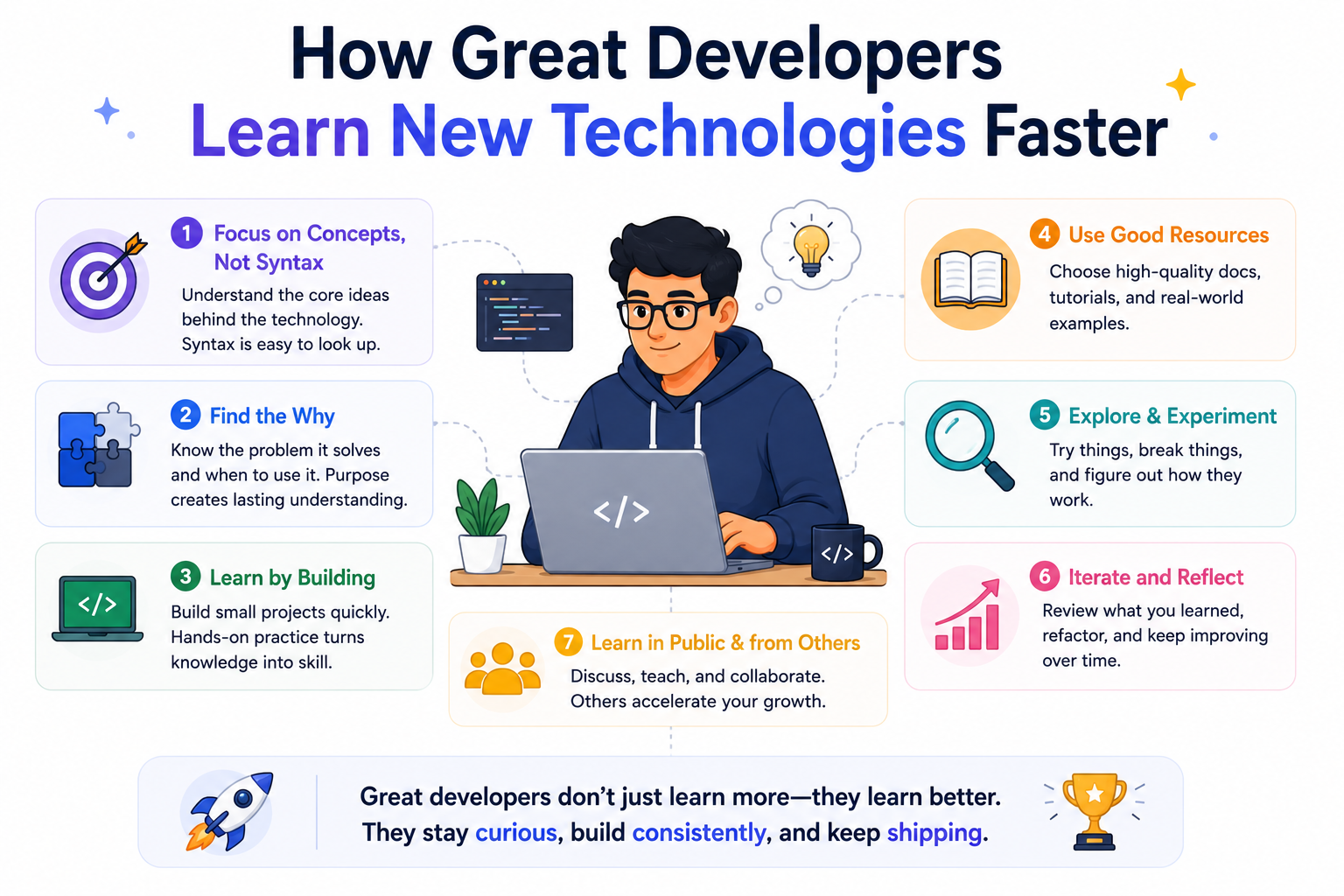
Skill #15: Learning and Adaptability
Technology changes constantly.
Developers who succeed long-term:
- Learn New Technologies
- Adapt to New Tools
- Embrace Change
Adaptability is a career-long advantage.
AI can assist learning but cannot replace the human drive to grow.
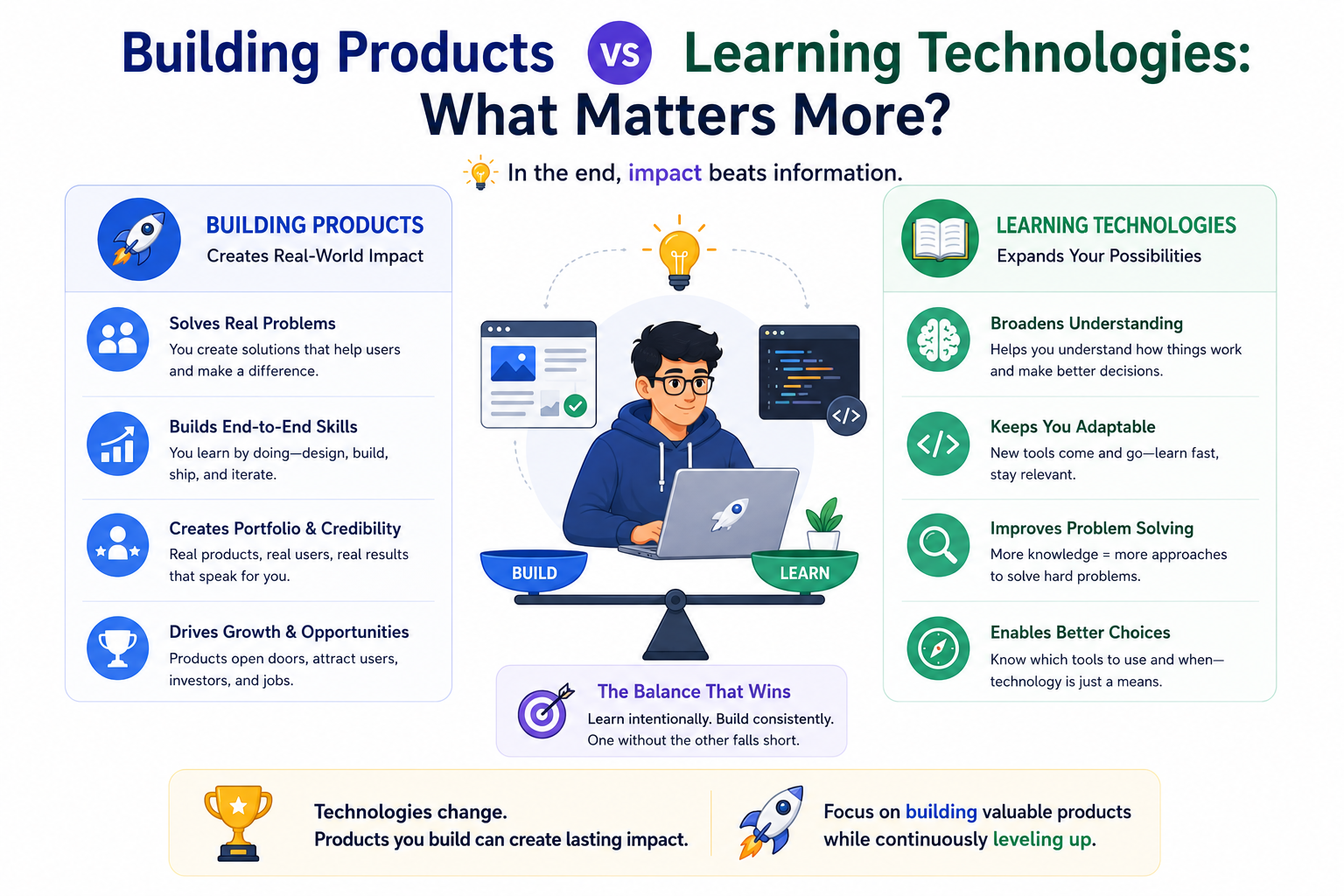
Why Coding Alone Will Become Less Valuable
As AI automates routine coding tasks, developers who focus only on:
- Syntax
- Framework Commands
- Boilerplate Development
may face increasing competition.
The industry is shifting toward higher-value skills.
Future engineers will be expected to think more and type less.
The Rise of AI-Augmented Developers
The most successful professionals will be:
- Skilled Engineers
- Strong Problem Solvers
- Effective Communicators
- AI-Literate Developers
They will use AI to increase productivity while contributing uniquely human capabilities.
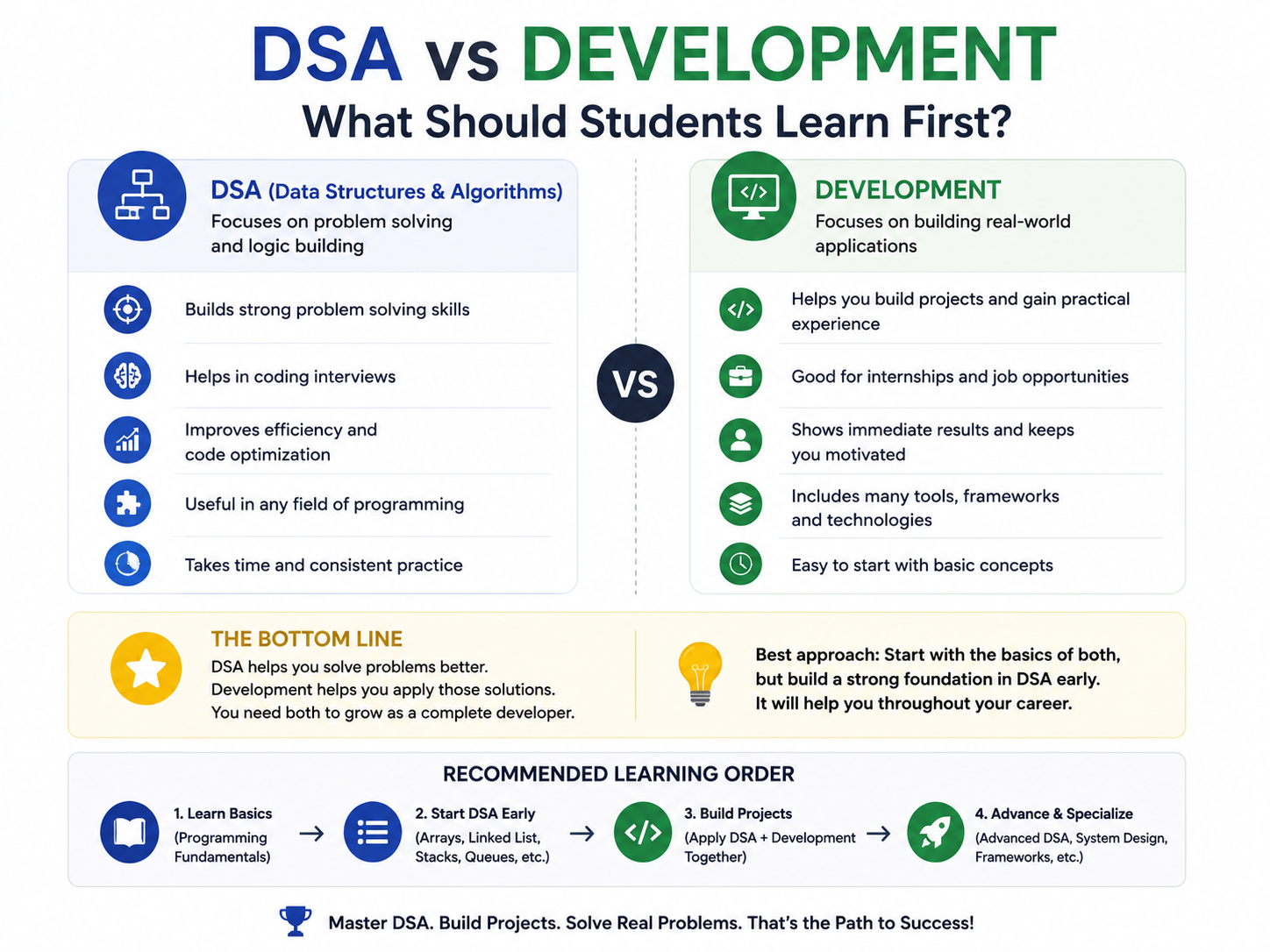
What Students Should Focus On
To remain valuable in the AI era, students should develop:
Technical Skills
- Programming Fundamentals
- Data Structures & Algorithms
- Databases
- Cloud Computing
Engineering Skills
- System Design
- Architecture
- Security
- DevOps
Human Skills
- Communication
- Leadership
- Critical Thinking
- Problem Solving
These skills create long-term career resilience.
Common Misconceptions
Myth 1: AI Will Replace All Developers
Reality:
AI will automate tasks, not eliminate engineering.
Myth 2: Programming No Longer Matters
Reality:
Understanding software remains essential.
Myth 3: Prompt Engineering Is Enough
Reality:
Technical knowledge is required to evaluate AI output.
Myth 4: AI Makes Human Skills Less Important
Reality:
Human skills become more important as coding becomes automated.
Future of Software Engineering Careers
The future software engineer will spend less time writing repetitive code and more time:
- Designing Systems
- Understanding Users
- Making Decisions
- Solving Problems
- Leading Teams
AI will change how software is built, but human engineers will continue to guide what gets built and why.
Frequently Asked Questions
Will AI eliminate software engineering jobs?
AI will transform roles but is unlikely to eliminate the need for skilled engineers.
Which skill is most future-proof?
Problem solving combined with system thinking.
Is communication important for developers?
Absolutely. Collaboration is a major part of professional software development.
Should students still learn programming?
Yes. Programming remains a foundational skill.
Conclusion
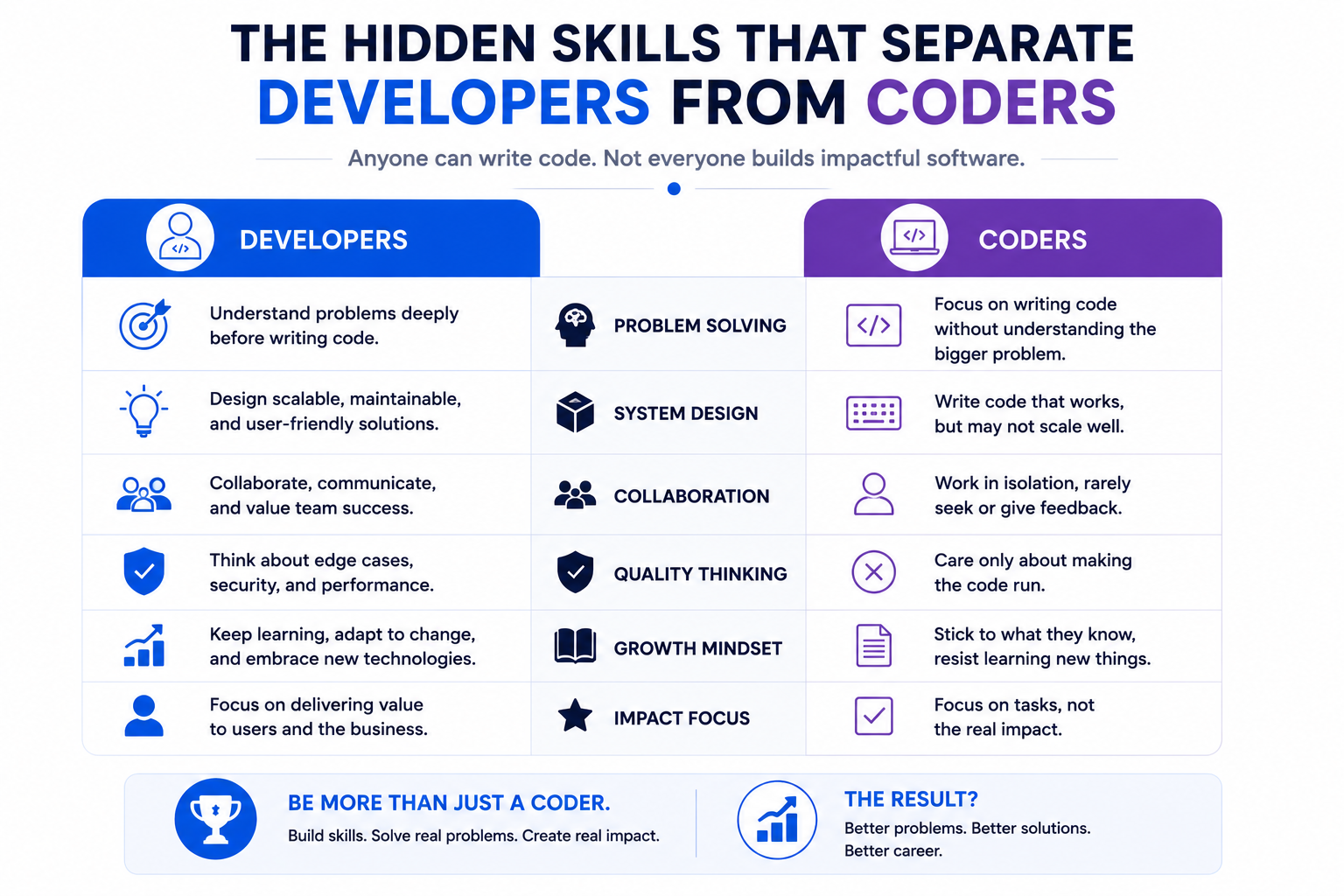
Artificial Intelligence is reshaping software development, but it cannot replace the uniquely human skills that drive innovation and engineering excellence. Problem solving, system design, communication, leadership, creativity, business understanding, and critical thinking remain essential for building successful software products.
The future belongs to developers who combine strong technical foundations with the human skills that AI cannot replicate. Rather than fearing automation, software engineers should focus on developing the capabilities that make them irreplaceable.
In the AI era, coding may become easier—but thinking will become more valuable than ever.
🌐 Website: https://grootacademy.com
📺 YouTube: https://www.youtube.com/@YourGrootAcademy
📘 Facebook: http://facebook.com/GrootAcademy
📸 Instagram: https://www.instagram.com/groot.academy/
🐦 X: https://x.com/GrootAcademy
💼 LinkedIn: https://www.linkedin.com/company/grootacademy
📌 Pinterest: https://in.pinterest.com/mygrootacademy/