


A Complete Roadmap for Students Who Want to Start a Successful Software Engineering Career
Every year, thousands of students graduate with dreams of becoming software engineers. However, many students struggle to make the transition from classroom learning to professional software development.
The reason is simple: academic education and industry requirements are often very different.
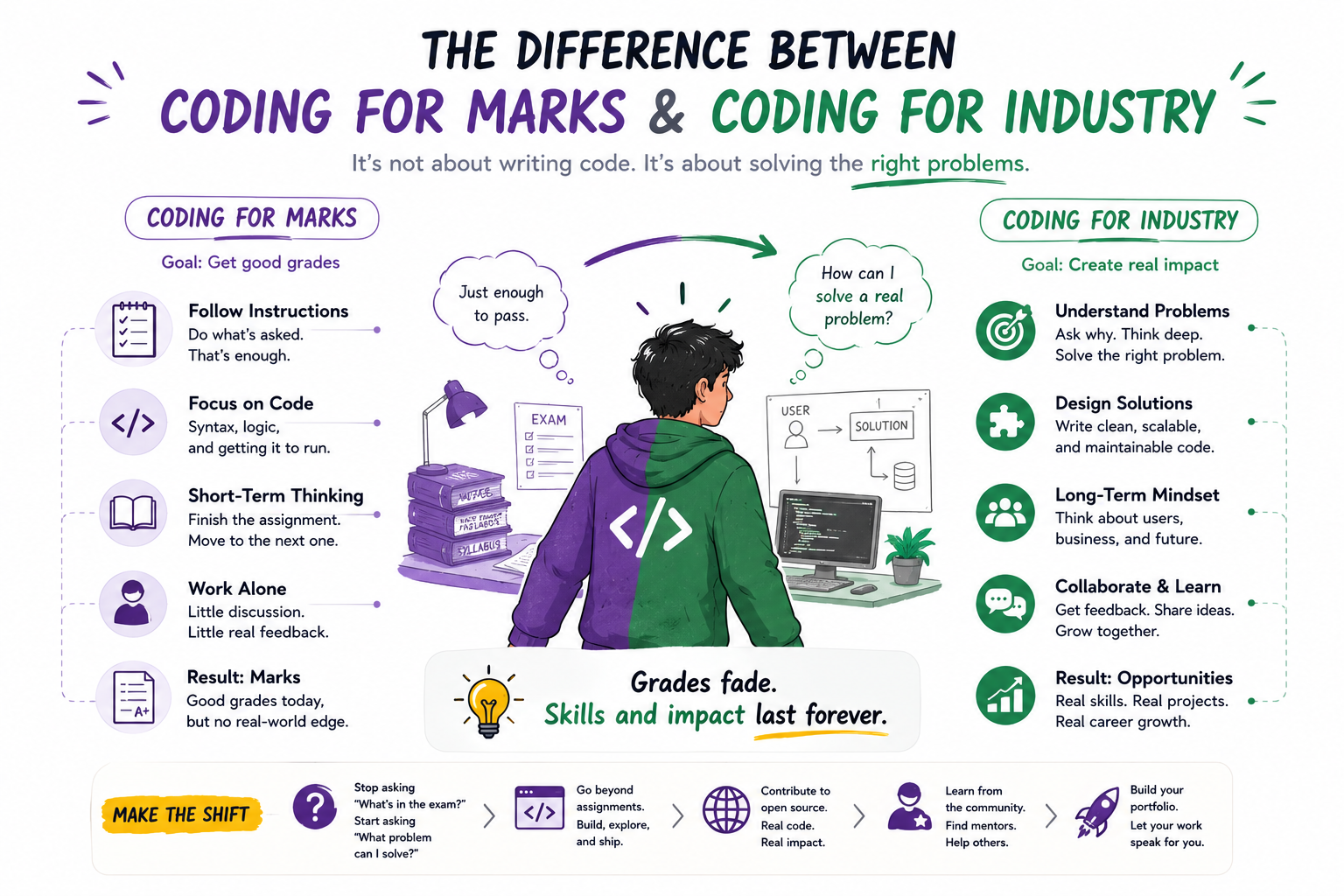
Colleges focus on theory, examinations, and academic concepts, while software companies look for practical skills, problem-solving abilities, project experience, teamwork, and real-world application development knowledge.
The good news is that students can successfully bridge this gap by following a structured learning and career development roadmap.
This guide explains how students can transition from student life to becoming a professional software engineer and build a strong foundation for long-term career growth.
Understanding the Difference Between Student Life and Professional Development
As a student, success is often measured by:
- Marks
- Assignments
- Attendance
- Exams
As a software engineer, success is measured by:
- Problem Solving
- Code Quality
- Team Collaboration
- Project Delivery
- Business Impact
Understanding this shift is the first step toward becoming industry-ready.
Step 1: Build Strong Programming Fundamentals
Programming is the foundation of software engineering.
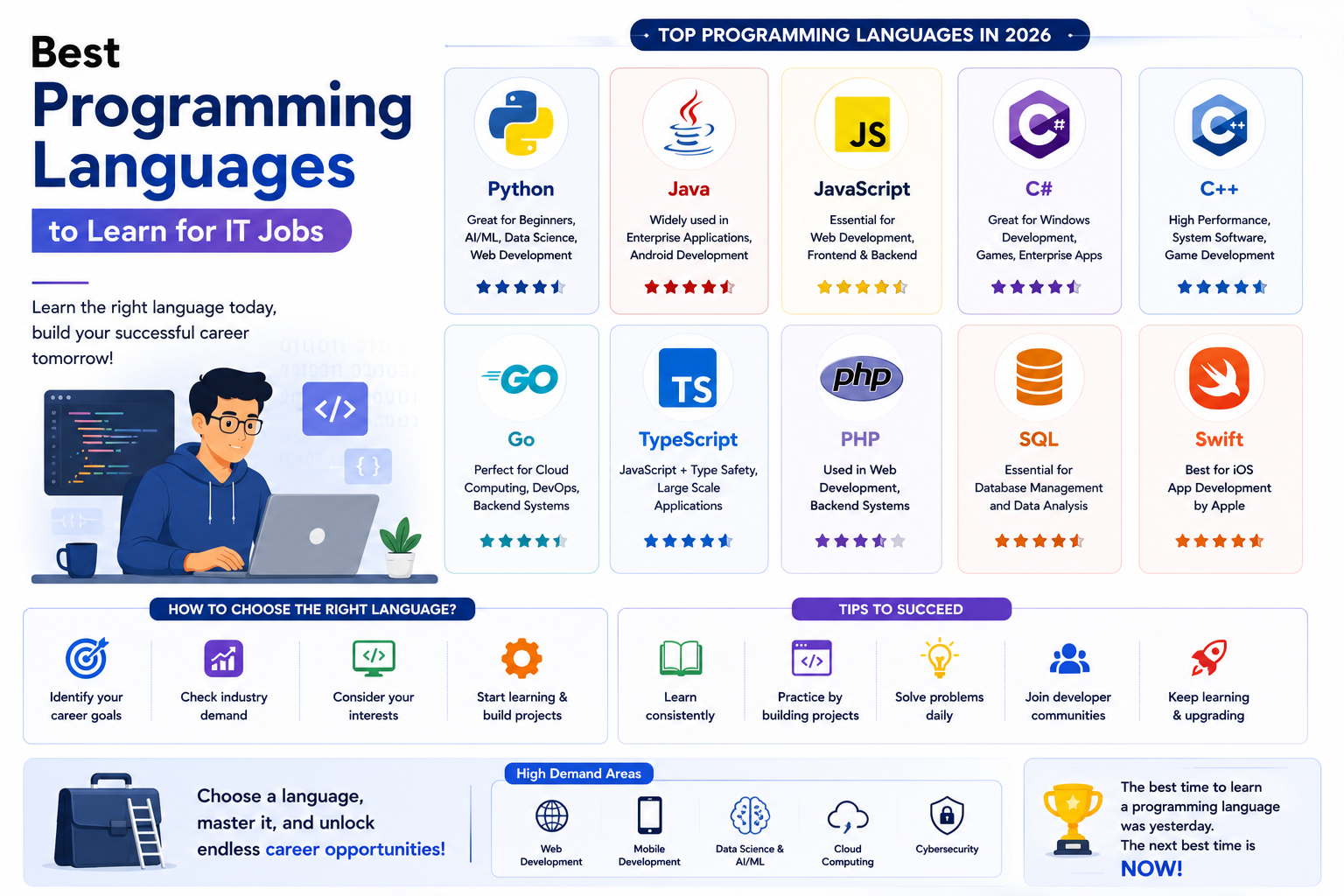
Students should master at least one programming language.
Popular choices include:
- Java
- Python
- C++
- JavaScript
Important topics:
- Variables
- Functions
- Loops
- Object-Oriented Programming
- Exception Handling
- File Handling
Strong fundamentals make learning advanced technologies easier.
Step 2: Learn Data Structures and Algorithms
Data Structures and Algorithms (DSA) improve:
- Problem Solving
- Coding Efficiency
- Technical Interview Performance
Important topics include:
- Arrays
- Strings
- Linked Lists
- Stacks
- Queues
- Trees
- Graphs
- Dynamic Programming
Most software companies evaluate DSA during hiring.
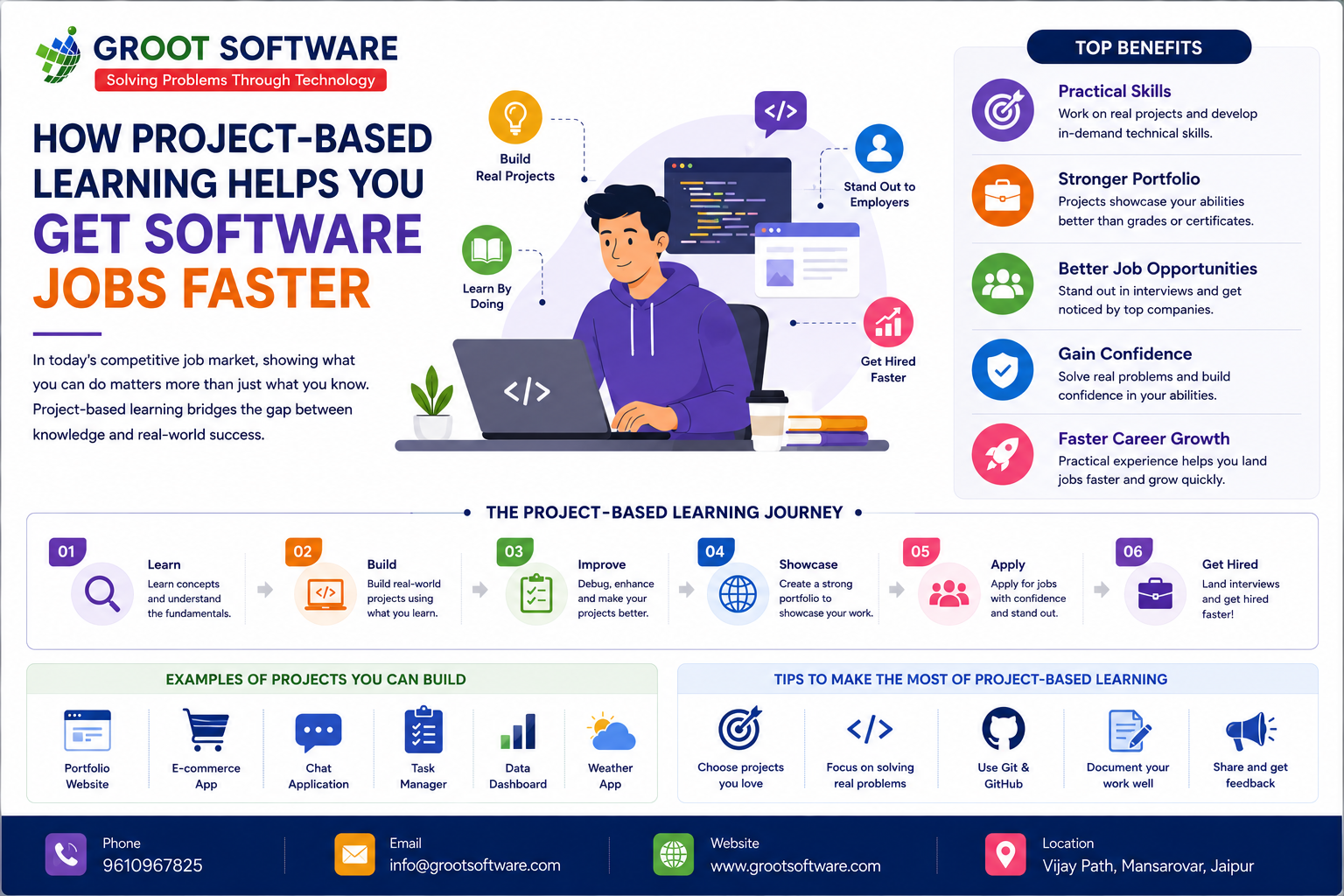
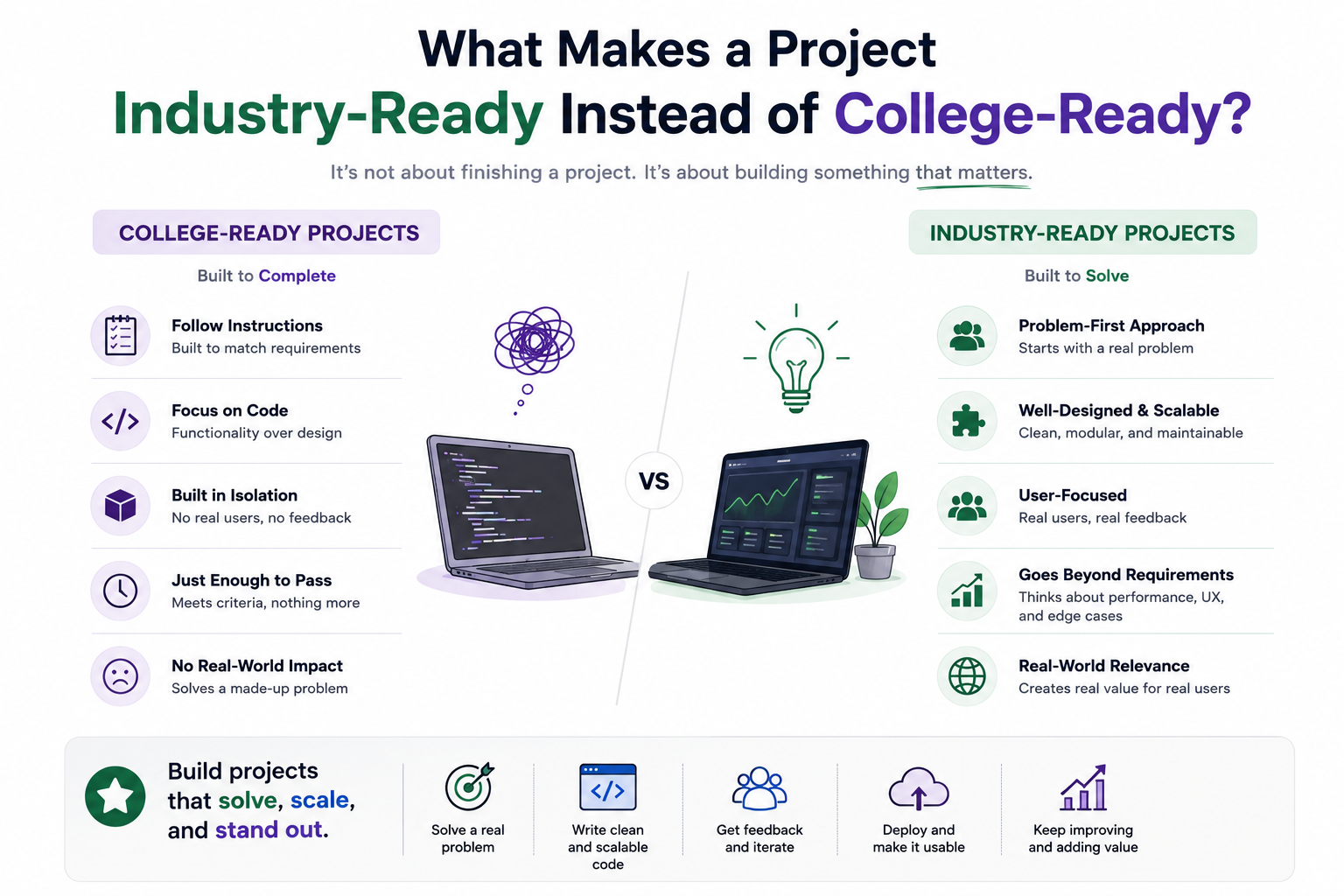
Step 3: Build Real Projects
Projects transform theoretical knowledge into practical skills.
Examples:
Beginner Projects
- Calculator
- Student Management System
- Expense Tracker
Intermediate Projects
- E-Commerce Website
- Inventory Management System
- Blog Platform
Advanced Projects
- AI Chatbot
- CRM Application
- Online Learning Platform
Projects demonstrate your ability to solve real-world problems.
Step 4: Learn Git and GitHub
Modern software development relies heavily on version control.
Students should learn:
- Git Basics
- Repository Management
- Branching
- Pull Requests
- Code Reviews
A GitHub portfolio allows recruiters to evaluate your work.
Step 5: Create a Professional Portfolio
Your portfolio should showcase:
- Projects
- Skills
- Certifications
- GitHub Profile
- Resume
A portfolio helps differentiate you from other candidates.
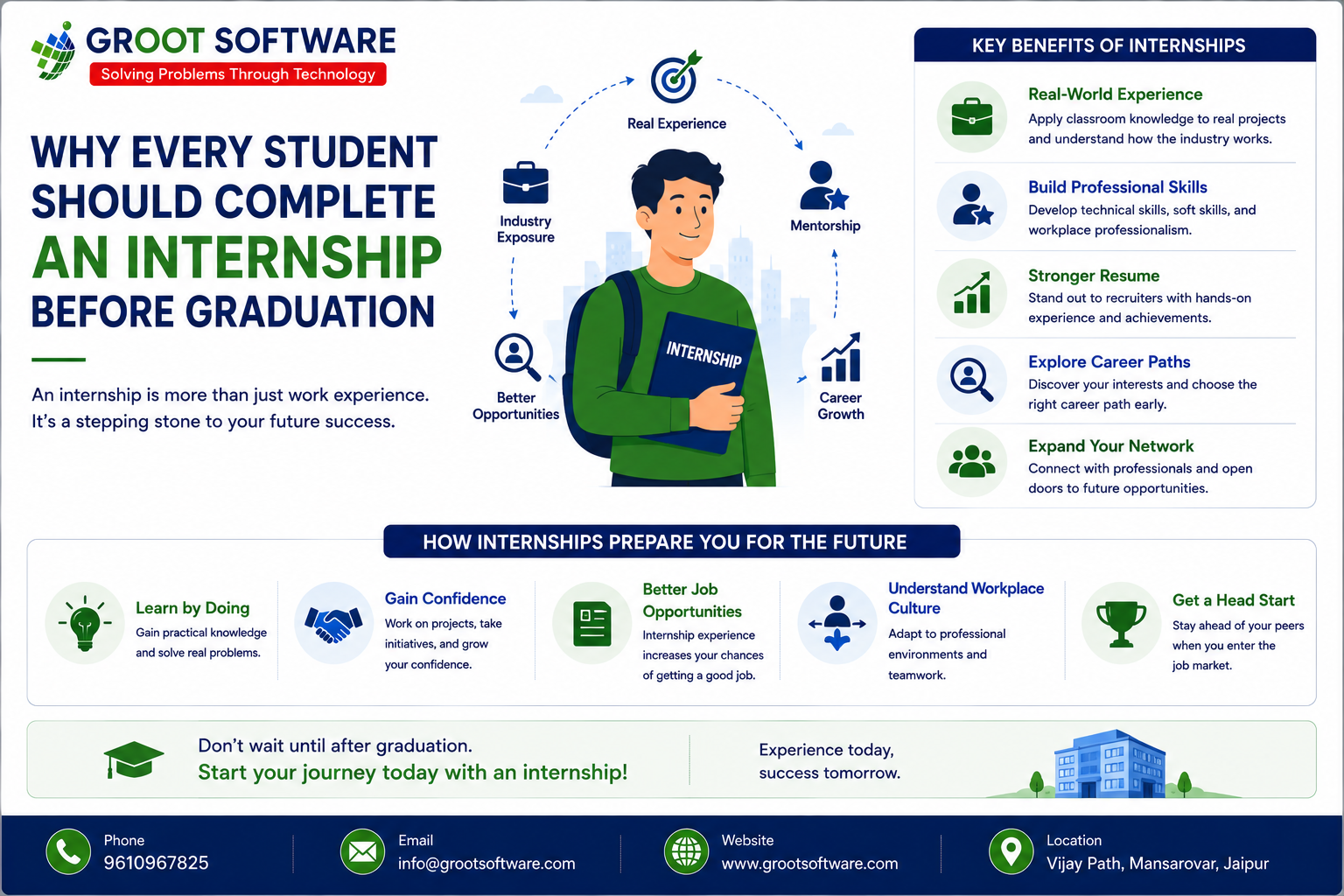
Step 6: Complete Internships
Internships provide valuable industry exposure.
Benefits include:
- Real Project Experience
- Professional Workflows
- Team Collaboration
- Industry Mentorship
Students with internship experience often transition into jobs more easily.
Step 7: Improve Communication Skills
Software engineers communicate with:
- Team Members
- Managers
- Clients
- Designers
- QA Engineers
Strong communication skills improve collaboration and career growth.
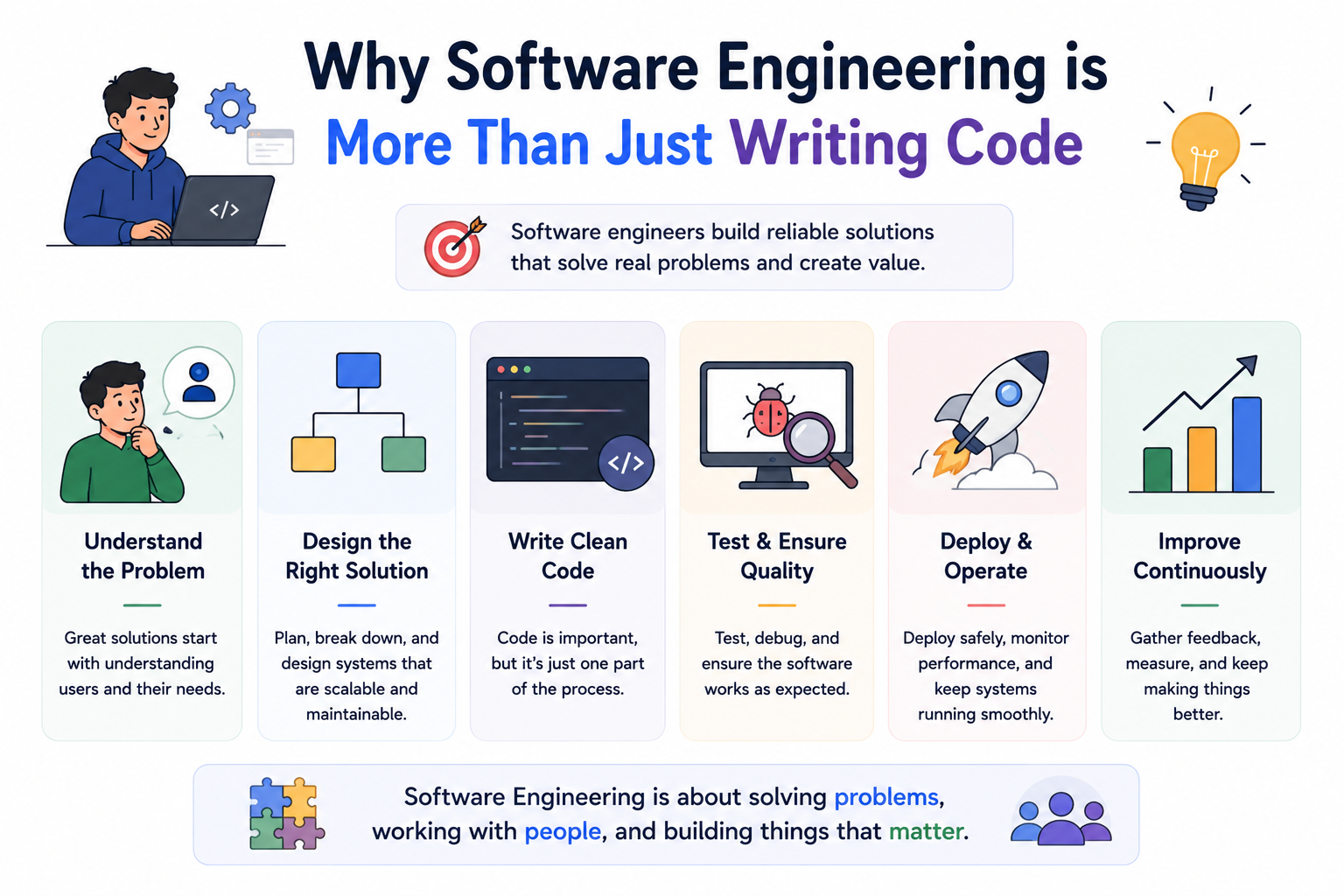
Step 8: Learn Software Development Workflows
Professional software development involves:
- Requirement Analysis
- Design
- Development
- Testing
- Deployment
- Maintenance
Understanding these processes helps students adapt quickly to workplace environments.
Step 9: Learn Modern Development Tools
Students should become familiar with:
Version Control
- Git
- GitHub
Project Management
- Jira
- Trello
Collaboration Tools
- Slack
- Microsoft Teams
Development Environments
- VS Code
- IntelliJ IDEA
- Eclipse
Industry tools improve productivity and teamwork.
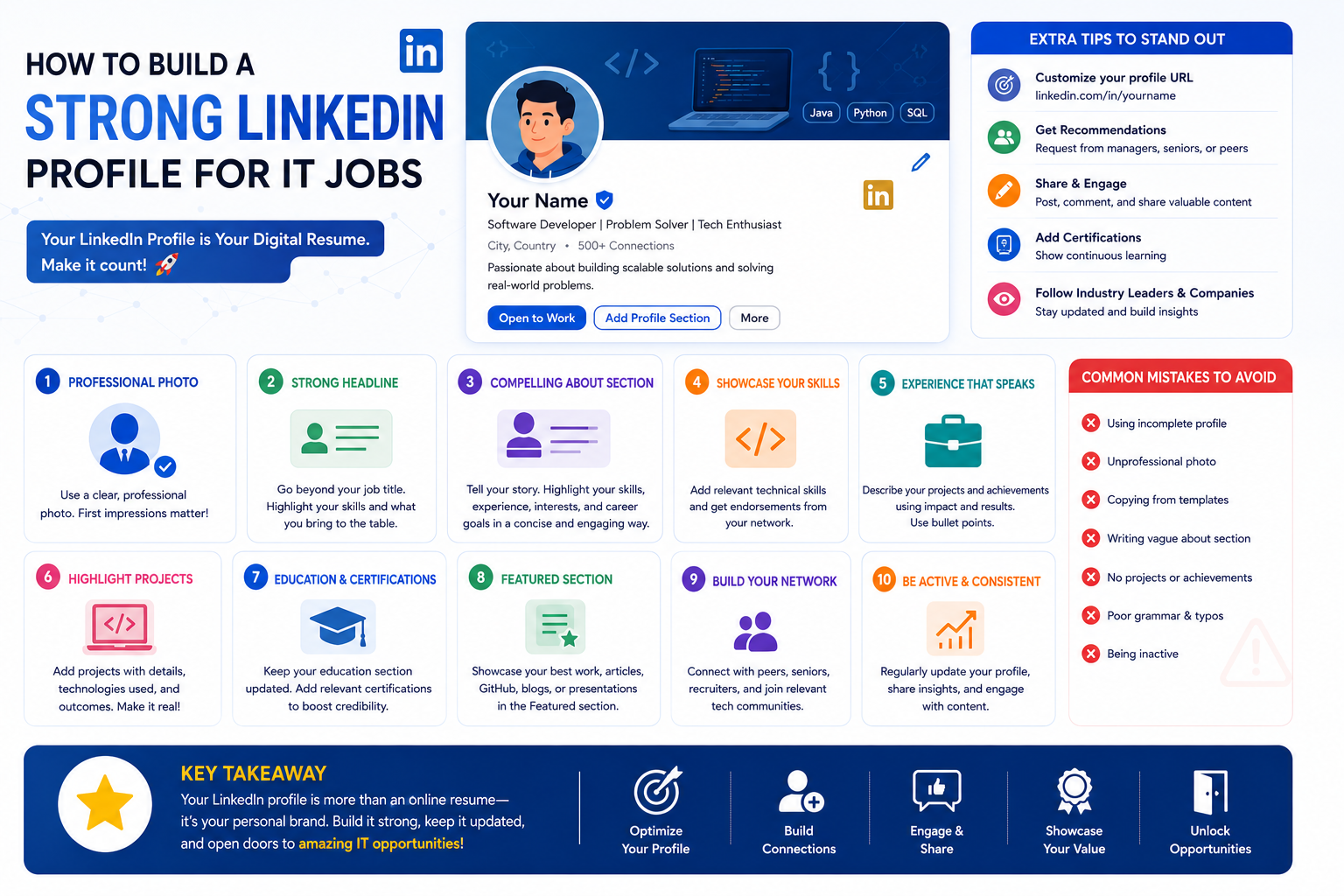
Step 10: Create a Strong LinkedIn Profile
LinkedIn helps students:
- Connect with Recruiters
- Build Professional Networks
- Showcase Projects
- Discover Opportunities
A strong LinkedIn profile increases visibility.
Step 11: Practice Technical Interviews
Common interview topics include:
Programming
- Java
- Python
- JavaScript
DSA
- Arrays
- Trees
- Graphs
- Dynamic Programming
Projects
Interviewers often ask detailed questions about projects.
System Design Basics
Understanding architecture concepts can be beneficial.
Regular practice improves confidence and performance.
Step 12: Understand Industry Expectations
Companies expect fresh graduates to:
- Learn Quickly
- Work in Teams
- Solve Problems
- Take Ownership
- Adapt to New Technologies
Professional attitude often matters as much as technical knowledge.
Common Challenges Students Face
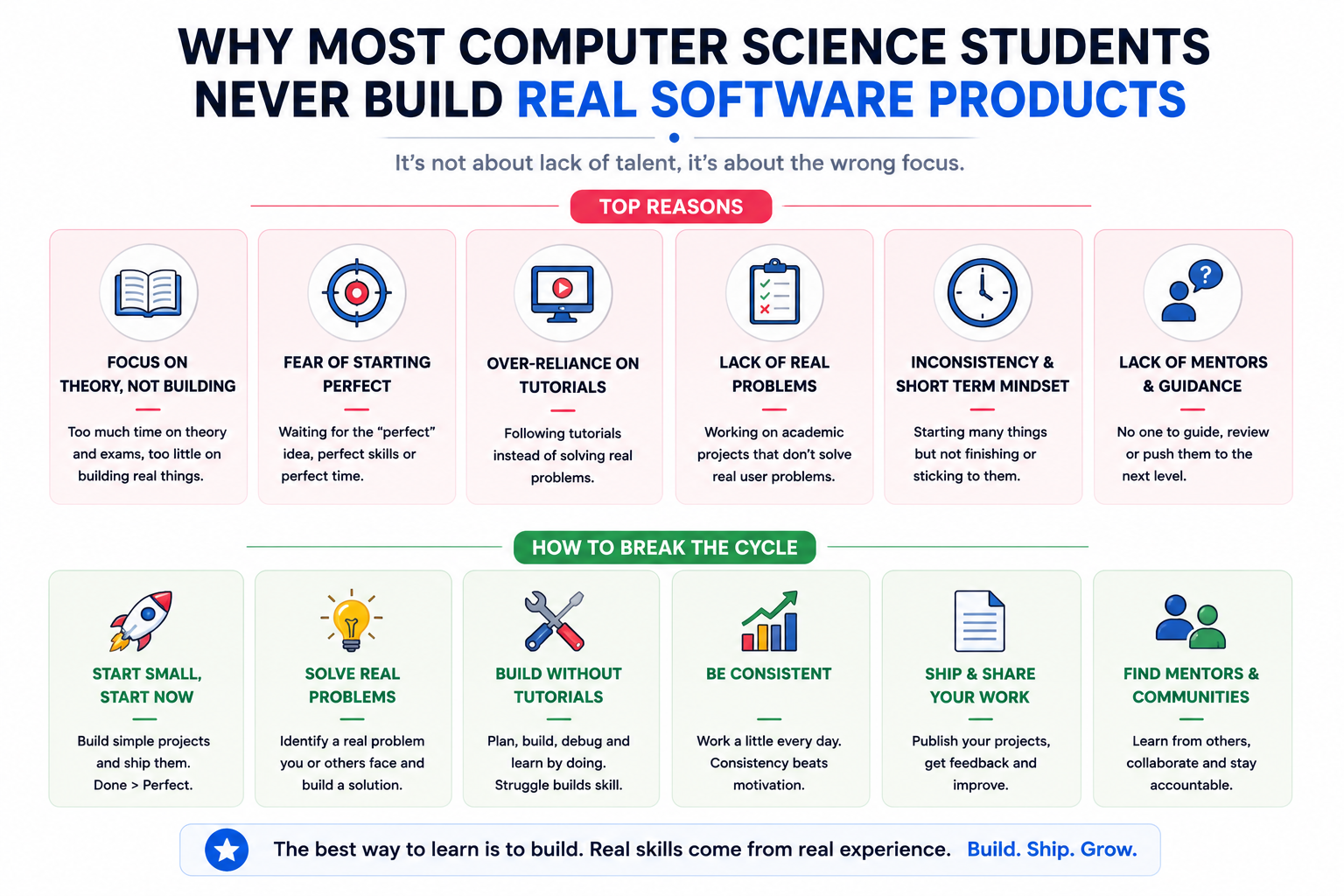
Fear of Real Projects
Many students hesitate to build projects.
Tutorial Dependency
Watching tutorials without implementation limits growth.
Lack of Consistency
Skills improve through regular practice.
Weak Problem-Solving Skills
DSA practice helps overcome this challenge.
Poor Time Management
Balancing learning and project work is important.
How to Become Job Ready Faster
Focus on One Technology Stack
Example:
- Java + Spring Boot
- Python + Django
- MERN Stack
Build Multiple Projects
Projects strengthen resumes and portfolios.
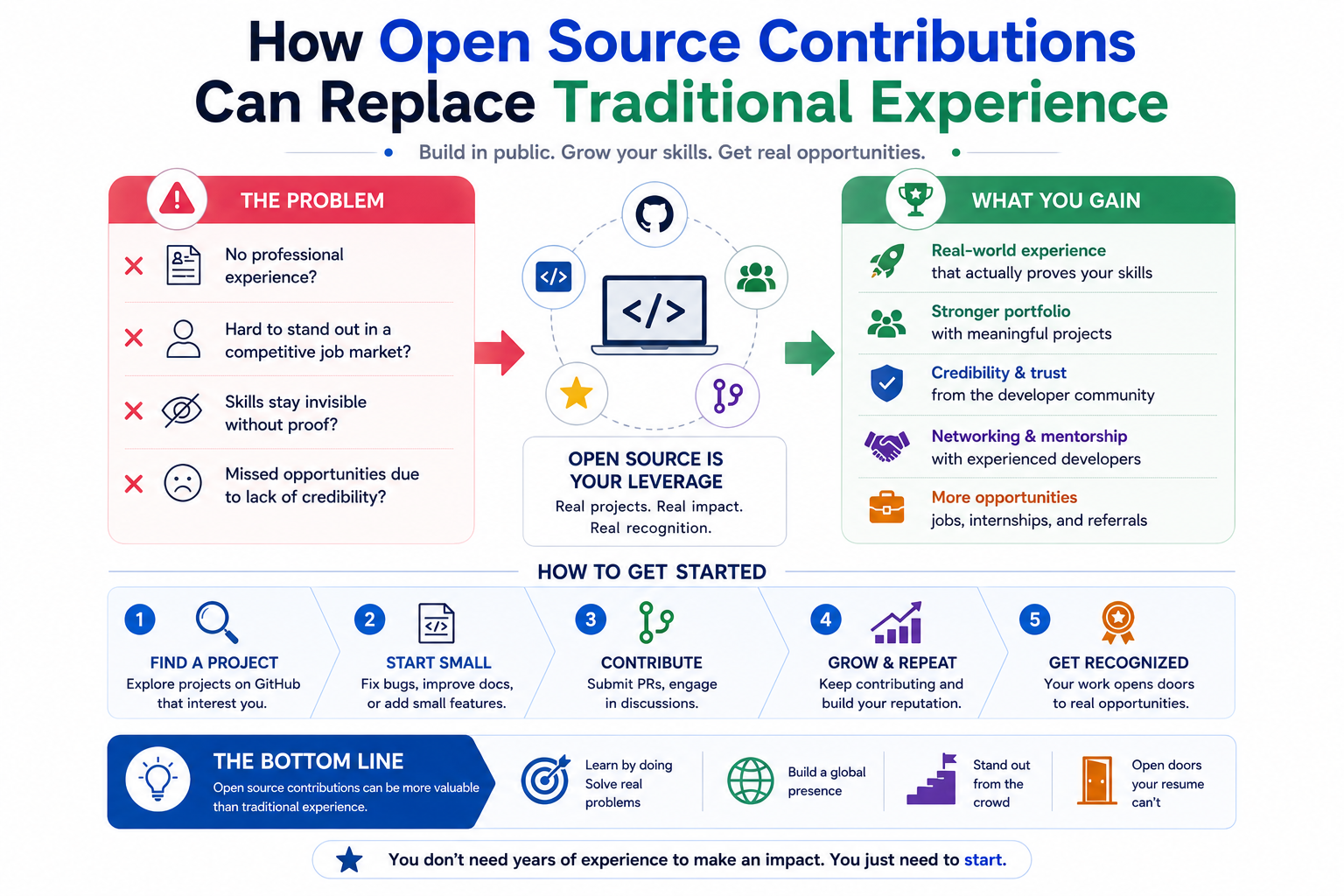
Contribute to Open Source
Open-source contributions improve collaboration skills.
Complete Internships
Gain real-world experience.
Stay Updated
Follow industry trends and emerging technologies.
Skills Recruiters Look For
Technical Skills
- Programming
- DSA
- Databases
- GitHub
Professional Skills
- Communication
- Teamwork
- Adaptability
- Problem Solving
Candidates with both technical and soft skills often perform better during recruitment.
Career Opportunities After Becoming a Software Engineer
Popular roles include:
- Software Engineer
- Full Stack Developer
- Backend Developer
- Frontend Developer
- Cloud Engineer
- DevOps Engineer
- AI Engineer
- Data Engineer
The software industry offers diverse career paths and growth opportunities.
Frequently Asked Questions
Can students become software engineers without internships?
Yes, but internships significantly improve practical understanding and employability.
How many projects should students build?
Quality matters more than quantity. Three to five strong projects can make a significant impact.
Is GitHub necessary?
Highly recommended. Recruiters often review GitHub portfolios.
How long does it take to become job-ready?
It depends on consistency, learning speed, and project experience, but focused students can become job-ready within several months.
Conclusion
Transitioning from student to software engineer requires more than academic knowledge. Students must develop programming skills, problem-solving abilities, project experience, communication skills, and professional habits.
By focusing on DSA, real-world projects, internships, GitHub portfolios, LinkedIn networking, and continuous learning, students can confidently move from the classroom to professional software engineering careers and position themselves for long-term success in the technology industry.
🌐 Website: https://grootacademy.com
📺 YouTube: https://www.youtube.com/@YourGrootAcademy
📘 Facebook: http://facebook.com/GrootAcademy
📸 Instagram: https://www.instagram.com/groot.academy/
🐦 X: https://x.com/GrootAcademy
💼 LinkedIn: https://www.linkedin.com/company/grootacademy
📌 Pinterest: https://in.pinterest.com/mygrootacademy/