


Banking app security is one of the most critical areas of modern software engineering and cyber security. Banking applications handle sensitive user information, online transactions, payment systems, APIs, authentication workflows, and cloud infrastructure every second.
Modern banking apps like Google Pay, Paytm, PhonePe, and international banking platforms rely heavily on encryption, authentication systems, secure APIs, databases, cloud security, and fraud detection technologies.
Software companies and financial institutions invest heavily in banking app security to protect user accounts, financial transactions, payment gateways, and digital banking systems.
Students learning banking app security concepts can understand how modern financial applications protect millions of users and securely process transactions.
In this blog, we will explore how banking apps secure user transactions, the technologies involved, and why cyber security is essential in modern financial systems.
What is Banking App Security?
Banking app security refers to technologies and systems used to protect:
- User accounts
- Transactions
- Payment systems
- APIs
- Sensitive financial information
Modern banking applications use multiple security layers for protection.
Why Banking App Security is Important
Banking applications process:
- Online payments
- Bank transfers
- Credit card transactions
- UPI systems
- Personal user information
Without strong security systems, applications may face:
- Fraud
- Data breaches
- Unauthorized access
- Financial losses
Cyber security is essential for financial applications.
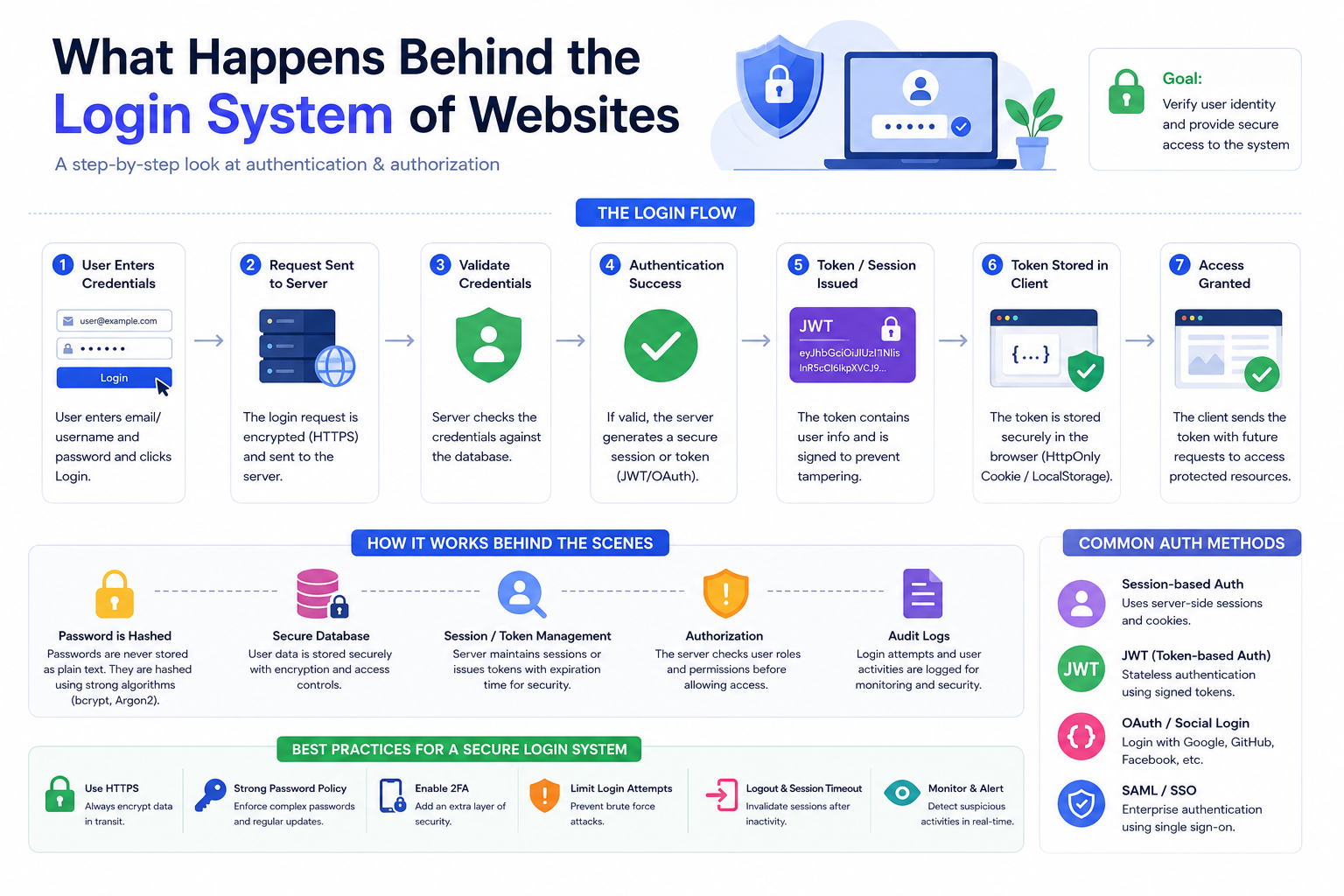
Authentication Systems in Banking Apps
Authentication is the first security layer.
Banking applications use:
- Password systems
- OTP verification
- Biometric authentication
- Device verification
- Multi-factor authentication (MFA)
Authentication systems verify user identity securely.
Encryption in Banking Applications
Encryption protects sensitive data.
Banking apps use encryption for:
- Transactions
- Passwords
- Payment details
- API communication
Popular encryption technologies include:
- SSL/TLS
- AES encryption
- HTTPS protocols
Encryption prevents unauthorized access to financial information.
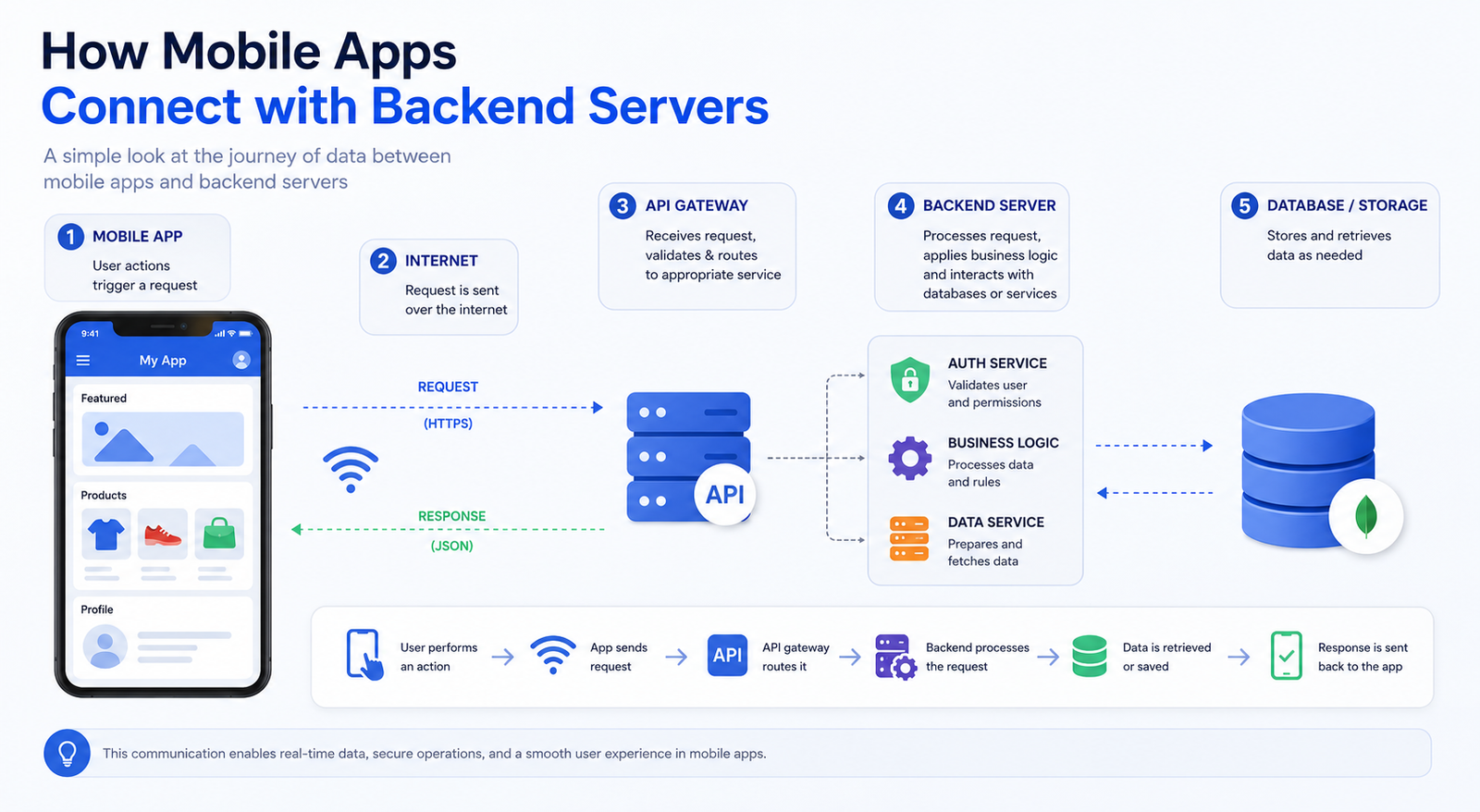
APIs and Secure Communication
Banking applications use APIs for:
- Payments
- Account information
- Transaction processing
- Authentication systems
Secure APIs use:
- Token validation
- HTTPS encryption
- API gateways
- Authentication systems
API security is critical in modern banking systems.
Databases in Banking Applications
Databases store:
- User accounts
- Transaction history
- Authentication records
- Payment details
Popular database systems include:
- PostgreSQL
- Oracle Database
- MySQL
Databases use strict security controls and encryption.
Fraud Detection Systems
Modern banking apps use AI-powered fraud detection systems.
Fraud detection systems analyze:
- Suspicious transactions
- Login activity
- Device behavior
- Payment patterns
Artificial Intelligence improves banking security significantly.
Cloud Security in Banking Apps
Modern banking systems increasingly use cloud infrastructure.
Cloud security includes:
- Secure hosting
- Identity management
- Access control
- Monitoring systems
Popular cloud platforms include:
- AWS
- Microsoft Azure
- Google Cloud
Cloud security improves scalability and monitoring.
Secure Payment Gateways
Payment gateways process digital transactions securely.
Banking apps use secure payment systems for:
- UPI transactions
- Credit card payments
- Online banking
- Wallet systems
Payment security protects users from fraud and unauthorized transactions.
Real-Time Security Monitoring
Modern banking apps continuously monitor:
- Login attempts
- API requests
- Suspicious activity
- Device access
Monitoring systems help identify cyber attacks quickly.
DevOps and Banking Application Security
DevOps workflows improve security automation.
Banking companies use:
- Secure deployment pipelines
- Automated testing
- Monitoring tools
- Infrastructure security
DevSecOps combines development, operations, and cyber security.
Security Best Practices in Banking Apps
Modern banking applications follow security practices like:
- HTTPS encryption
- Secure APIs
- Token-based authentication
- MFA verification
- Database encryption
- Regular security audits
Security best practices protect users and financial systems.
Real-World Banking Security Technologies
Modern financial platforms use technologies like:
- JWT Tokens
- OAuth systems
- Biometric authentication
- AI fraud detection
- Cloud security monitoring
Banking security technologies continue evolving rapidly.
Skills Students Should Learn for Banking App Security
Students should focus on:
- Cyber security
- Backend development
- APIs
- Databases
- Cloud computing
- Authentication systems
- Encryption basics
Practical security projects improve industry readiness.
Career Opportunities in Banking Security
Students learning banking app security can prepare for careers as:
- Cyber Security Engineer
- Backend Developer
- Cloud Security Engineer
- Security Analyst
- Software Engineer
Banking security professionals are highly demanded worldwide.
Future of Banking App Security
The future of banking app security focuses heavily on:
- AI-powered fraud detection
- Biometric authentication
- Cloud-native security
- Real-time monitoring
- Zero-trust security systems
Financial security systems continue evolving rapidly.
Final Thoughts
Banking app security combines authentication systems, encryption, APIs, cloud computing, databases, fraud detection, and cyber security practices.
Modern banking applications rely heavily on secure backend systems, AI-powered monitoring, authentication workflows, and scalable security architectures.
Students learning cyber security, backend development, APIs, cloud computing, and authentication systems can prepare for strong software engineering careers in 2026.
Practical security projects help students understand real-world banking system protection and secure software development workflows.
Learn Software Development with Practical Training
🚀 Groot Academy – IT Training Institute
Build your career with practical training in coding, AI, and modern technologies. Learn through real projects and industry-focused guidance.
📺 YouTube: https://www.youtube.com/@YourGrootAcademy
📘 Facebook: http://facebook.com/GrootAcademy
📸 Instagram: https://www.instagram.com/groot.academy/
🐦 X (Twitter): https://x.com/GrootAcademy
💼 LinkedIn: https://www.linkedin.com/company/grootacademy
📌 Pinterest: https://in.pinterest.com/mygrootacademy/
#BankingAppSecurity #CyberSecurity #BackendDevelopment #CloudComputing #SoftwareDevelopment #CareerGrowth