

Python Developer vs Software Engineer: Key Differences Explained
A practical comparison of Python-focused development and the broader software-engineering role, with clear starting points for learners who are choosing a direction.
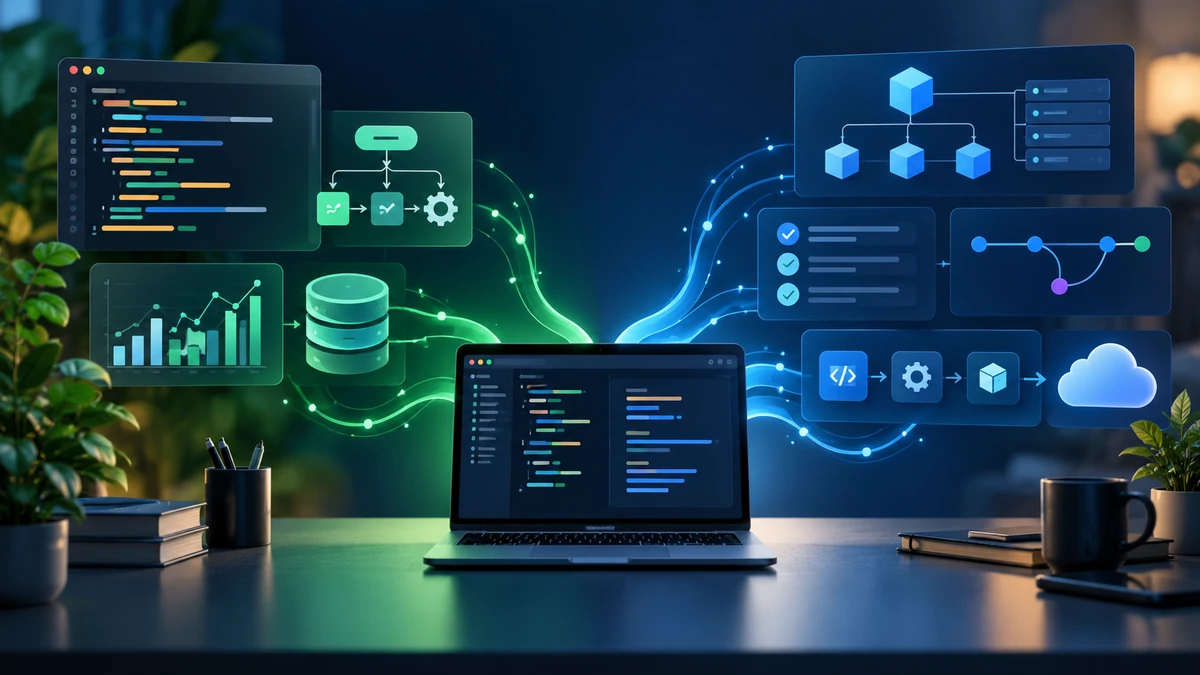
Why “Python developer” and “software engineer” often overlap
A Python developer can be a software engineer, and a software engineer can use Python every day. The terms describe different things. “Python developer” usually points to a technology focus: the person mainly uses Python to solve problems. “Software engineer” usually describes a broader practice: designing, building, testing, deploying and maintaining software systems, sometimes with Python and sometimes with another language.
Neither title is automatically senior to the other. Job titles vary across organizations, and the real work behind the title matters more than the label. A Python-focused role may involve an API, an automation service, data pipeline, test tool, backend application or machine-learning workflow. A software-engineering role may cover one of those areas too, while adding design decisions, integration, testing, reliability, documentation or longer-term maintenance.
For a learner, the comparison should not be “which title wins?” It should be “which skills will I practise first, and what kind of problems do I want to solve?” The Python Programming career guide and the Software Development career guide explain the two learning foundations in more detail.
Core differences at a glance
| Area | Python developer path | Software engineer path |
|---|---|---|
| Primary focus | Using Python well for a defined application, automation, data or backend problem. | Building and maintaining software systems; the language is one tool in the design. |
| Typical technologies | Python, packages, virtual environments, APIs, databases and a specialization such as web, data or automation. | Programming fundamentals, version control, testing, architecture, APIs, data storage, deployment and one or more languages. |
| Common output | A script, service, API, workflow, data process or Python application. | A reliable feature, service or product component that works with other parts of a system. |
| Useful first goal | Become confident writing, debugging and explaining Python programs. | Learn to turn requirements into maintainable, tested software with a clear design. |
| Relationship | Can become a software-engineering specialization. | Can include Python as a main or supporting language. |
The rows are not separate career boxes. A person may start by automating a repetitive task in Python, then learn how to turn that script into a tested service with an API, database and deployment process. That growth is both Python development and software engineering.
Skills to build for each path
Shared foundations come first
Both paths need the same core habits: breaking a task into smaller steps, writing readable code, handling errors, testing ordinary and awkward cases, using version control, reading documentation and explaining a decision. Data structures, functions, files, modules, basic databases and API concepts are valuable across languages and roles.
Do not skip debugging. The ability to reproduce a problem, inspect a small example, form a hypothesis and verify a fix is one of the most transferable skills a learner can build. Focused exercises such as the coding challenge guide can help develop that reasoning before larger projects.
Python-focused skills
A Python developer should become comfortable with the language itself: variables, conditions, loops, functions, collections, exceptions, modules, environments and package management. The next skills depend on a direction. A backend learner might add HTTP, REST APIs, authentication and a web framework. A data learner might add file formats, SQL, pandas and visualization. An automation learner might add command-line tools, scheduling, integrations and safe handling of credentials.
The goal is not to memorize every library. It is to understand what your program receives, what it produces, how failure is handled and how another person could run or review it.
Broader software-engineering skills
Software engineering adds system thinking. You still need to write code, but you also need to understand boundaries between components, interface contracts, data ownership, testing strategy, deployment risks, logging, security and how a change affects existing users or services. The depth expected depends on the role and team; nobody learns all of it in a first project.
Start with manageable practices: organize a project into clear files, use Git with descriptive commits, write a few tests, document setup steps, validate input and keep configuration separate from code. These habits make a Python project more dependable and transfer directly to other languages later.
How day-to-day work can differ
In a Python-focused role, a workday might involve improving a script, preparing data, extending an API endpoint, fixing a backend bug, connecting to a database, reviewing a small integration or writing tests around a workflow. The work can still be deeply collaborative and production-oriented; “Python developer” does not mean working only on small scripts.
In a broader software-engineering role, the day may include the same coding work plus clarifying requirements, reviewing a design, breaking a feature into tasks, tracing a production issue, reviewing another person’s change, deciding how systems communicate or monitoring behavior after deployment. A software engineer may specialize in backend, frontend, mobile, platform, data or quality engineering.
The important distinction is scope, not status. Some positions focus closely on implementing a language-specific solution. Others expect you to own more of the system lifecycle. Both benefit from patience, careful communication and evidence-based decisions.
Projects that make the distinction practical
Projects are a better way to test your interest than a job-title quiz. Begin with a small problem you can finish, then extend it in one direction at a time. A Python foundation project could be a file organizer, expense tracker, data-cleaning script, command-line study planner or small API client. Write down the inputs, outputs, edge cases and test cases.
To explore the software-engineering side, evolve that project. Add a clear data model, input validation, a small API or user interface, tests, logging, a README, version-control history and a deployment or runbook note. You do not need to use every tool at once. The aim is to see how a simple program becomes easier for another person to understand, run and improve.
When you save the work, include a short explanation of the problem, the chosen approach, trade-offs and limitations. This lets a reviewer see your thinking rather than only a screenshot. Learners interested in a broader web application path can also explore the Full Stack Web Development career guide.
Choose a starting path based on your next useful action
Start with Python if you want a readable programming foundation and are interested in automation, backend logic, data work, APIs or AI-related tooling. Python can help a beginner get quick feedback from small programs while still leading to substantial technical work. It is also a useful language for learning how to reason about data, functions and program structure.
Use “software engineer” as your direction if you are interested in how complete applications are designed and maintained over time. That does not require choosing one language forever. You can begin with Python, JavaScript, Java, C++ or another appropriate foundation, then learn the software practices that make code reliable and collaborative.
If Python is a useful starting point but you are still choosing a specialization, compare the practical Python career directions by the skills and project evidence each one needs.
A practical sequence is: learn one language well enough to build and debug small projects; add Git, basic data storage and APIs; turn one project into a tested, documented application; then choose a specialization based on the parts you enjoyed. This keeps the decision reversible and gives you real evidence before you commit to a narrow title.
Salary and opportunity factors: avoid a misleading shortcut
Salary figures and job counts change by city, experience, organization, specialization, interview performance, work authorization and market conditions. A single number from an old article cannot tell you what a particular role will pay or whether you will be hired. Treat salary claims, placement percentages and “guaranteed” outcomes with caution.
A more useful question is whether you can demonstrate the skills the role asks for. For a Python-focused position, that may mean readable programs, data or API work and sound debugging habits. For a software-engineering position, it may also mean system design awareness, testing, version control, documentation and collaboration. Build those capabilities and review current, role-specific job descriptions when you are ready to apply.
Frequently asked questions
Is a Python developer a software engineer?
Often, yes. A developer who uses Python to design, build, test and maintain software is doing software engineering. The title used by an employer can depend on the team and the scope of the role.
Should I learn Python before software engineering?
Python is a practical first language for many learners, but software engineering is not tied to one language. Start with a language that fits your goal, then add the design, testing, version-control and collaboration habits that make software reliable.
Which path is better for a beginner?
Start with the path that gives you a clear next action. Python is useful if you want to learn programming through small, readable projects. Software engineering is the broader direction you can grow into as you learn how complete applications are built and maintained.
Do I need advanced mathematics to become a Python developer?
Not for many Python applications such as automation, web backends and general scripting. Mathematics becomes more important for some data science, machine learning, graphics or specialized engineering work.
Can I switch from Python to another language later?
Yes. Core programming ideas such as functions, data structures, testing, APIs and debugging transfer. Learning a second language is easier when you can already explain the problem-solving concepts behind the syntax.
Start with a practical programming foundation
Build core Python, problem-solving, project and software-development habits before narrowing into a particular role or technology stack.
Explore Python Programming