

Python Full Stack Development Course in Jaipur
Build complete web applications by combining HTML, CSS and JavaScript with Python, SQL, Django, REST APIs, authentication and deployment workflows.
- Practical learning
- Project practice
- Jaipur
Python Full Stack Development
Build your foundation in Python Full Stack Development
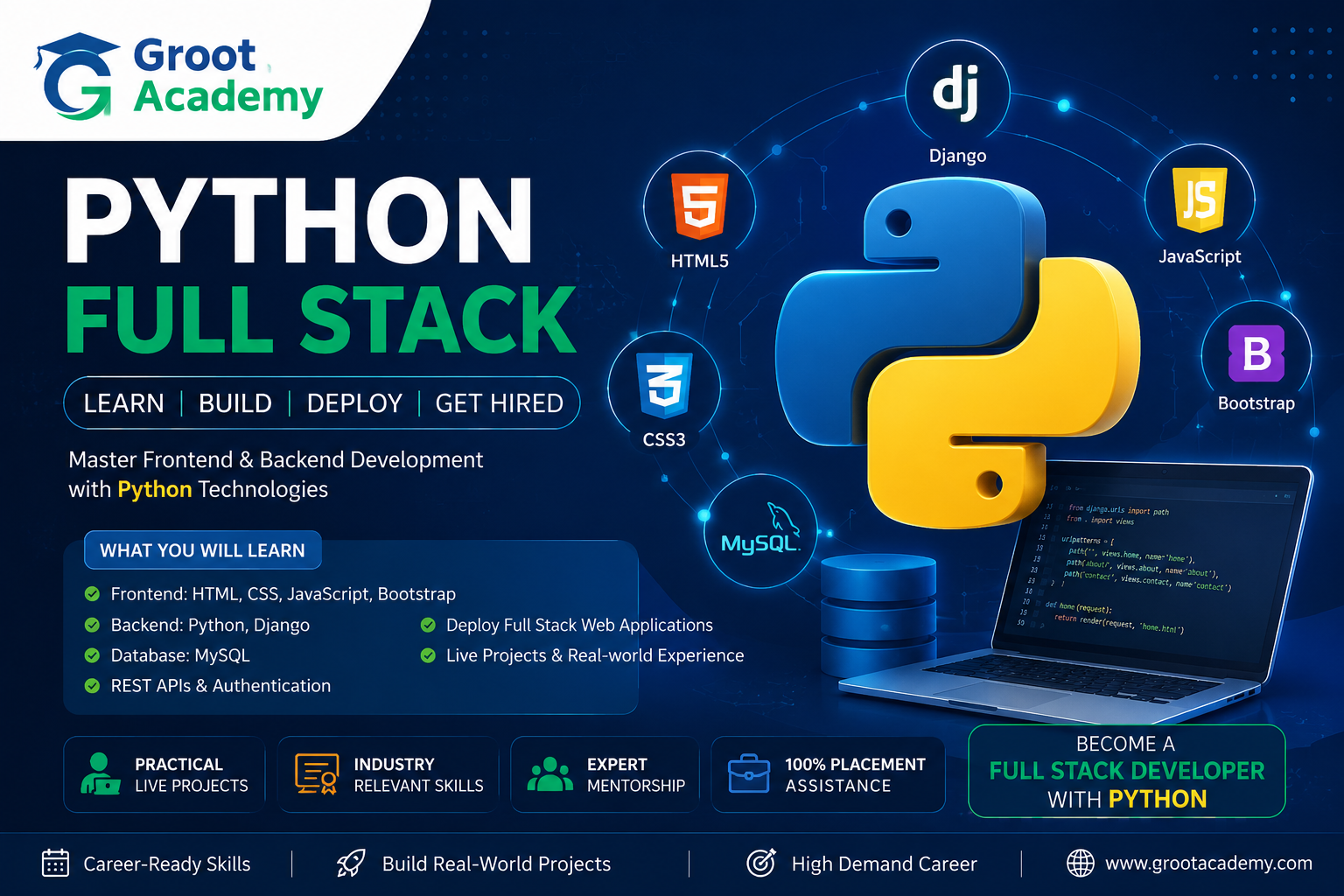
Build complete web applications by combining HTML, CSS and JavaScript with Python, SQL, Django, REST APIs, authentication and deployment workflows.
Begin with the frontend and Python foundations needed to understand a complete web application. Use HTML5, CSS3 and JavaScript for the interface, then connect Python to relational databases and build Django applications.
Develop forms, authentication and permissions, create REST APIs with Django REST Framework and connect them to a JavaScript frontend. Practise Git, production configuration and deployment through CRUD applications, dashboards and a final full-stack project.
Who can join?
Beginners learning Python for web development Students who want both frontend and backend exposure Python programmers moving toward web applications Learners building a full-stack portfolio
Skills and tools
Course curriculum
Explore the published learning outline below. Confirm the detailed syllabus and module coverage for your chosen batch with the course team.
Introduction to Full Stack Development
Understand web development, client-server architecture and how frontend, backend and data fit together.
- Introduction to Web Development
- Frontend vs Backend Development
- Understanding Full Stack Development
- Introduction to Python Full Stack Development
- How Frontend, Backend and Database Work Together
- Understanding Client-Server Architecture
- Setting Up the Development Environment
- Understanding Full Stack Development Workflow
HTML5
Build semantic HTML pages with text, links, media, tables and forms.
- Introduction to HTML
- HTML Document Structure
- Headings, Paragraphs and Text Formatting
- Links, Images and Media
- Lists and Tables
- HTML Forms and Input Types
- Semantic HTML Elements
- HTML Best Practices
CSS3
Style responsive pages with CSS, Flexbox, Grid, media queries and transitions.
- Introduction to CSS
- Selectors, Colors and Units
- CSS Box Model
- Typography and Backgrounds
- Flexbox Layout
- CSS Grid
- Responsive Web Design
- Media Queries
- CSS Transitions and Animations
- Building Responsive Web Pages
JavaScript and ES6+
Use JavaScript and ES6 features for DOM interaction, asynchronous requests and JSON.
- JavaScript Fundamentals
- Variables, Data Types and Operators
- Conditions and Loops
- Functions and Scope
- Arrays and Objects
- DOM Manipulation
- ES6 Features
- Promises and Async Await
- Fetch API and JSON
- JavaScript Mini Projects
Python Programming Fundamentals
Practise Python syntax, control flow, functions, modules and exception handling.
- Introduction to Python
- Installing Python and Setting Up the Environment
- Python Syntax and Variables
- Python Data Types
- Python Operators
- Conditional Statements
- Loops
- Functions
- Modules and Packages
- Exception Handling
Advanced Python Programming
Use object-oriented Python, files, comprehensions, generators, decorators and virtual environments.
- Object-Oriented Programming
- Classes and Objects
- Inheritance and Polymorphism
- Encapsulation and Abstraction
- File Handling
- Lambda Functions
- List, Dictionary and Set Comprehensions
- Iterators and Generators
- Decorators
- Virtual Environments and Package Management
Database Fundamentals and SQL
Design relational data and practise SQL queries, joins, constraints and CRUD operations.
- Introduction to Databases
- Understanding Relational Databases
- Introduction to SQL
- Creating Databases and Tables
- CRUD Operations with SQL
- SQL Joins
- Constraints and Relationships
- Aggregate Functions
- Subqueries
- Database Design Basics
Python Database Connectivity
Connect Python to databases using parameterized queries, transactions and reliable connection handling.
- Introduction to Python Database Connectivity
- Connecting Python with Databases
- Executing SQL Queries
- CRUD Operations Using Python
- Handling Database Transactions
- Parameterized Queries
- Database Connection Management
- Database Error Handling
- Building Database-Driven Applications
Django Fundamentals
Create Django apps with views, templates, static files, models, migrations and administration.
- Introduction to Django
- Installing Django and Creating a Project
- Django Project Structure
- Creating Django Apps
- URLs and Views
- Templates and Template Inheritance
- Static Files
- Models and Django ORM
- Migrations
- Django Admin
Advanced Django Development
Build validated forms, authentication, permissions and secure Django application features.
- Django Forms
- Form Validation
- Class-Based Views
- Django Authentication System
- User Registration and Login
- Authorization and Permissions
- Sessions and Cookies
- File Uploads
- Sending Emails
- Django Security Best Practices
Django REST Framework
Create and document REST APIs with serializers, views, routers, authentication and permissions.
- Introduction to REST APIs
- Introduction to Django REST Framework
- Serializers
- Function-Based API Views
- Class-Based API Views
- Generic Views
- ViewSets and Routers
- API Authentication
- Permissions and Authorization
- API Testing and Documentation
Frontend and Backend Integration
Connect JavaScript interfaces to Django APIs with JSON, forms, authentication, search and pagination.
- Understanding REST API Integration
- Consuming APIs with JavaScript
- Fetch API with Django Backend
- AJAX Concepts
- Handling JSON Data
- Form Submission with Backend APIs
- Authentication Integration
- Application Error Handling
- Pagination and Search
- Building Full Stack CRUD Applications
Authentication and Security
Apply password, session, role and input-protection concepts to application workflows.
- User Registration Workflow
- Login and Logout System
- Password Security
- Authentication and Authorization
- Role-Based Access Control
- Protected Views and Routes
- Session Security
- CSRF Protection
- Environment Variables and Secrets
- Application Security Best Practices
Deployment and DevOps Basics
Prepare production configuration and deployments with Git, basic Linux and web-server concepts.
- Preparing Django Applications for Production
- Environment Configuration
- Static and Media File Management
- Introduction to Web Servers
- Basic Linux Commands
- Introduction to Git and GitHub
- Version Control Workflow
- Deploying Python Full Stack Applications
- Domain Configuration
- Production Best Practices
Live Projects and Practical Training
Build practical CRUD, Django, API, dashboard and final full-stack projects.
- Responsive Portfolio Website
- Python and SQL CRUD Application
- Django Blog Application
- User Authentication System
- Student or Employee Management System
- E-Commerce Application
- REST API Project
- Full Stack Admin Dashboard
- Deployment Project
- Final Python Full Stack Major Project
Project practice ideas
Use these examples to discuss suitable practice work with your trainer.
Responsive portfolio website
Build a responsive interface with HTML, CSS and JavaScript.
Python and SQL CRUD application
Use Python database connectivity, parameterized queries and transaction handling in a database-backed workflow.
Django blog or management application
Create models, views, templates, forms and an administration workflow for a blog or student/employee management app.
Authentication and REST API project
Add login and permissions, build Django REST Framework APIs and connect them to a frontend.
Full-stack admin dashboard
Combine database operations, search, pagination and API-driven interface features in a dashboard.
Python full-stack capstone
Plan, build and document a complete application, review its configuration and prepare a deployment.
Frequently asked questions
Which Python web framework is used?
The source curriculum focuses on Django and Django REST Framework. Confirm detailed framework coverage for your chosen batch with the course team.
Do I need to know HTML and CSS first?
No. The curriculum begins with frontend fundamentals so the backend work can be integrated into complete applications.
Is database training included?
Yes. The syllabus includes relational databases, SQL, CRUD operations, Python database connectivity and Django ORM.
Does the course include APIs?
Yes. The outline covers Django REST Framework serializers, API views, routers, authentication, permissions, testing and frontend integration.
Are practical projects included?
The source curriculum includes CRUD applications, Django projects, authentication systems, REST APIs, dashboards, deployment and a final major project.
Who is this course for?
Beginners learning Python for web development Students who want both frontend and backend exposure Python programmers moving toward web applications Learners building a full-stack portfolio
How can I confirm fees, duration and batch timings?
Contact Groot Academy for the current syllabus, fees, duration and available learning modes before enrolling. These details depend on the selected course and batch.
Ready to discuss Python Full Stack Development?
Ask the course team about syllabus coverage, current batch timings, fees, duration and learning modes before you decide.